

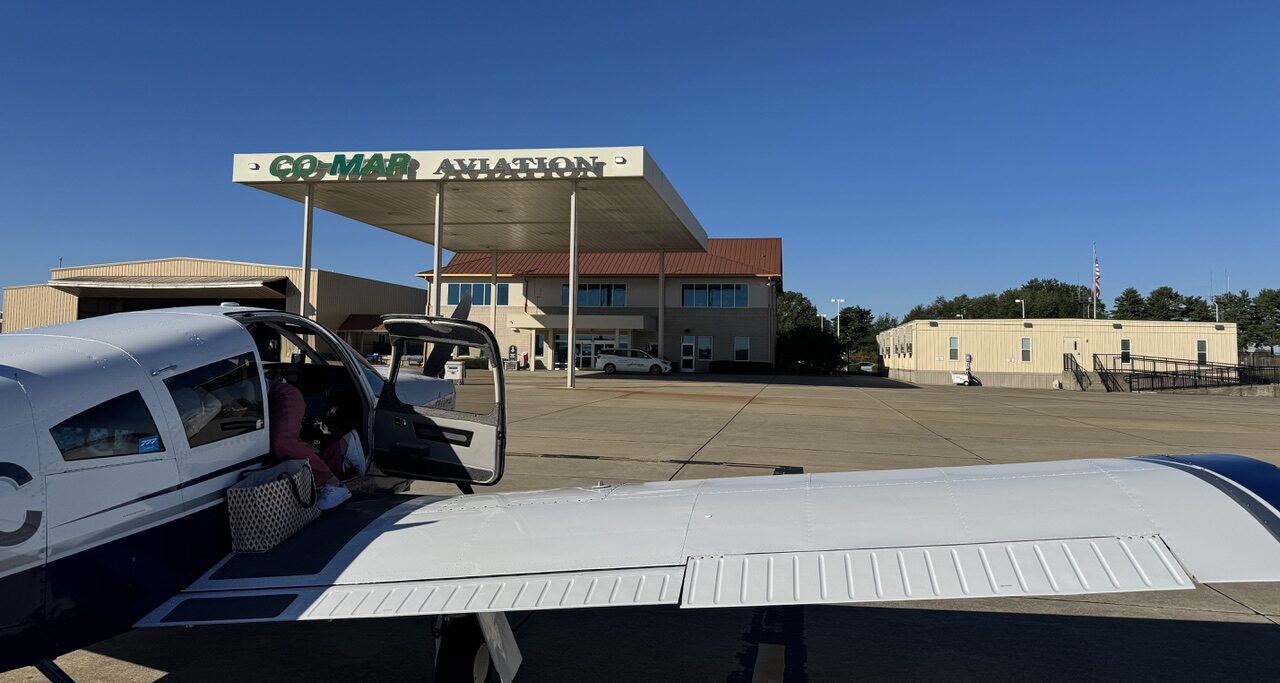
It’s all about the mission. For whatever reason, 2026 was the year of wedding invitations. Aside from the celebration themselves, the opportunity in having the freedom of flying our own airplane to the venues added another level of enjoyment. In that regard, our monthlong flying mission was dictated by nuptials in diverse locations. Translation: The weddings were a great excuse to fly our airplane to places we hadn’t been.
Before we get into the planning nuts and bolts, here’s a brief synopsis of our sojourn: Flagler Beach, Florida (FIN) to Dover, Delaware (33) to Burlington, Vermont (BTV) to Montreal, Canada (YHU & YJN) to Sault Ste. Marie, Michigan (ANJ) to Chetek, Wisconsin (3WN6) to Minneapolis, Minnesota (FCM) to Dickinson, North Dakota (DIK) to Hulett, Wyoming (W43) to Cody, Wyoming (COD) to Grand Forks, North Dakota (GFK) to Sandwich, Illinois (IS65) to Bowling Green, Kentucky (BWG) and then return to Flagler Beach, Florida.
The airports listed above don’t include fuel stops. The original plans changed because of various circumstances, but mostly the itinerary remained intact. Aside from the weddings in Montreal and Wisconsin, some of the highlights were the Teddy Roosevelt Presidential Library in Medora, North Dakota, Devil’s Tower, five days in Yellowstone National Park, and visiting friends and family.
I’ve found that whatever your flying excuse, it’s best to define the mission first and then plan the trip accordingly. For example, if the mission is simply to visit cities you’ve always wanted to experience, list them and then use your favorite flight planning app to connect the associated airports in one continuous loop all the way back home. Stay with me, there’s a reason for this exercise.
Flight Planning: Consider Fuel and Your Bladder
Now that you have a frame of reference for time and distance to each destination through the flight log created from the airports selected, use the application’s map to display the circuitous route entered. Is it the most efficient or logical sequence of visiting the destinations or do you need to readjust?
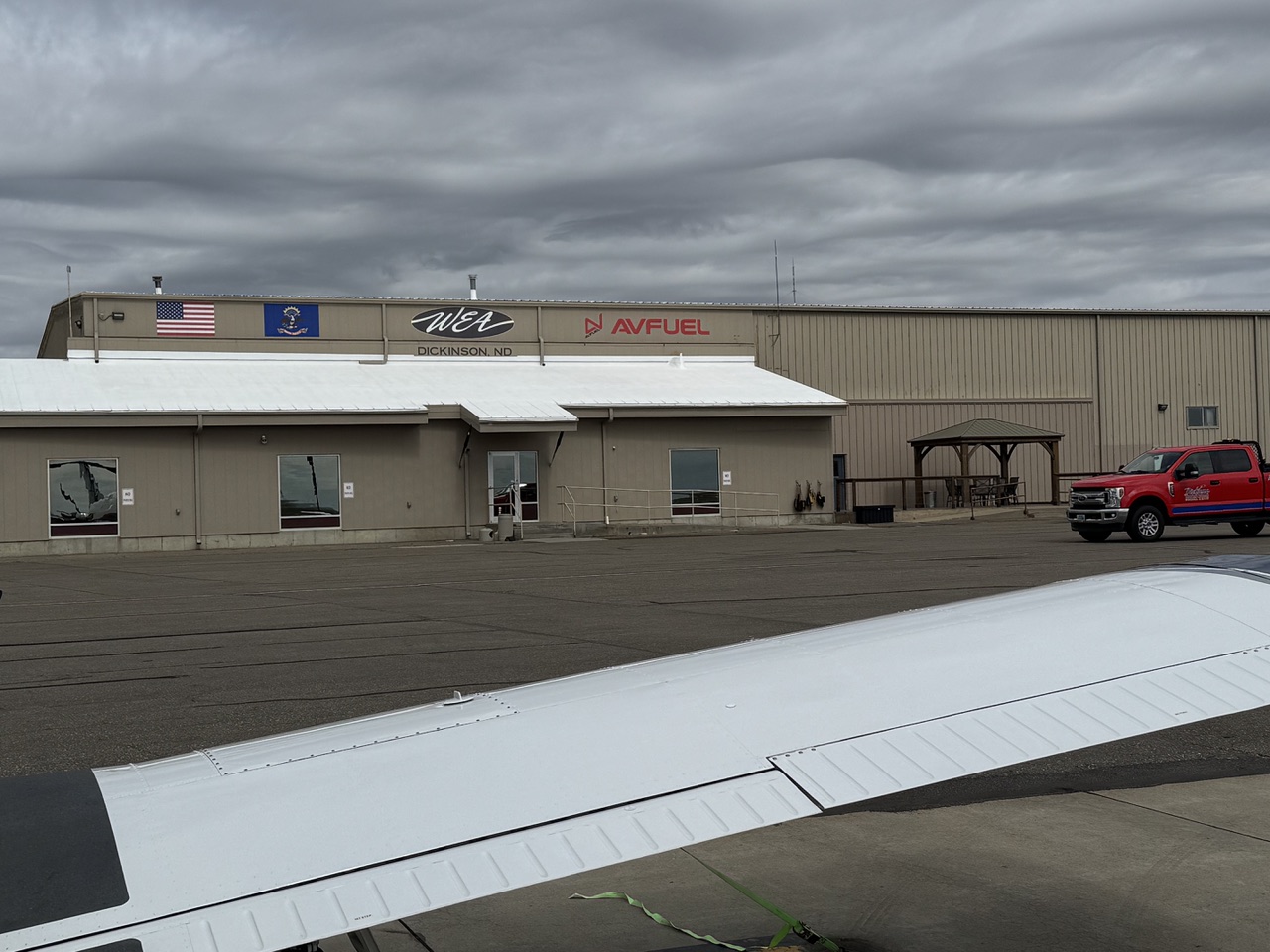
I found it helpful to decide the number of days at a particular location and enter them in an electronic calendar. Determine the lodging nights required. The calendar presents an organized display of the days involved. Once hotel, rental car, and FBO selections are made, the information can be entered into the days selected. When a long trip is involved, I’ll occasionally draw a blank on the hotel reserved, so having pertinent details available on the iPhone saves me embarrassment when trying to enter the address for the Uber ride.
Once the chronological sequence of destinations is established, I begin the process of creating separate flights between each airport (more on airport choices later). If the distance between destination A and destination B is beyond either your fuel supply and/or your bladder capacity, consider picking a fuel stop about halfway in-between.
And ask yourself what duration of flying for the day is reasonable with consideration to fatigue and comfort. If flying time for the day will exceed your tolerance, or your passengers’ tolerance, it’s best to consider a hotel for that leg. Additionally, if you depart in the morning and require a lunch stop, either at an airport restaurant or through the use of a crew courtesy car, then plan your flights accordingly. My wife and I are three-meals-per-day people, but we find it more efficient to dine in-flight on healthy snacks that we’ve packed in abundance. A breakfast bar or a couple handfuls of cashew nuts saves the day.
Challenges: Choosing the Right Airport, FBO
The process of airport selection and FBO selection tests your skills as a full-service travel agent.
If your destination is a well populated city, most likely you’ll have a choice in available airports. It’s reasonable to assume that a major airport will have the most expensive fuel and the most expensive fees, i.e., tie-down, ramp, and service. My search typically begins with non-towered airports that are within close proximity or an easy Uber/taxi ride to the center of town, assuming a rental car is not part of the plan.
The FBO oftentimes dictates the airport choice based on costs. Most flight planning apps have the ability to display fuel prices and fees. (Airnav.com seems to be more up to date with fuel prices than my ForeFlight app.) Although cheaper costs are attractive, especially with skyrocketing avgas prices, other factors are important. Does the airport have instrument approaches from different directions that allow for a descent down to low enough minimums in the event of adverse weather?
If the fees at a particular FBO are higher but the services available add value, like a clean and professional facility with adequate tie-down equipment, hangar space, and drinkable coffee, is it worth the extra money? Are courtesy cars, rental cars, or Uber/taxi transportation available? It’s not a bad idea to call and confirm fees with an FBO. At smaller aerodromes owned by the local municipality, I’ve had very pleasant and informative conversations with managers who discussed anything from tie-down fees to restaurant recommendations.
As an example for one of our destinations, Burlington, Vermont (BTV) doesn’t really have any alternatives to Patrick Leahy International Airport if the goal is to be within striking distance of downtown. Fuel at the only FBO, Heritage Aviation, is $8.15/gallon as of this writing and fees for tie-down are $45/night with a $6.00 landing fee. The $25 ramp fee is waived with an avgas purchase of at least 10 gallons, a common incentive.
It’s easy to gasp at Heritage Aviation’s costs, but you do literally get treated with a red carpet by very polite and accommodating line personnel. The coffee is almost Starbucks quality. And the rental car is delivered directly to the airplane. The FBO inside has a well-appointed, clean, and professional environment.
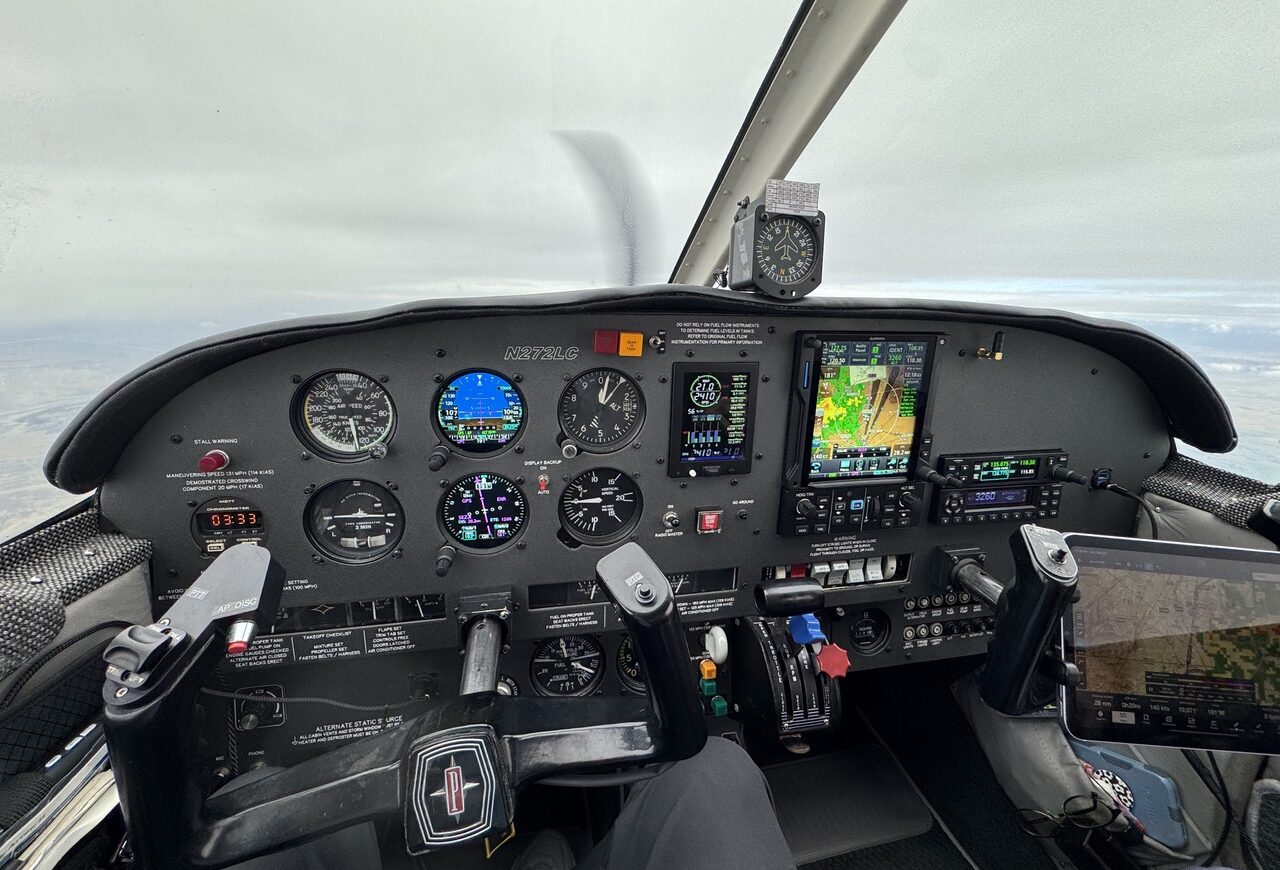
That said, FBOs located at airports that can accommodate the corporate jet market profit primarily from fuel. Little airplanes are just the cost of doing business, so discouraging pilots that fly reciprocating engines by charging high prices is the common solution. Even at airports without regular corporate activity, fuel prices within the same geographic radius of about 50 miles can differ significantly.
Certainly, some FBOs take advantage of major events, like athletic competitions, concerts, or conventions, so expect ramp fees (often called event fees) to be increased … sometimes to eye-watering prices. If your trip falls within a special event, a call to the FBO or airport manager might save you from a fee-based cardiac arrest. See Larry Anglisano’s sidebar for more on event fee gotchas.
The selection of our Montreal FBO required an additional strategy. An official airport of entry was required to clear Canadian Customs, so the choice was between Pierre Elliott Trudeau International (YUL), which I had flown into in my prior airline life, and Montréal Metropolitan Airport (YHU). Mixing in with airline traffic wasn’t my idea of fun and ForeFlight’s info seemed to indicate that 100LL was not available anyhow at YUL. Montréal Metro Airport is similar to Teterboro in New Jersey, so that became the best solution.
The Metro airport’s (YHU) choice of three FBOs was determined by the least overall cost. ForeFlight displayed fuel data but not fee data, so a direct call was made to each facility. With fuel costs at nearly $9.00/gallon U.S., ramp fees of $67 U.S., and $81 U.S. nightly tie-down fees at the HUB FBO, the plan was to clear customs and then immediately depart to a more GA-friendly airport eight minutes to the south. The St. Jean Airport (YJN) sold avgas at about $7.00/gallon U.S. and charged $35 U.S. per week for tie-down.
Our arrival at the Montreal Metro HUB FBO had us being greeted by an army of very friendly line personnel on a relatively small ramp. As expected, we were then charged the $67 ramp fee, which did involve 15 minutes of lounge use and a trip to the restroom. (Inclusive of ramp occupancy, I calculated $2.68/minute for our brief stay.) In direct contrast, the experience at St. Jean Airport was friendly but mostly a self-serve situation, with no baggage carts or line guy to tie down the airplane.
So, the key takeaway is that sometimes the FBO dictates the airport selection and sometimes the airport dictates the FBO selection, but neither can be separated from the decision process. Determining what gives your mission the most value is a personal preference. Just be certain that fuel, transportation, hotels, and restaurants are accessible. Don’t hesitate to verify your planning info with a phone call.

And finally, consider enrolling in a free account at FlightBridge.com. The corporate world uses the website, and it seems to be a staple of the larger FBOs. Aside from the notification aspect of your arrival and departure times, inclusive of requested services like fuel, tie-down, hangar, etc., FlightBridge has a selection menu for hotels and rental car agencies, oftentimes offering discounts through an AOPA membership. In addition to adding credit card info, loyalty memberships with rental car companies and hotels can be added to your profile.
FlightBridge is a useful planning tool for the FBO in allocating line personnel and ramp space appropriately in order to accommodate your arrival. But the website can be a little clunky until you’ve had some practice with its idiosyncrasies.
Fuel Stops
If the magenta line established using your flight plan app between the departure airport and the destination airport requires a fuel stop, determine the halfway point. Scan the map within a 50-mile radius of the halfway point for an airport that has an acceptable avgas price. (Your flight planning app most likely has a map layer selection that will display fuel prices.)
Here are the questions I consider in determining the fuel stop:
- Is the airport more than 50 miles off the straight-line course between the departure and destination that would require burning more fuel to buy more fuel?
- Are instrument approaches available?
- Is the fuel price reasonable?
- Does the airport have other services beyond fuel? I.e. restroom, maintenance, courtesy/crew car, lounge.
- Do the airport NOTAMS indicate fuel temporarily unavailable, a closed runway, or even a closed airport?
- Is the airport near hotels and restaurants with available transportation in the event of weather or maintenance issues?
- Is there a major local event that might create FBO fees? If so, call the FBO to verify.
We’ve all landed at an airport in the middle of nowhere to take advantage of bargain fuel prices, but is it worth the risk of not having services available? I try not subject my wife to a restroom that looks like it’s better suited at a truck stop. Understandably, flights over sparsely populated areas may not offer many choices. Obviously, if the halfway point is void of any acceptable airports, the decision to continue farther or to stop for fuel earlier is a consideration.
Event Fees: One Pilot’s Pricey Quick Turn
A growing trend in the FBO business is layering special event fees on top of regular facility and ramp fees, and these so-called “event pop-up fees” can be eye watering. That was the case when reader Alexander Wolf showed up (after radioing ahead) in his Cirrus on the Modern Aviation ramp at New York City’s LaGuardia Airport in the middle of the Class B. You know—concrete jungle where dreams are made of. But his goal was simple: A quick turn to drop off a friend who was catching a flight out of the airline terminal on the field, and to buy some fuel.
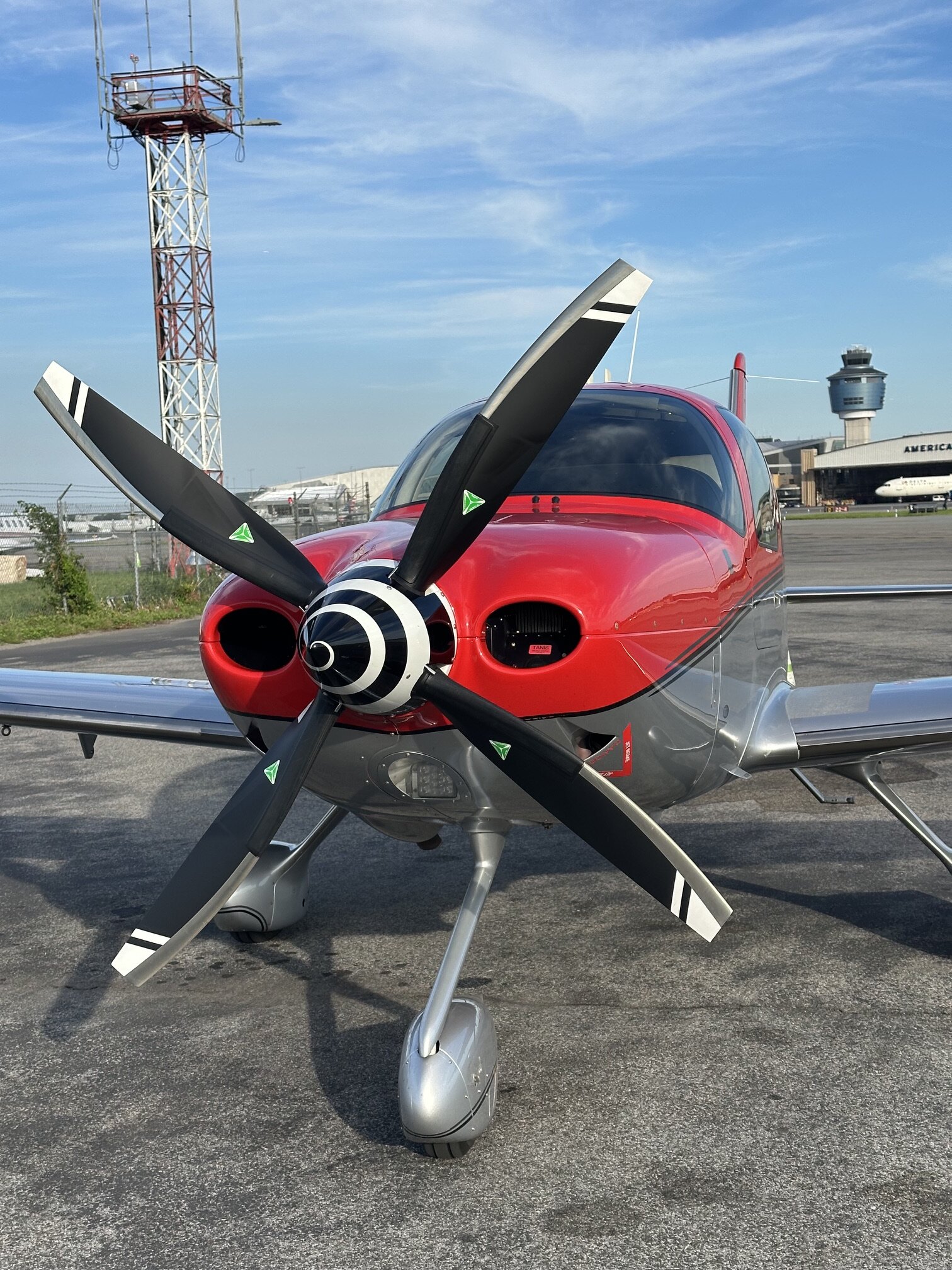
“Checking the NOTAMs as we always do, there was nothing remarkable at LaGuardia. We take off from Bridgeport, Connecticut, head for the ILS to Runway 22 at LaGuardia and I gave Modern Aviation a call on the radio with the drop-off info and a fuel order. They tell us to call them when we’re parked. There was no mention of a special event in that conversation,” Wolf said. He taxied to the mostly empty ramp and the line personnel brought his passenger to the Delta Air Lines terminal and Wolf to the Marine Air Terminal. But Wolf said back inside the FBO is where the visit got pear shaped.
While the customer service reps verified the fuel order for his Cirrus, he went to the restroom and when he returned to square up, the CRS mentioned there was an event fee, but didn’t say what the fee was for or provide any details. It wasn’t until Wolf got an email from the FBO after he departed that he learned the event fee was for the U.S. Open Tennis Championships in New York City that ran from August until September 2026.
Easy Gotcha
“So they got my credit card (and my plane behind a gate which I can’t get through without paying) for an unknown fee for an event unknown to me. There weren’t any NOTAMs for the airport about the event, and essentially my airplane and I were held hostage to a fee that showed up on an invoice that was a double whammy,” he told us. “I have zero issues with the airport’s landing fee, the FBO’s ramp fee, or infrastructure fees because, well, it is what it is. But as pilots, we are told that we have one source of information and that’s the federal government NOTAM system. That’s the central repository of everything a pilot cares about when planning a trip. I didn’t see anything about a special event, a PPR, or anything that would indicate that 18 gallons of 100LL and a quick turn would cost $1,000 total,” Wolf said, pointing out that what is different about his experience is the chilling effect it has on airports when FBOs spring these event fees on transients without any warning from the NOTAM system.
We reached out to Modern Aviation to ask about the $584 surprise event fee and got a quick response. According to the company, Wolf’s tail number was added to the FBOs arrival schedule approximately five minutes prior to landing, which resulted in the pop-up event fee being applied because of the U.S. Open, and the fee was later followed by the United Nations General Assembly (UNGA) event period in part of September 2026.
“NOTAMs are intended to provide pilots and flight planners with time sensitive aeronautical information that may affect flight operations, such as runway or taxiway closures, airspace restrictions, obstructions, navigational changes, and other temporary operational conditions. Our special event fees, however, are FBO specific service charges and are handled in the same manner as our standard FBO service pricing, which is not published through NOTAMs. Special event pricing and reservation requirements are communicated directly through Modern Aviation and are normally available on our website. Had we received advance notification of the aircraft’s arrival, our team would have been able to advise the customer of the applicable special event fee prior to arrival,” Modern said in part. In our estimation, that might not be practical on the fly.
Modern also said that while an appropriate slot is required for operations into LaGuardia, securing that slot does not notify Modern Aviation or serve as a reservation with the FBO. Since FBOs do not receive notification from the FAA when an operator secures a slot for an expected arrival, Modern said pilots have to contact Modern Aviation directly to advise of their intended arrival and make the appropriate FBO reservation. Once that notification is received, it places the aircraft on the schedule and communicates any applicable special event fees. Still, we think this is a trap for pilots making last-minute plans to show up on an FBO’s ramp. At press time, Wolf said the event fee charges were ultimately refunded by his credit card company.
Can Apps Help?
Our first thought went to the 8Flight Aviator iPad app, which concentrates heavily on trip planning and populating FBO facility data to the app. We asked 8Flight’s Matt Guthmiller if he is seeing more FBO published event fees and if 8Flight might become a leading source for identifying event fees before showing up on the ramp. He said the current app mainly lists event fees for certain larger FBO chains and it’s work in progress adding smaller ones.
Guthmiller admitted one of the biggest challenges across the board on these things is that the FBO’s CSR might not know the correct pricing and two inquiries about the same aircraft type yield different answers. He said 8Flight is working to track the evolution of fees over time now that it’s had a couple years of really nailing down how to do it given all the different ways FBOs name and structure fees. We agree the added line items can be challenging to make sense of. The ultimate goal is to provide more transparency around not only who’s charging what, but who’s recently decided to charge a lot more and help keep those changes better under control over time. 8Flight is gradually adding additional aircraft categories too, both to support aircraft types that don’t as cleanly fit into a particular bucket and also add fees for new categories and larger aircraft. Wolf made it out of the New York FBO easy in his Cirrus SR22 compared to the event fees charged for turbine-category aircraft, where it’s often many thousands of dollars per visit. We think it’s a growing problem because it’s becoming the Wild West of fees.
“The first time I’d ever actually walked into an FBO and found a different price than what we had in the app (though it can certainly happen) was in Las Vegas a couple years ago in my TBM turboprop. The CSR must have thought I sounded surprised because she offered that it was the second time the FBO doubled its rates in two months. I didn’t feel so bad that the information was a couple weeks out of date then. (To their credit though, that particular FBO has left piston rates flat in the same time.) But it seems it can’t hurt for pilots to know just which FBOs are the ones raising rates that much and that often to access publicly funded airports. Imagine if a gas station did that to use a busy highway?”
More Than Red Carpets
Last, Les Abend’s useful travel planning advice in the main article is driven home and it’s all about choosing the right airport and FBO in the first place. Part of that is the FBO’s willingness to be fair, especially to lower-end aircraft. Those that don’t want small airplanes on their ramp say so with pricing and your pre-trip planning should uncover the ones you might avoid in your Cherokee. Still, like every business, FBOs need to make money to survive in a difficult market where the customers are demanding and often arrogant, and we’ve all seen good and bad operations come and go. Many struggle to hang on to reliable and skilled personnel (not everyone can move and fuel aircraft) and the service is only as good as the front line. Not part of the jet set, we generally favor independently owned smaller FBOs over large chains. You might have your preferences, too, but smaller operations might be more in touch with clients.
As an example, we asked the manager of Hartford Jet Center at our home field in Connecticut how it handles event fees and was told it often waives them if it’s obvious the transient isn’t showing up as part of the local event. When the PGA Tour stops in Connecticut each summer, Hartford Jet Center’s ramp is packed with jets, turboprops, and celebrities and it’s a weeklong hustle. “But if we see a small piston show up in the mix that obviously isn’t here for the golf tournament, we aren’t going to charge the event fee,” the manager told us. We think this mentality is a key to repeat business and attracting new customers. In the case of Alexander Wolf’s FBO experience during the U.S. Open, it’s at least a way to not lose a customer forever.
—Larry Anglisano
DIY Travel Agent Stuff
First, the ground transportation. Is an Uber or a taxi available from the airport? Will the FBO allow you to keep a crew/courtesy car overnight? If a rental car is part of the plan, will you need a ride to the commercial side of the terminal, or will the agency deliver the car to the FBO? Having a rental car delivered right to the airplane on the ramp always puts a smile on my face.
I’m an Enterprise Rent-a-Car fan. Rarely do they fail to have the car delivered to the FBO, but it requires that you find the location that can fulfill that request. A call to the FBO may lead you in the right direction because they’re familiar with the appropriate agency. If Enterprise doesn’t drop off the car at the airport, most times a local representative will pick you up.
FlightBridge.com is a great source for choosing a rental car company. The selection on the website not only lists the local agencies but provides a discount that may prove better than your loyalty program. Additionally, FlightBridge includes a selection for having the rental car delivered to the FBO.
Then, there’s lodging. The choice of lodging is certainly a personal preference in regard to amenities required. The important point is ensuring that the destination actually has accommodations at a reasonable distance from the airport. An Airbnb or a VRBO is an option, mostly for longer stays.
If the destination has a wide variety of hotel/motel choices, my goal is to attempt finding a location within reasonable walking distance of the restaurant, shopping district, and/or attractions area. Google Maps or Apple Maps becomes my friend in making that determination. We’re enrolled in almost every hotel loyalty program, so oftentimes some form of discount is available or points can be used.
Weather and airplane mechanical issues can change plans quickly, so I do attempt choosing room rates with refundable cancellation policies as close to the date of the stay as possible. In addition to entering the hotel info into my electronic calendar, I find it helpful to add the last day that a fully refundable cancellation is available.
Although discount websites like Expedia or Hotels.com offer room rate bargains, I find that making an online reservation directly with the hotel website or hotel chain website oftentimes allows for the opportunity to negotiate even if the cancellation deadline has passed, especially if you are a loyalty member. The discount websites make refunds difficult if not impossible because the hotels don’t take responsibility for third-party reservations.
Once again, check out FlightBridge.com for hotels. The website offers some great discounts. You can apply your loyalty membership for points as well.
Packing It In
After spending over four decades of packing bags for work, clothing organization has become part of my skill set. Everyone has their methodology, so I’m not going to use this forum to make detailed suggestions. However, a monthlong trip in a small airplane presents some challenges.
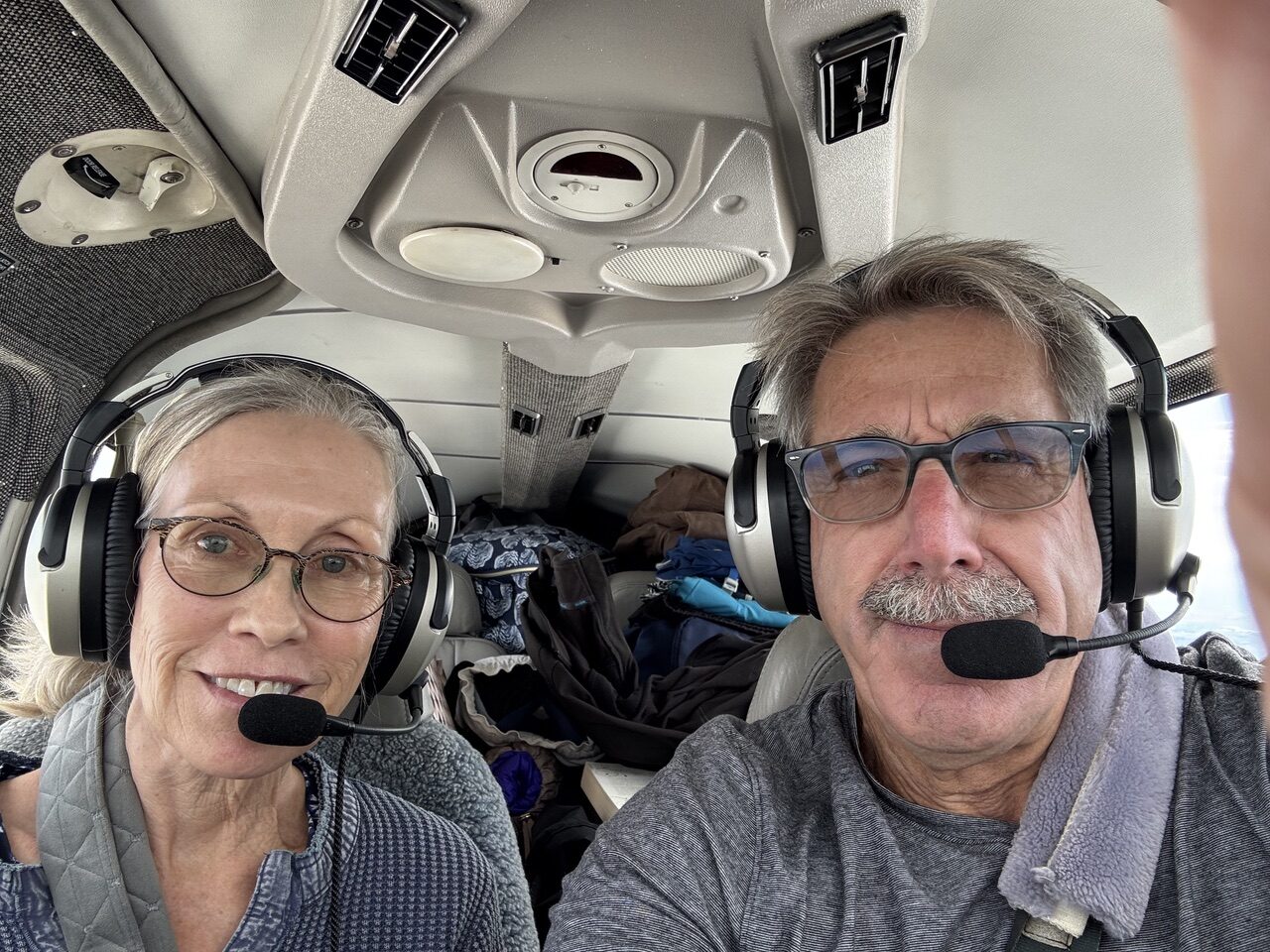
Most of us would prefer to limit time spent in a hotel laundromat. In that regard, we found it best to populate two separate bags with at least a week’s worth of clothes … and maybe some extra underwear. We would swap out the bags as the trip progressed. A separate bag was used for footwear. In addition, the weddings required a valet bag for a suit, with my wife utilizing a separate hard bag for her nuptial attire. And of course, we utilized a small separate bag for in-flight snack dining.
Our standard wheel bags with extendable handle provided us with a mobile platform to move everything else. Wheels were especially helpful from the airplane to the FBO or from hotel lobby to our room. The remaining bags were soft with two having the capability of being carried as backpacks. Smaller and soft bags made stuffing into the airplane much easier. Most FBOs and hotels will have baggage carts available, so moving your wardrobe and sundries is not usually a problem.
On this particular trip our routing not only took us around mountainous terrain but over sparsely populated areas in Canada. Diversion airports were oftentimes not within gliding distance. It seemed survival supplies would be prudent items to carry.
A personal locator beacon (PLB) was first on the list. I purchased an ACR ResQLink View RLS. The unit has the capability of acknowledging that Search & Rescue has received the SOS signal. For just over $500, it was a good insurance value and a peace of mind. I clipped it to the copilot’s side pouch and instructed my wife in its use. There are other satcomm devices, of course, with tracking, SOS, and texting capabilities. We’re in the process of rounding them up for a separate report in Smart Aviator.
Additional survival supplies included a two-person, water resistant sleeping bag, a box of energy bars, and a gallon of designer water, notwithstanding our standard issue inflatable life jackets. We were also carrying cold-weather jackets and other layers of warmer clothes. These items were placed in separate locations within the cabin. In the event an off-airport landing broke up the airplane, at least some of the survival gear would be accessible.
Parting Thoughts
Although my wife and I are usually ready for a good night’s sleep in our own bed by the end of a long trip, we always bring back great memories. Not that I’m qualified to offer marital advice, but if you’ve defined the mission, completed travel agent duties to the best of your abilities, and have organized your airplane packing system, spousal friction will be minimal. Have a great time!

On a recent trip last month from east to west coast and back again in a piston single, we had wonderful experiences at the various FBOs we used for overnights and for fuel stops (we had a couple of nights at DIK North Dakota that Les mentions). Fuel prices were a major factor, but so was seeing good comments on the flight planning software. We loved the little FBOs that were so friendly. And the National Car Rental FBO desk was awesome as always in getting cars to meet us at the FBO without fail (all FBOs we used on this trip were served by National/Enterprise as part of this program). I’m happy operating into big airports (BOS, MDW, and their ilk), but the little ones make me happy to be part of light general aviation.
Another great article by Les.
This sentence struck a chord with me: “It’s not a bad idea to call and confirm fees with an FBO”. I failed to do this on a recent trip to Savannah. I figured, how much could parking possibly be, $45 a night? $50? Imagine my surprise when the invoice presented showed $72 a night. No wonder my Mooney was the only plane parked on Signature’s ramp. Oh well, live and learn.
Another resource for courtesy cars is AirportCourtesyCars.com
Encyclopedic, Les. And always s pleasure (and learning experience) to read your, and equally informative, Larry Anglisano’s articles. Thank you!
I’d add favoring an airport with a crosswind runway, should the other one be closed on arrival, or the winds stronger than expected.
Tie-downs; it seems an increasing number of airports don’t provide ropes anymore, so bring your own. Some FBOs don’t have tie-down spots at all (AGC, TEB), or no anchors for the tailwheel (GTF, “we’ve never had one fly away”).
On Google Maps, pinch in and out to reveal points of interest off the beaten track.
Uber: “it’s available…but there’s only one guy in town and he drives for Lyft too…sometimes he takes a day off”.
Carry cash. More than once an internet outage/anomaly has made the fuel pump inop. The FBO usually knows how to open up the box and bypass the electronic switch.
If you’re a runner/hiker, check what Alltrails.com offers around your destination.
How the other half lives… I look for grass runways, cheap fuel, and maybe on-airport camping. Many of the airports I frequent don’t even HAVE an FBO, let alone ramp fees. But we fly in the same sky.
Mr. Abend, you sort of touched on it, but I want to emphasize 3 things from my own experience. I have made multiple trips from San Marcos (home base) to California, Utah, Colorado, Arizona, Oklahoma, North Carolina, and Florida since 2013 (that’s where family and my kids reside). I had a major engine failure at 79J (Alabama) in 2022, but that breakdown could have been a simple flat tire. Question: Would you rather have an airport with no A&P but rental cars, or an airport with an A&P, but no rental cars? 79J has no rental cars, but it does have a great A&P. The A&P there worked with me to resolve my problem (new reman engine) without having to import an A&P from some other location. Today, my flight planning includes only airports with an on-field A&P with only very rare exceptions. 2nd, I have determined the dry cost of my Mooney Ovation. I search for airports that not only have A&P’s, but also meet our fuel and bladder constraints. What I have found is that the straighter my route is, the lower are my flight costs, almost regardless of the fuel price. The exception generally is if I can find fuel that is $1.25 or more lower than the straight line route, then I will go off-route, but a $0.50 savings never in a 2-hour flight or longer, justifies even 15 miles off the straight line (and that blows my mind). Now I also plan as if I will fly IFR which means flying around MOAs, so my straight line route still gets bent. That is my experience. I also recommend the “Total Cost” approach to an airport. By “Total Cost”, I look not only at tie-down/parking, and fuel, but also rental cars/Uber commute, and hotels if overnighting. By example, Jet Center at APA is less expensive at $10.03/gal, because rental cars for the week are under $300 for the week, and parking is free for single engine piston planes when compared to CFO and BJC in the Denver area. APA is also closer to the mountains than CFO which was No. 2 in my comparison.
It’s only a matter of time before a ticked-off attorney-pilot points out that these surprise fees don’t meet the requirements for a contract – a “meeting of the minds”, i.e., the parties have to know what they are agreeing to in advance. The fix: properly published prices, so the pilot can’t claim not to know. But, if they’re properly published, we all then have some chance of finding on our apps.
Good articles from Les and Larry- not the puff pieces some of the flying magazines seem to be producing these days.
I wish more pilots would contribute to the comments and fuel price sections in the flight planning apps! Personally I almost always update both the 100LL and JetA prices whenever I fuel up.