

A busy week for me, so a collection of updates from various disparate ends of GA. No pithy way to tie them together, alas.
Honda Echelon Gets a Wing
No aircraft manufacturer continues for very long with a single model. Anyone have one for me? Either one model evolves significantly well (such as Epic’s E1000AX turboprop) or the company finds another customer segment to answer.
So it has been with Honda Aircraft Company. The collective team returned customer feedback with two requests: a larger cabin size and a transcontinental range, but keeping the light jet single-pilot capable. The result was the Echelon, which debuted at NBAA’s BACE back in October 2023, with a first flight to come in 2026.
Three years later, the program progresses, but is taking a more measured pace. It’s not a pause, as confirmed by a Honda Aircraft spokesperson to AvBrief, but a timeline that reflects a few current realities, mostly having to do with securing first-tier (that’s the big stuff) supply chain “adjustments” and ongoing developmental work to lock in the design. The target for first flight shifts right to 2028, with first deliveries in 2031.
The Echelon has passed one milestone: the completion of the first wing structure of the initial test aircraft. The company continues structural testing, with many components through this portion, and more than 70% of parts for the first unit ready. Systems work in Honda’s Integrated Test Facility also moves ahead, with a second flight deck in the works for further test purposes.
Yes, the Echelon is planned to use the over-the-wing engine mounting system of the HA-420, along with features including autothrottle, emergency autoland, autobrakes, a Runway Overrun Awareness and Alerting System (ROAAS), and the Advanced Steering Augmentation System (ASAS) also on the current HondaJet.
“Completion of the first wing assembly represents an important achievement as we continue advancing testing, systems integration, and equipment qualification activity across the program,” said Honda Aircraft SVP, COO, and Echelon program lead Arnod Kelkar in a release. “In spite of some schedule challenges, with steady progress towards the final assembly, we are committed to delivering an aircraft that will redefine light jet performance, efficiency, and capability.”

Air Derby Registration Open
Want to try your hand at racing? In 2023, the all-women’s cross-country Air Race Classic launched a co-ed Air Derby raced in the autumn for those who wished to race with a wide-open field and weren’t limited to the constraints of a weeklong ~2,500-nm race.
Open to two-person crews flying essentially any aircraft under 12,500 pounds, the only stipulation is that either the pilot or copilot must be a certificated female pilot or student pilot. Last year, one team raced a route in New Zealand, so the course is not limited to the U.S.
Registration closes on Friday, September 25, at 6 p.m. EDT, with contestant briefings beginning that evening. The race can be flown on any course that meets the distance parameters, during the time period between September 30 and October 13. For more info, or to sign up, visit the FAQs on the site.

Weather Cams Are So Cool
This is the kind of surveillance we can sign up for … with a distinct purpose of offering real-time weather at remote and/or challenging locations.
I’ve spent this week working on my flight instructor renewal, through the Sporty’s gratis online FIRC, and as usual, I learn new things. This time around, I enjoyed the great update on weather information available through not only the usual suspects (avaitionweather.gov, 1800wxbrief.com, and noaa.gov), but also the growing FAA WeatherCams site.
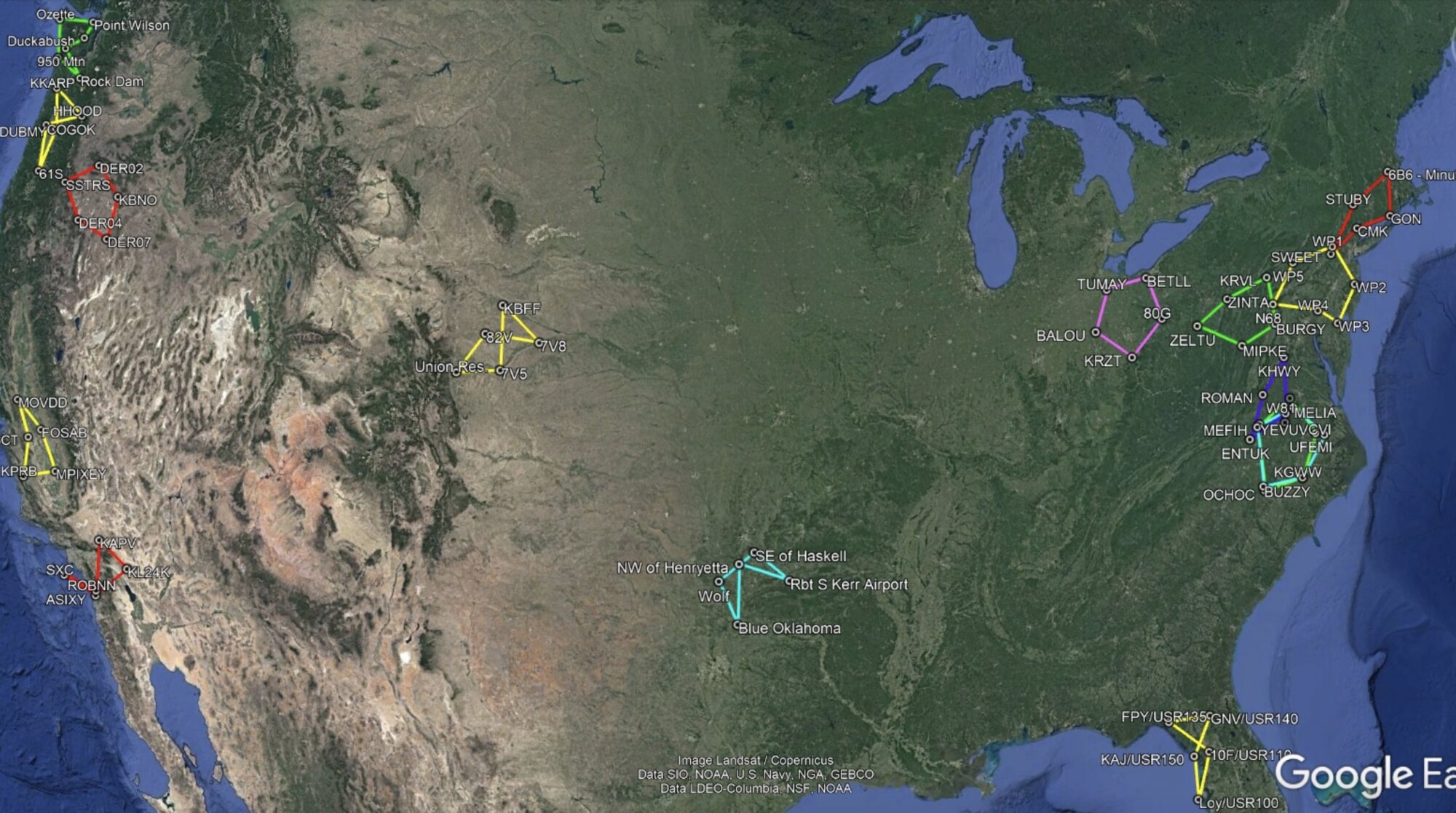
First tested in Alaska, the weather cams have moved throughout the lower 48, providing a 24-hour view onto current conditions. Especially handy for VFR pilots, they reign supreme over many a mountain pass, and deliver data previously unrecorded save for the odd pilot report (PIREP). And because they often sit far from the nearest METAR, they can help form a regional view of weather even if you don’t plan to fly over the pass itself.
Another cool tool? AFDs. Aviation forecast discussions now take on the role of weather briefer in the modern age, when few of us still call in for a briefing to 1-800-WX-BRIEF (yes, it still exists, and as a website too. See above). These are issued by forecasters at the 123 weather offices around the country, and are meant to deliver details beyond the scope of a TAF. While they include some general, non-aviation weather info, they also have an aviation-focused segment that gives ceilings and visibility. Pretty cool, indeed.

I am one of those holdouts that calls 800 WXBrief to get my N# and TFR status request on tape. It may not make the ramp any more comfortable if I find myself spread eagle there, but at least the follow up proof of due diligence may save admin pain…and every email notification, FAA, ATC, or otherwise has the equivalent of “for entertainment purposes only” if you check the fine print.
Completely agree on NWS aviation discussion value, not only do you get an outlook, but you also get their confidence in their forecast. When our NWS office was describing clouds/viz using metro definition of high/low for aviation discussion I reached out via their POC info and asked them to recalibrate to aviation defs (VFR, MVFR, IFR, LIFR) and they did, making it much less ambiguous for our purposes.
… for the boaters out there, they have a discussion targeted to that as well.
I’m encouraged to see increased awareness of the FAA’s weathercams system. At my local airport (56S, Seaside Municipal) there is no ASOS or other weather reporting, and the weather can often be vastly different at the nearest location that does have it. So our airport committee and volunteers put lot of time and effort into getting three cameras installed and integrated into the weathercams system. I credit that with increased use of our tiny airport (always good for justifying its existence). And safety is of course served as well. There are still a lot of coverage gaps, so hopefully more airports and state aviation departments will take the necessary steps to get either existing or new cameras integrated.