

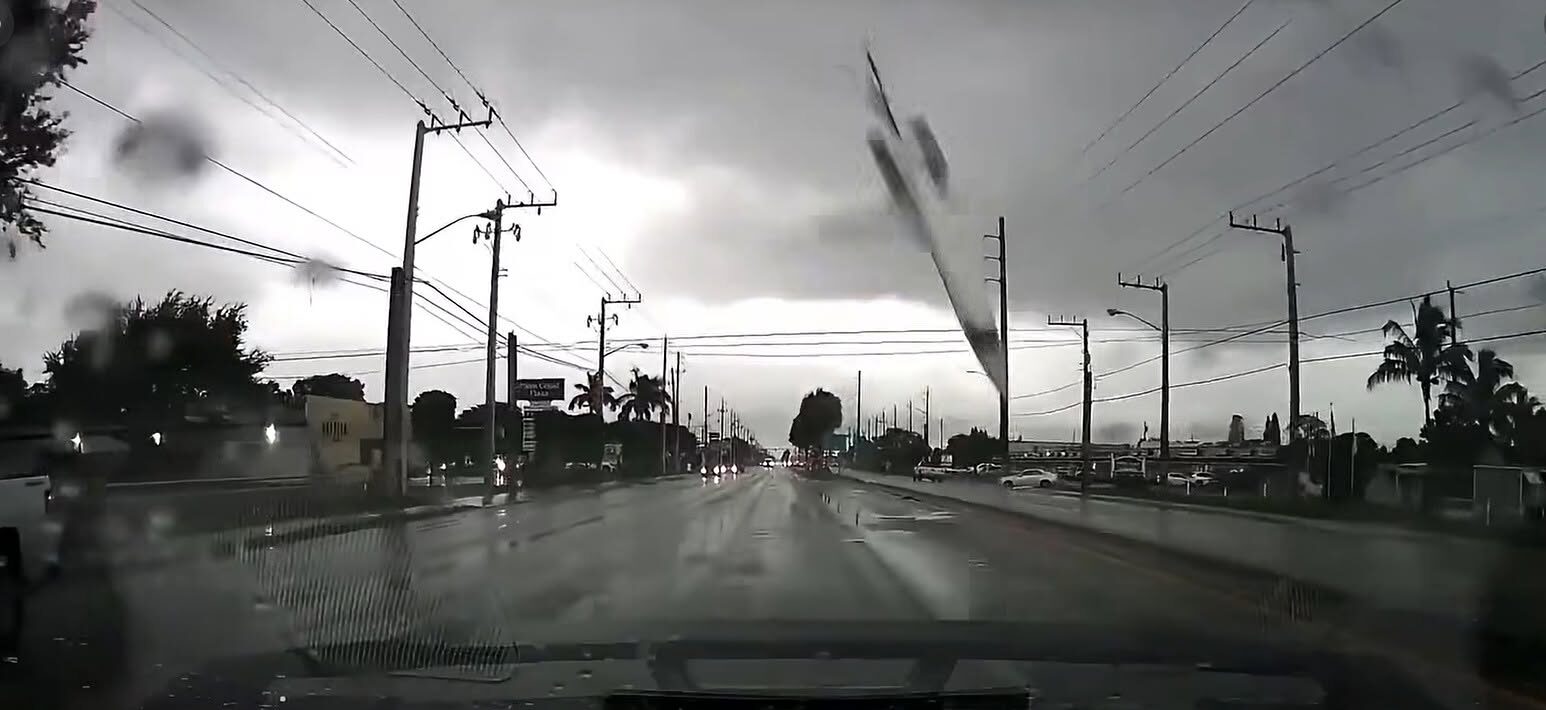
Ed. Note: A version of this blog originally appeared as a Facebook post and Paul kindly allowed us to publish it.
There aren’t many days when I’m happy to be out of aviation and especially happy to be out of aviation media. But today is surely one of them.
You can guess why, too. The horrific Palm Beach Lear 60 crash has provoked an online frenzy for the ages. Just scrolling my FB feed for a bit yesterday, every other post was something about this crash. The worst of it was the live ATC audio, which I absentmindedly clicked on and listened to, much to my regret. Mea culpa. It makes me part of the problem.
I did media accident reporting for many years, eventually transitioning to doing it online where it always pulled in the clicks for the same reason that rubberneckers can’t resist gawking at a crash that’s strangled traffic to a single lane. I always salved myself by believing it was a higher calling that saved lives by alerting pilots to mistakes they might blunder into.
Maybe it did. But mostly not, I suspect. By the late 1990s, accident rates had flattened and day after day, week after week, year after year, pilots and passengers died in crashes for the same dreary reasons they always had. Creative they weren’t. And they still aren’t.
Sometime in the early days of AVweb, I wrote an editorial essentially saying as much and noting that for all the ersatz high-minded intent, the animating force—at least in general aviation—was still voyeurism. Social media has supercharged this in ways that even I, at my most cynical, wouldn’t have thought possible.
He who’s first, gets the mostest, to paraphrase Civil War Gen. Nathan Bedford Forrest. He was thinking of mounted cavalry, but now it’s clicks, views, and likes.
You might recall that when Icon Aircraft whipped the cover off its owner agreement—to universal howls, I might add—it required an operating cockpit camera as a condition of ownership. Were we about to get crashes livestreamed? Don’t be silly. Starlink didn’t exist then.
But it does now.
Recall also that this very idea has been proposed for airline cockpits, as a safety measure. And I’d just say that for airlines, accident investigations have been instrumental in elevating airline safety, if not the media reporting we do about them. The industry responds with regulation, with training, and so on. It’s a real thing.
This is much less so in general aviation, where accident investigations can be cursory and inconclusive. (Twenty-nine% of piston engine failures occur for unknown reasons, for instance.)
This Lear crash investigation will probably be as exhaustive as a crater with precious little detectable physical wreckage allows. In a stunning moment of understatement, the NTSB’s Tom Chapman said the investigation will be challenging. But they’ve done it before and I’m confident they will again, even in the midst of a squall of second-guessing by online experts and, lately, conspiracy theorists seasoned with the occasional misogynist.
If you’re like me, you probably struggle to tune out the noise, for not doing so risks a certain psychosis. Sometimes, I’m not sure I haven’t already fallen into it. But I think this is true: Given the availability of radar—both NEXRAD and airborne—thunderstorm accidents are now relatively rare.
When the contours of this one come into focus, I won’t be surprised that apart from minor details—however interesting and unusual—the root cause won’t be anything new. Which is to say if the information revealed is a revelation to anyone, this may actually be your first rodeo.

Good to hear from you again Paul.
Remember, Substack is always an option.
Well said Paul. The F/O was my commercial ground student. Bright, thoughtful and committed to professionalism. I am at a loss.
Sincere condolences. There is little more one can or should say.
Thank you Paul for allowing the reposting of your FB post. Good to hear from you. By the way, I have never had s FB account and never will, so I missed your post. This is my very first comment about this crash.
Your reference to pilots and passengers dying in crashes for the same reasons they always did reminds me of one of the first citizen comments during Tom Chapman’s NTSB presser. The commenter, referring to his more than 5 decades of flying, stated that looking at the radar return into which this Lear 60 flew said he would have flown through it as well.
Russ and Paul-
Thank you both.
John Caulkins
Take comfort in the unprovable fact that without these bouts of speculation the accident rate would be worse.
If Paul Bertorelli writes it I’m going to read it. He always gives the best thoughts about a situation in the aircraft/aviation world. So glad to read your work again.
Amen and Amen!
Agreed…even as an aviation journalist working 5 jobs with 4 magazines, I get none of the garbage aviation speculation on my social media feed, because I have never clicked on one such post. Consequently I didn’t see posts from Paul or anyone else. I get my aviation breaking news here. But if Paul writes it and I see it here, I’m going to read it.
Part 135 ops are on the FAA’s radar in a big way.
So good to hear from you, Paul! Thank you for sharing your FB post here. I, too, am not on FB. I miss your voice, but understand the need to slow down, too. Please consider sharing future FB posts and/or other writing here on AvBrief.com, even if only occasionally.
Paul, take heart. Steer clear of the voyeurs and spitefuls and remember that the US General Aviation accident rate is 0.72 per 100,000 flight hours. That is, 99.9993% are non-fatal. If they made videos about safe flights, you’d see nothing else in the media.
What I sometimes wish is that there’d be a few more videos about how someone avoided an incipient problem by good judgment. Should be room for us to learn from such incidents.
Paul, So good to read you again. (I am not on FB). Whatever you happen to be musing about, I’d love to read it. (Or watch it on a YouTube video). Your superficial grumpiness, and deep genuine warmth, combined with real insights and beautiful writing are a most special combination. Yes, you have helped me be a better pilot. More importantly, you have helped me be a better person. Thank you.
William said what I wish I could say, and far better than I could. Miss reading your writing and seeing your videos. I too have learned much from both.
Some of the authoritative authors commenting about this crash have never experienced the real violence inside the core of a thunderstorm. For those who think it might be fun to try it, please allow me to save you the trouble because it is not. Especially if you do it at night. It will be the most terrifying experience of your life if you live through it, maybe just short of sitting in an electric chair waiting for them to throw the switch.
First comes the rain and hail, depending on which side of the storm you enter from. Then you will hear some strange frapping sounds as ice covers the airplane in a matter of seconds. Then comes blinding lightning through the cockpit that can completely disorient you if you have your eyes open at the wrong time. Now comes the really fun part. So buckle your seatbelt for this one. The updrafts come so hard and so fast that you feel like you are pulling G’s in a fighter. And you’re really going to like the next part. The downdrafts that come seconds later can have you at full power with nose up and descending 4-5 thousand FPM, just like the updrafts had you climbing 4-5000FPM with the power levers all the way back at idle. And that seatbelt that you tightened down nice and snug? It takes the air right out of your lungs each and every time you hit one of the shear zones. It’s almost continuous. Oh, and be prepared to try to put batteries and generators back online a couple of times after the lightning hits and knocks them out. And Good luck holding on, keeping the wings level, moving your hands, trying to see the instruments, and coordinating closing your eyes for lightning flashes all at the same time. Be sure and time your breathing just right in all of this so that you get enough air to remain conscious. You’ll probably need bandages for all the times you hit your head on something if you are fortunate enough to make it out alive. Oh, And Don’t worry about your copilot or passengers screaming. They won’t be capable of it while you’re actually in the storm. They will be too busy just trying to keep from hitting their head on whatever is close to them.
Oh, and I almost forgot. The cockpit gets really warm when the lightning flashes and the thunder sounds just like it does when it hits a tree right outside the window of your house. Loud Garrett turboprop engines will drown out the sound of the thunder you say? Nope. Lightning is the great equalizer on the sound board. You will hear it.
I have never flown through a thunderstorm, but in the days before I had on-board weather (ADS-B/SXM or even a stormscope), I did once get vectored by ATC between two thunderstorm cells. Fortunately the ride was smooth, but the one thing that has stuck with me was the static I suddenly had on the radio, as though it was in open-squelch. I could still hear ATC and they could hear me, but it was rather unsettling.
Excellent comments, Paul. I spent thirty years flying in remote portions of Alaska. I’ve always called the hunting season the “Crashing season”, for precisely the reasons you cite here.
We may be creative, but it’s really unusual to hear of a novel accident scenario.
First off, great to hear from you again, Paul!
As to reporting on and reviewing accident reports, while we may not have come up with new, creative ways to crash, it is still important to have occasional reminders about how bad certain actions/decisions can be.
The problem is when some “experts” or commentors take it as an opportunity to criticize the decisions of another fellow (perhaps former) pilot instead of using it as a teaching moment of what not to do, and more importantly, what may lead oneself to considering doing the same bad thing. That’s just finger-pointing and serves no good except to make onself momentarily feel a bit smug about themselves.
We may not learn anything new from this accident, but it may hammer home one or two old lessons folks may have forgotten. I’ve heard that the crew asked for a turn to avoid but ATC denied their request. The crew then continued on and attempted to outclimb the thunderstorm (a rarely possible task). What we need to remind ourselves is that sometimes you gotta invoke 91.3(b) and tell the controller that YOU, not they, are the final authority responsible for the safety of the flight and that you’re making the turn, not asking to make the turn. What’s that old line? When the pilot screws up, the pilot dies, but when the controller screws up, the pilot still dies. Caveat aviator.
Amen and amen. Pilot in command. Not controller in command.
This may be the best takeaway we may glean from this- and I don’t normally fly above 11,500 msl nor anywhere near weather. PIC has final say, not ATC.
Somewere in FL, I’m sure there’s an ATC type who is asking himself some real hard questions. Wonder if he’s on psychological leave?
ATC radar for WX also takes skill, time and attention, just like in the cockpit.
The breakable chain appears to an early FL410 to 350 descent, for ATC, then icing and turbs, reported to BF via text, while avoiding larger area of wx, then a too early turn to destination.
ATC didnt point out the killer cell well and the PIC/PF/Radar operator likely did not or could not paint the cell.
Break the chain. That is the lesson basis, no?
My experience running the radar in a tight thunderstorm avoidance environment doesn’t leave much time for texting a lover.
But then again, most of the copilots I have had weren’t capable of keeping up with the plan or the radar and they didn’t know much about weather.
PF/PIC/ATP likely ran the radar, no? PM/CP texted.
I get the distinct impression that neither one of them had any business flying an airplane.
I’m beginning to form that opinion, too. Online, this same jet (crew unknown but with a female voice), had an issue up in the NE several months ago??
See: msn.com/en-us/news/other/crashed-learjet-audio-recorded-months-ago-captured-exasperated-atc-ordering-male-female-pilots-to-correct-flight-maneuver/ar-AA2gK6Cv
Seriously? You’re responding to more journalistic malpractice. The story doesn’t confirm if it’s the same crew, but you’re willing to leap to the conclusion that it is?
Just to show you how bad that story is, here’s the first graph: “The cause of Sunday’s private jet crash near Palm Beach, Florida, close to President Donald Trump’s Mar-a-Lago estate, may have been hidden in air traffic control audio from May of this year, according to reports that surfaced after the crash.”
So, the “cause” was hidden six months ago?
Is this the video you are referring too?
https://www.youtube.com/watch?v=BtizFtfrHdg
Paul … I specifically said “crew unknown” … didn’t you see that? The article specifically said there was an unknown female on the mike and some of the situation was similar with turbulence in that situation. I didn’t say I agreed with everything printed … only that whoever that crew was, they weren’t handling the situation correctly. If a controller had to chide them for being 700′ off assigned altitude, that ISN’T ‘journalistic malpractice … it’s a fact. So either that Lear 60 has some sort of problem or crews flying the same jet has a problem.
MY point was that with all the info being presented, sumting was bad wong again! Weather obviously ‘got’ them and they didn’t handle the jet correctly. It’s obvious mach tuck got them; maybe they never heard of that?
A reader emailed this comment and asked that it be added. Mickey Schulhof has 11,000 hours on a variety of business jets and is the former chairman of Sony Entertainment.
I’m totally amazed that not a single report talks about “coffin corner.”
Everyone knows an airplane wing can stall if you go too slow. But they forget that at high altitude you can also go too fast when the air detaches from the wing and it stalls the same way.
The difference between going too slow and too fast depends on altitude and temperature but the higher the aircraft flies the smaller the difference between a stall going too slow and a stall going too fast. Hence the name coffin corner.
We shall see what the NTSB report eventually says but it’s called coffin corner for good reason,
Mickey Schulhof
Russ, I have seen a couple of other YouTube videos where someone attempted to explain coffin corner as a possible cause, but considering that a Lear 60 is certified to much higher altitudes, but was only around 37000 trying to out climb a thunderstorm, I really don’t see how it could have exceeded critical Mach until the dive started. They probably had plenty of airspeed margin on the high end of coffin corner in level flight until he tried to climb over the storm. The question in my mind is whether that captain pulled the tail feathers off fighting the elevators once he entered the storm, or whether they came off when it exceeded Mach crit in the dive. I tend to believe that the tail feathers came off during the dive. Yes, the thunderstorm could have ripped them off, but I think the most likely scenario was loss of control in severe convective activity, leading to a rapid, high speed descent inside the storm which ripped the tail off as it landed less than 4 miles from the crash scene. If anything, I would guess a low speed stall at that altitude trying to do a zoom climb to get over a cell and the the turbulence of the storm stole his airspeed margin from the end of the climb.
Here is one opinion on that issue Russ.
https://www.youtube.com/watch?v=K1H0CPg3gVI