

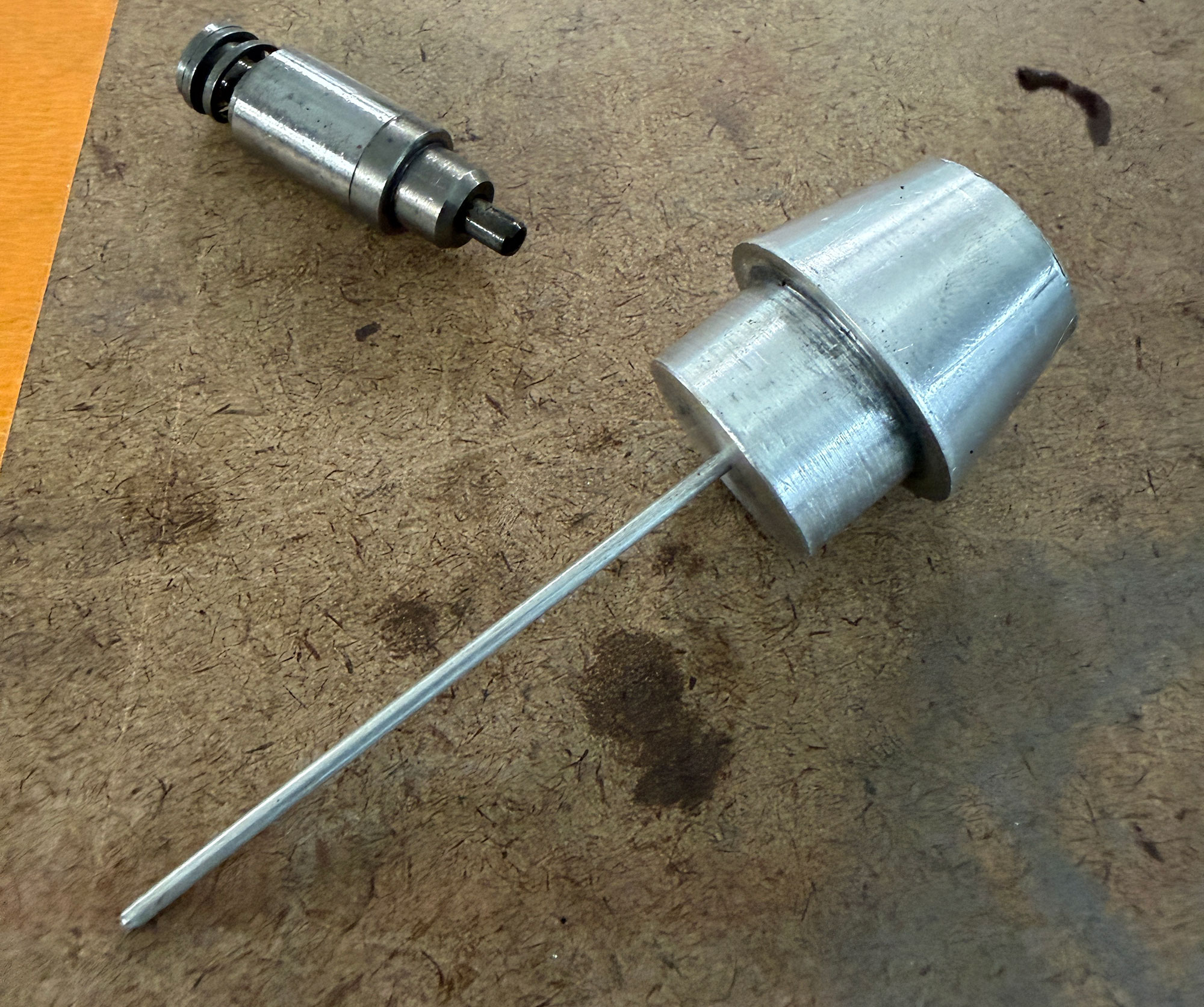
Admit it—the first time you removed and replaced the rocker shaft/rocker arms/pushrod/pushrod tube on a direct-drive Lycoming with hydraulic lifters, you were stumped as to how you were going to get the rocker shaft back in. Then along came an experienced mechanic who simply said “bleed the lifter” and walked away. You scratched your head, then went and found a big cup of coffee with which to bribe said mechanic into coming back and explaining what he meant—and showing you the trick. Sure enough—fish out the lifter from the cam follower with a bit of safety wire, then pop that safety wire in the tube end with a piece of safety wire (stabbing yourself with the safety wire in the process), and now the lifter was compressed enough that when you put it back in, you could get the rocker arm and shaft to line up and go together! We’ve all been there—and pretty much anything that you do with the top end of a Lycoming requires you to do this.


Well, let me give you a trick to take the painful part out—that thing about “stabbing yourself with the safety wire.” It turns out that a piece of 0.090-inch piano hinge wire fits nicely inside the lifter with room around the diameter for the oil to escape. Just cut a piece of hinge wire 4 to 6 inches in length. Polish the end so it is smooth, deburred, and won’t scratch the tiny ball inside the lifter. Find something to serve as a handle (I used a blivet of aluminum I was shaping on the lathe and discarded because I made a mistake—you can use anything that fits in the palm) and drill a 0.090-inch hole in the middle. Insert the piano hinge wire, and you have a tool! Some of the best shop tools are those that you make yourself, and if you do much work on Lycs, this is one you will save and use over and over.

There’s nothing quite so satisfying than making a tool from the (heaps of) scraps of previous projects. Thanks!
Thank Paul and the rest of y’all for keeping these types of articles going.
Paul,
Actually that never occurred to me and here is why: You should NEVER touch that ball in the lifter with anything hard like safety wire or steel. This can scratch the ball and it can also magnetize it. Either way it can change the bleed down rate, thus destroying the lifter.
I use a plastic cable tie to release the ball valve or I pull the lifter apart to rinse it in solvent (and inspect the bore for scratches). Do one at a time to not mix up the parts!
To get to the hydraulic unit you have to take the pushrod out, the pushrod, the plunger cup etc. I don’t like to disturb any of that.
I have a plate of 1/4″ aluminum that is about 1/2 the size of the valve cover. Lower half. It spans the valve springs with a couple of V notches around the end of the rockers and has three holes that align with the valve cover screws. Use this as a spring compressor to get the shaft in without having to bleed the lifters. It does not take much compression if the cam is in the right position.