

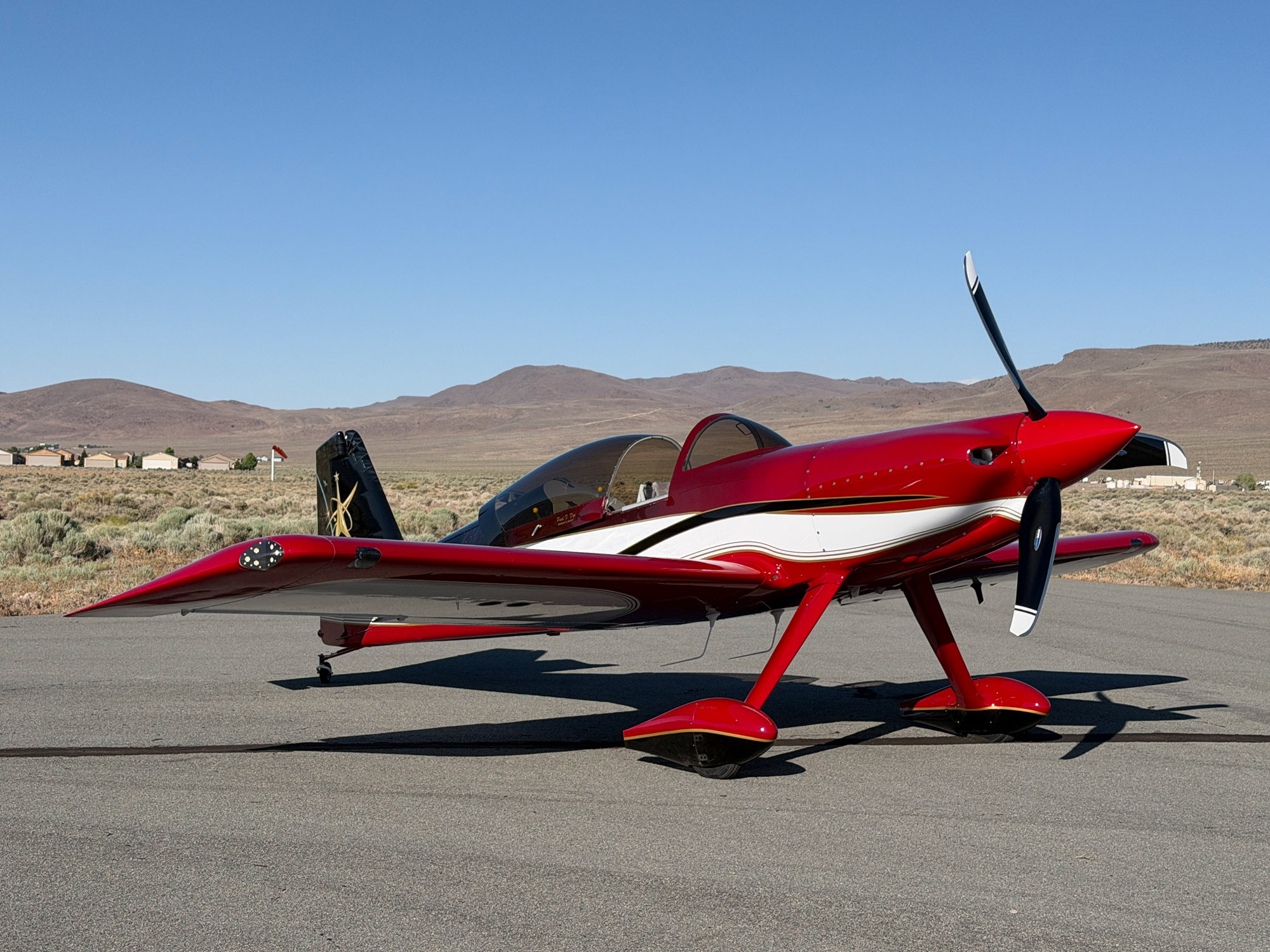
I began building my RV-8 about 23 years ago. I finished it in 18 months, got it flying, and now have about 2,300 hours in RV-8s. I have always described the airplane as “the thoroughbred of the RV line” (at least for the two-seaters) because it does everything well; it has excellent speed and range, and has a forward baggage area to increase volume (and CG management) … it’s just a great all-around machine. It’s nowhere near as nimble as my RV-3 … but few planes are! Van himself has said many times that “the RV-8 flies the way most pilots THINK a P-51 flies,” and that’s true … but in truth it flies much lighter and more maneuverable than the Mustang. The Mustang will do whatever you ask — but you’ll have to put a little muscle in to make it happen.
As an RV-8 fan, I can honestly say that I never really lusted after a Harmon or F1 Rocket. Sure, I wouldn’t turn one down, but it wasn’t on my “I’ve got to have one of those” card. And then a deal on an untouched quickbuild F1 kit along with a unicorn of an engine came along, and I began the two-and-a-half-year build toward becoming a Rocket owner. I’ve now been flying the airplane for two months, Phase I testing is complete — and I am well into learning how to actually get the most out of it as a fast, long-range cruiser. Here are a few observations on what I have learned so far …
The biggest single difference between the Rocket and the RV-8 on the runway or taxiway environment is that the long nose coupled to long landing gear legs makes it more like a true taildragger of old when it comes to seeing ahead. I rarely have to S-turn a normal RV to see ahead while taxiing, but you really don’t want to go very far on the ramp or down a taxiway in the Rocket without having a look ahead by swinging the tail. I am glad that I installed a taxi camera on the belly, but even with that electronic aid, I want to look ahead with my own eyes once in a while. You really want to make sure that you have the airplane lined up straight before adding power for takeoff, because any misalignment will be multiplied quickly as you build speed. And the same is true when landing—make sure you are straight before dropping the tail in a wheel landing or flaring to a three-point, because you can find the edge of the runway pretty quick if you don’t.
I have found that the easiest “normal” landing, given a reasonable runway length, is a tail-low wheel landing—just the way I prefer to land an -8. Sure, if I want a short landing, I want a three-point, and you have to be competent with them. But landing with a view over the nose and the speed necessary to have good rudder control is a no-brainer. Flight testing showed me I can easily land and get stopped in 1,100 feet even with a wheel landing, so I’ll take the visibility when I can get it. One thing I was warned about in advance was that if you bounce with that long titanium gear, you will be launched back into the air, and a PIO could very well be in your future. This means you really want to have a good feel for the touchdown and be smooth, thinking your way through every landing. This is not a plane you fly casually!
In the air, the Rocket is solid, more solid than the -8, which is more solid than the smaller RVs. By solid, I mean stable and requiring a little bit of effort on the stick to maneuver. But ANY of these airplanes are light and quick on the controls compared to a typical certified airplane like a Cessna, Piper, or Beech. Airplanes are generally more solid and less maneuverable with forward CGs, and the Rocket lives there when solo with fuel. I carry 50 pounds in the baggage area when flying local and alone, and that makes it handle more like the -8. Of course, airplanes also get more “solid” with speed, and the extra 20 knots you get in typical flight regimes with the Rocket are noticeable compared to the RVs.
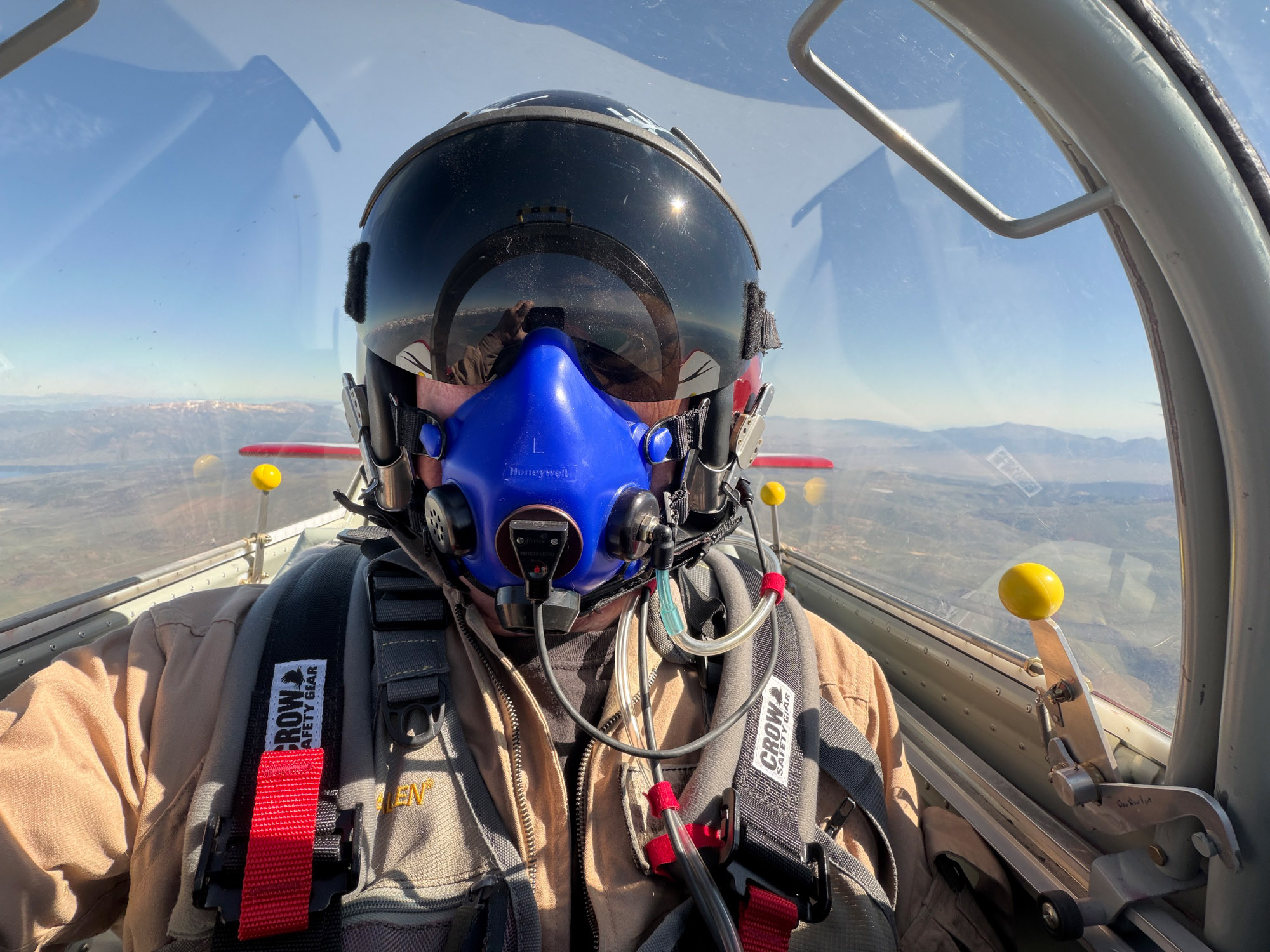
I do miss the forward baggage compartment—not so much for the weight-carrying capability (the cabin useful load is similar to the -8 once you account for the increased gross and increased fuel), but for the organization. In the RV-8, I tended to put “permanent” traveling items in the right-side “well” of the forward baggage area—things like the canopy cover, spare oil, tools, tie-down ropes, etc. I could then put a couple of daypacks up front when traveling, and duffel bags went in the rear. In the Rocket, the “travel gear” has to live elsewhere. Fortunately, I have a little compartment under my thighs for oil and tools—but the tie-down kit has to sit on the floor in back, and the canopy cover lives in the back of the long aft baggage “tube”—with a small rope tied to it for retrieval. It’s not bad at all—it’s just different. Old people don’t like “different” …
The big fuel tanks on the Rocket are easier to fill than on any of our RVs—fill to the top of the neck and you’re done! In the RVs, the fuel slowly drains through the ribs and you have to tease in the last five gallons per side. My guess is that the holes in the ribs are larger in the Rocket. Whatever it is, the job of fueling is quicker and easier.
The top of the canopy on the Rocket is lower than on the -8, so you feel a little more confined. Perfectly acceptable for me at 5 feet 8 inches, but someone much taller would have to rejigger the cushions or seating position a bit.
I find that pulling the Rocket around on the ramp (by the prop) is more difficult than doing the same thing with the -8 because the nose is so high up—you can’t direct as much of your effort “forward” because you are always pulling “down.” It’s easier to push it around backward by the horizontal tail (carefully, of course!)—or I have been using the electric tug I built to move our big Dream Tundra around. It could also be that I am getting older—something I hate to admit but must consider …
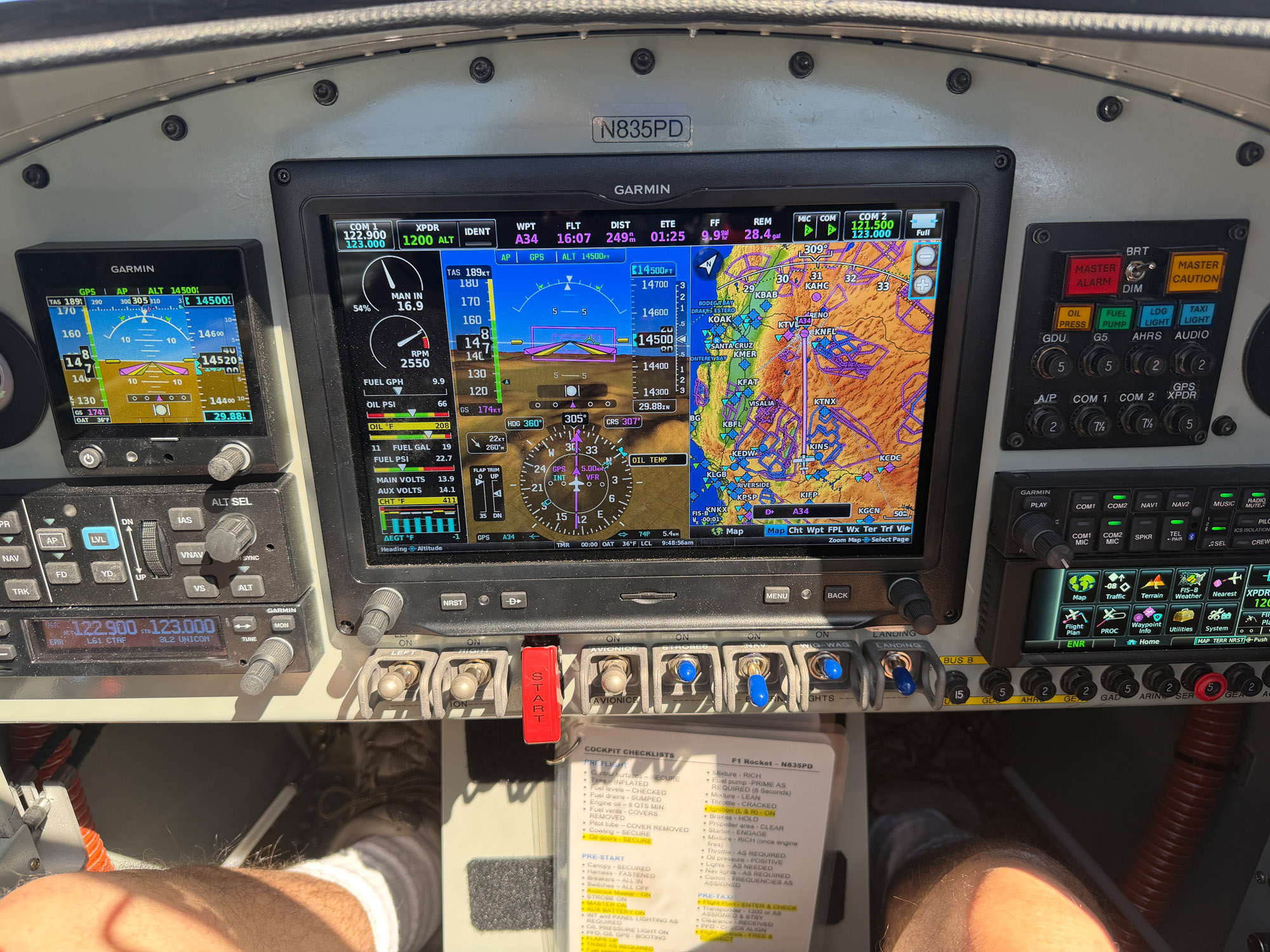
In terms of KTAS per gallon/hour, the Rocket is actually a little bit more efficient than the RV-8. I have been cruising it at about 187 KTAS at 10.0 gph at about 15,500 feet. If I bring the mixture back to 9.0 gph, I get about 179 KTAS—the RV-8 at 9.0 gph will do about 170 KTAS. So for the same fuel burn, the Rocket is faster!
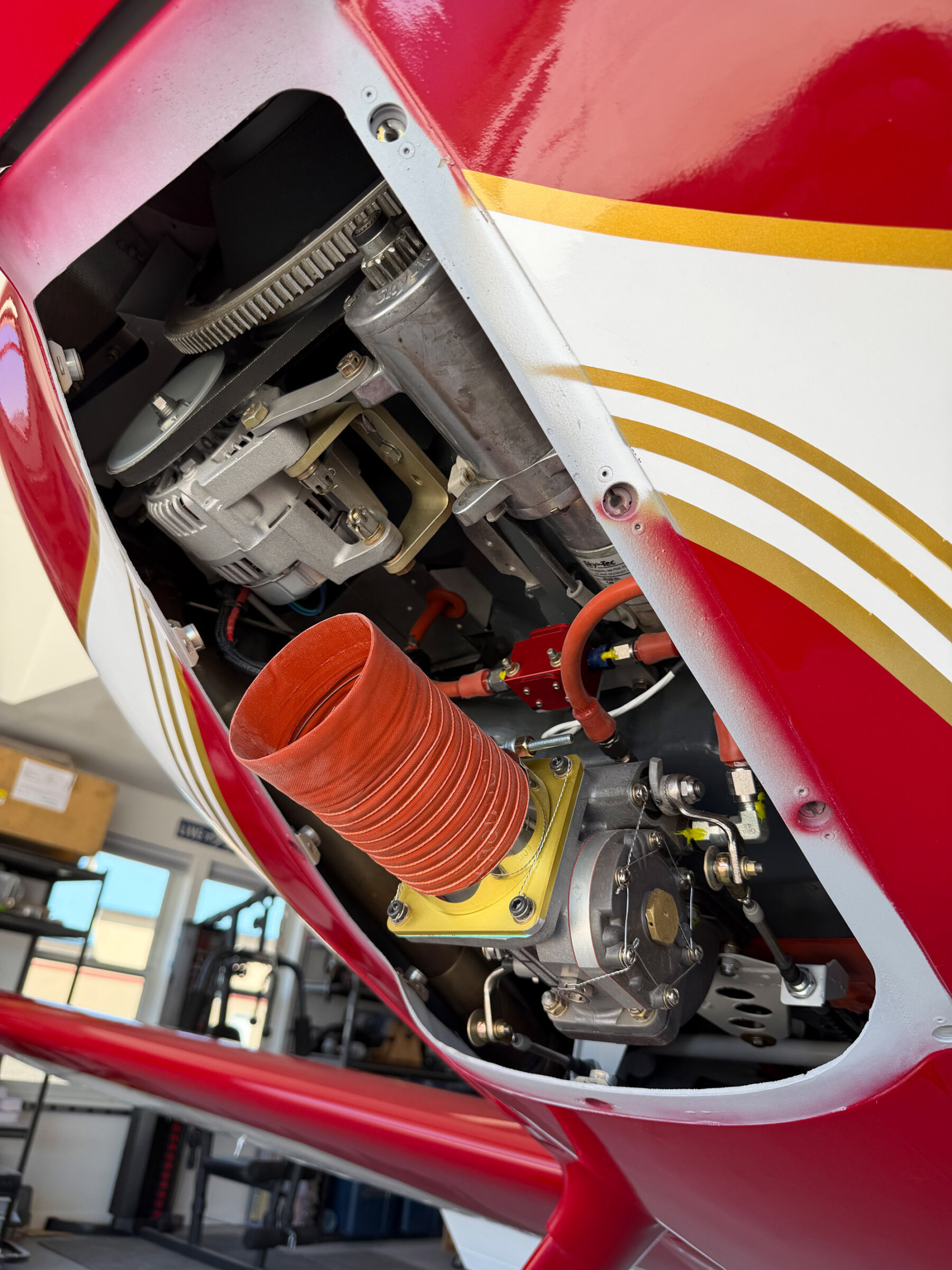
The Rocket, as currently cowled (without any adjustments from stock), runs hotter than the RV-8. Both CHTs and oil temps run higher—within limits, but hotter. I spend more time adjusting mixture and throttle setting in climb to keep the temperatures in limits than I have to do with the -8. It should be remembered, however, that no two -8s have identical cooling characteristics, with some owners struggling to keep their temps under control while others run impressively cool. I wouldn’t say that the Rocket is out of family in this regard—but I am going to explore exit area changes and/or cowl flaps to improve things as I get used to the airplane.
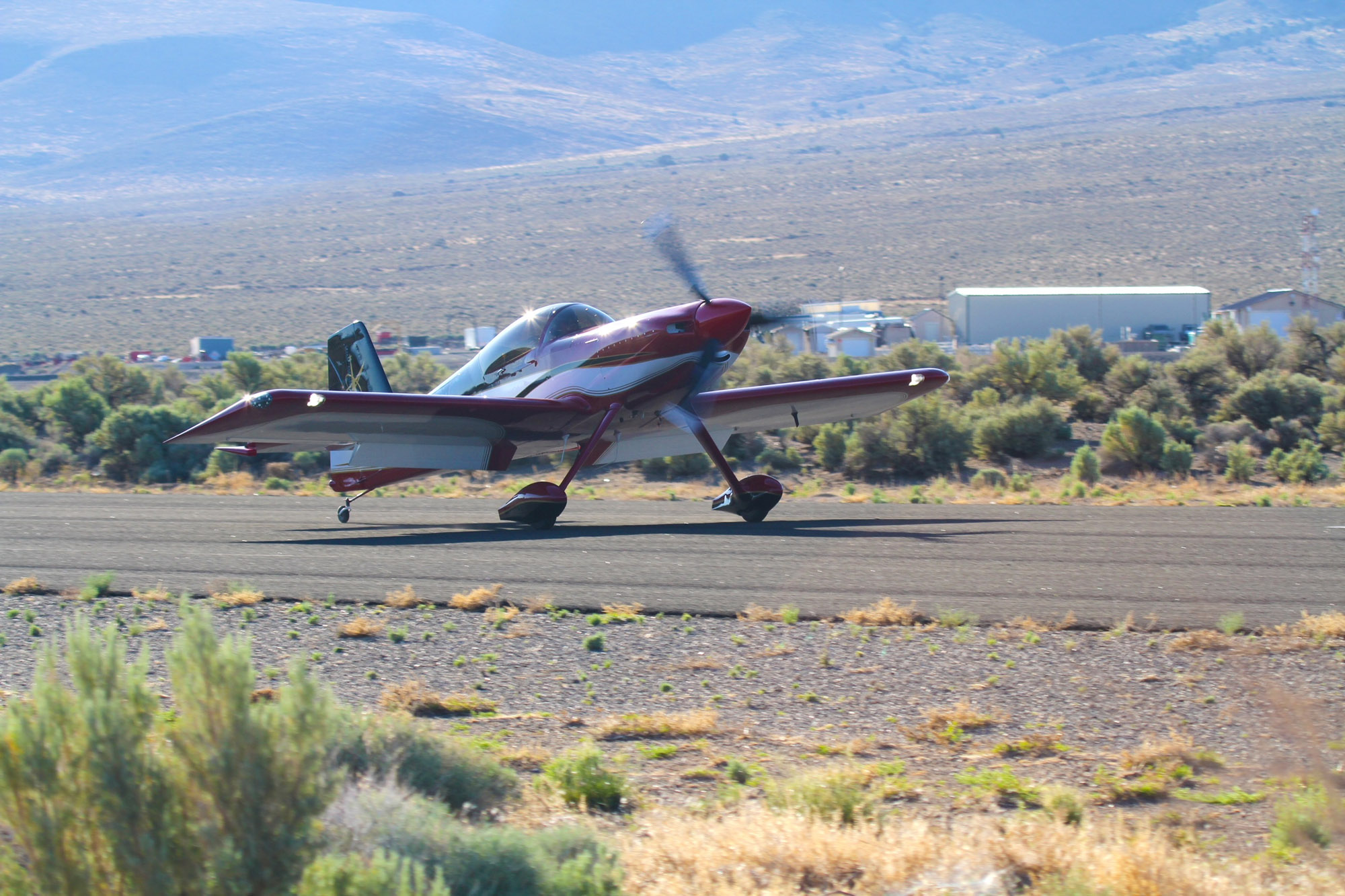
While the RV-8 is a very nice formation airplane, the F1 surpasses it in stability and performance. The Rocket has plenty of power to catch up in a rejoin, and a huge prop that flattens out to act as a massive speedbrake in an overtake. The RV-8 doesn’t have the same acceleration/deceleration capabilities—but anyone who has flown one knows it is a good formation ship. That just means that the Rocket is an EXCELLENT formation ship!
In summary, for an experienced RV-8 pilot, the Rocket is nothing at all to be afraid of. Respected—yes … but after the first takeoff and landing, the RV-8 pilot will realize that the Rocket is not more difficult to fly; you simply have to plan ahead a little bit more on directional control on the runway, avoid excessive braking to make that turnoff that you’re about to miss, and make sure that you S-turn a little more when taxiing. It’s a powerful, responsive machine that is stable—not twitchy—and is perfect for long-distance traveling.
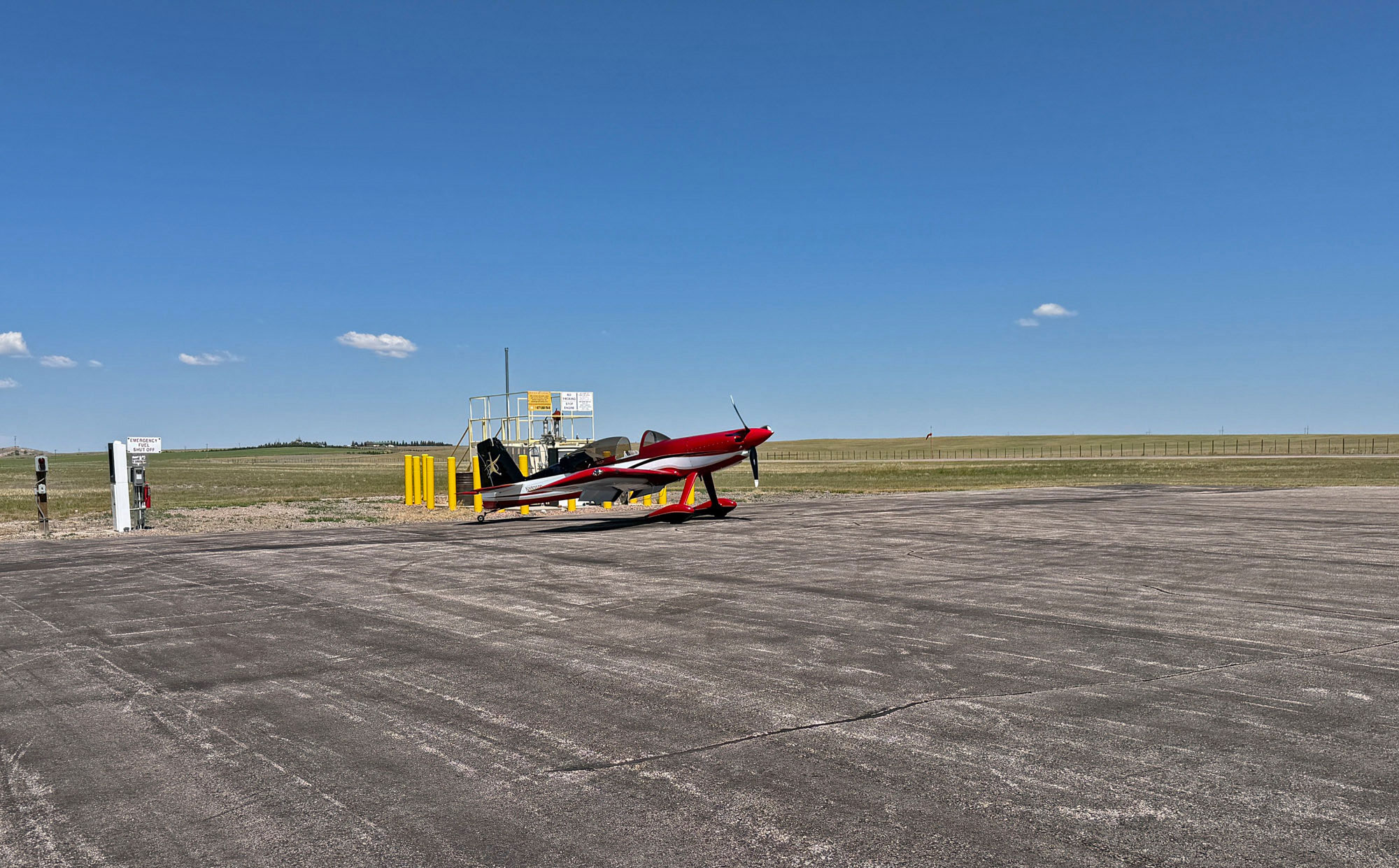

That is a beautiful aircraft Paul! Did a section/element takeoff in my -8 last year with a Rocket. Impressive get up and go. Enjoy!
Absolutely stunning. I hope to see your rocket in person someday