

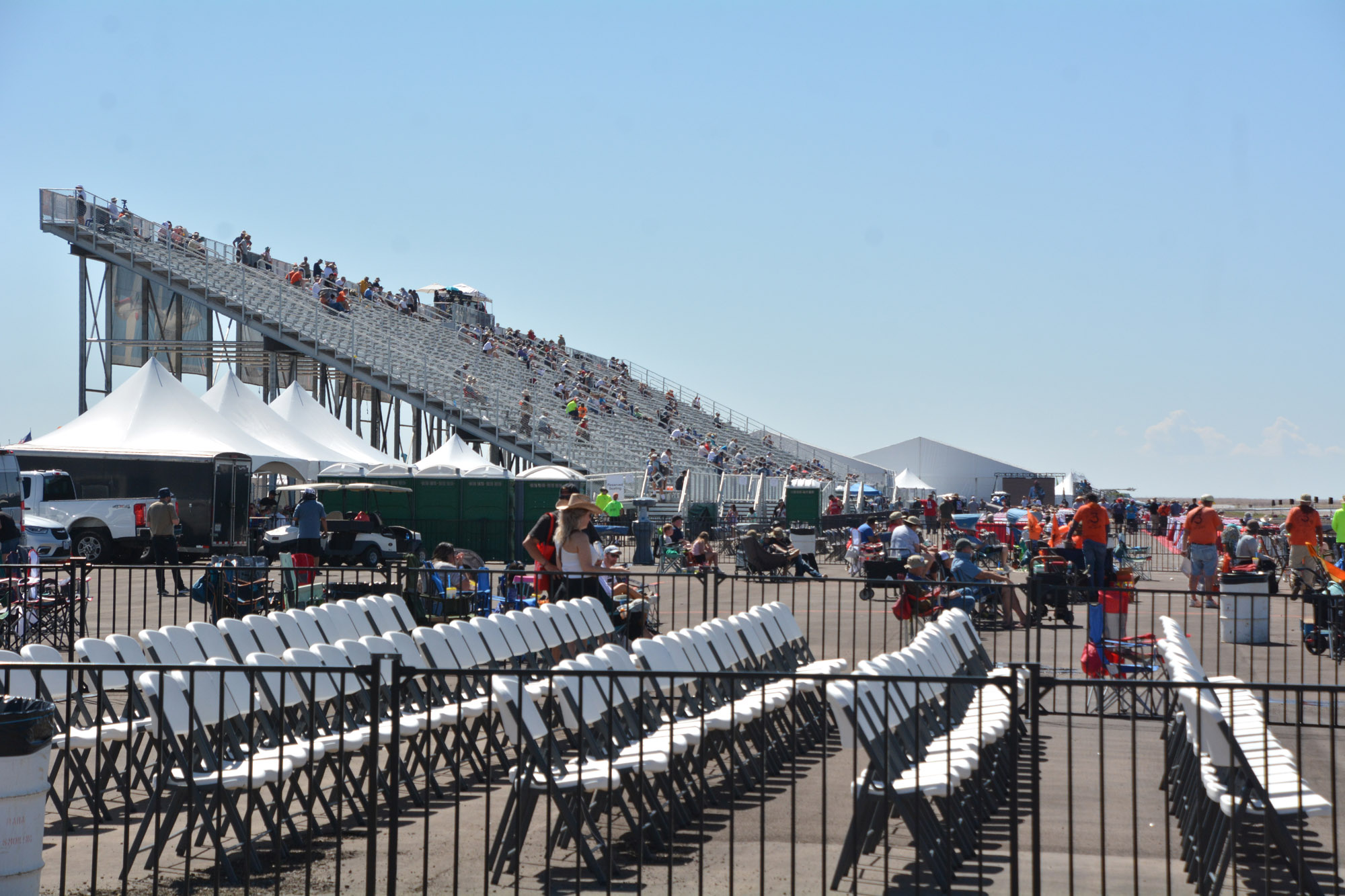
So, now we’re twice around the Roswell pylons with the National Championship Air Races. The first year was like all first years—full of promise and a free ticket to learn. But the second year starts a trend, sets a direction. It lets us know where we might be headed.
And that direction is alternately promising, yet pierced with existential danger.
So, what’s right about Roswell? For starters, it exists. That a large, multi-class air race takes place anywhere is a small miracle in 2026, and this is the background for all following arguments. People have moved mountains to land the NCAR at Roswell, and we all should acknowledge that. After all, Reno hosted the air races for six decades and ultimately decided it didn’t want that in town, and it wasn’t like Chicago was going to resurrect Meigs Field for the honor, either. That anyone anywhere will buck the financial and cultural headwinds for a major league motorsports event these days is exceptional, let alone something as esoteric as pylon racing.
But wide-open New Mexico sees success with aviation events, witness the Albuquerque Balloon Fiesta, and the state has put amazing resources (code speak for train loads of taxpayer cash) in the Roswell NCAR spread, plus a much smaller but still significant effort into the Sport class SkyFiesta pylon race in Las Cruces. There is a three-year contract in place for the NCAR in Roswell, so the 2027 event is a given, but we can expect difficult questions after that.
All that state money has resulted in a fine place to race if you talk to the Roswell racers. Acres of new paving have formed an expansive staging area for racers’ pits, grandstands, and their camp-following concessionaires, STEM labs and so on. The racecourses themselves are typically larger, less G-intensive tracks, and when someone decided to lay the racecourses over the desert instead of over the pair of two-mile-long existing runways, a third (!) 5,000×60-foot emergency runway was paved on the far side of the faster courses this year. Try that in the Windy City.
And the infrastructure effort hasn’t been one and done. When rain inundated the Roswell pits in 2025, extensive new drainage culverts and above-flood ramps appeared in 2026. Rome in one day and all that; it’s holding true in Roswell so far.
Money has helped the racers, too. The purse has been raised for Roswell, and accommodations such as tents for the Sport class and hangars for F1 and Biplane are widely appreciated. It’s been a long time since we heard from happy racers, so that was good news.
If nothing else, Roswell has room. The sort of room that won’t be encroached on in any foreseeable future, which is the same as a promise to settle in for the long haul. If it otherwise makes financial sense, the bar to long-term investment in the Roswell event is low.
But then, there are the problems at Roswell. Overwhelmingly, it’s Roswell’s location far from a major population to draw from, and simultaneously at the end of this nation’s transportation system, posing the existential threat to its long-term viability. Getting to Roswell is a slog, no matter how much whitewash you splash at the issue. Yes, there are now airline flights right to the racing airfield, but they are necessarily expensive. And when you get there for race week, a rental car is far over $600 for three days. This probably isn’t even gouging, either, but likely the reality of having to truck in extra cars into what is a tertiary rental car market the other 51 weeks of the year. It still makes sense to jet into Albuquerque or El Paso and motor over three hours in a rental car to Roswell.
Should you be the hearty, drive-yourself racegoer, then Roswell is simply too long from anywhere, meaning a large population base to draw from. Reno was a California race run just over the border in Nevada. It was a minuscule fraction of nearly 40 million Californios, think what you will of them, who made Reno possible. It sure wasn’t the population of eastern Nevada spending their money in Reno that kept those races going.
Roswell has the same geographic disadvantage as Reno except far worse, and there’s no California nearby to save it.
Then there is the much-ballyhooed bit about insufficient motel rooms in Roswell. It is an issue, and what is not often admitted is the condition of some of those rooms. Sure, the guys don’t mind partying in fish camp motels once a year, but she does. Even the big chain accommodations in Roswell can have dirty carpets and scratched paint. The town just hasn’t had to attract and hold a three- or more-star audience previously.
Naturally following such remote and underserved status is the piracy commerce around big events in small markets. Event pricing is a reality, and here we must make a special acknowledgment to the Roswell mayor who’s gone out of his way to bring to heel the more entrepreneurial hoteliers in his town. At least from a pricing perspective, the local leaders have truly gone to bat (perhaps not literally) for the racers and fans, to which we’re pleased to give deeply appreciative thanks for such extraordinary effort.
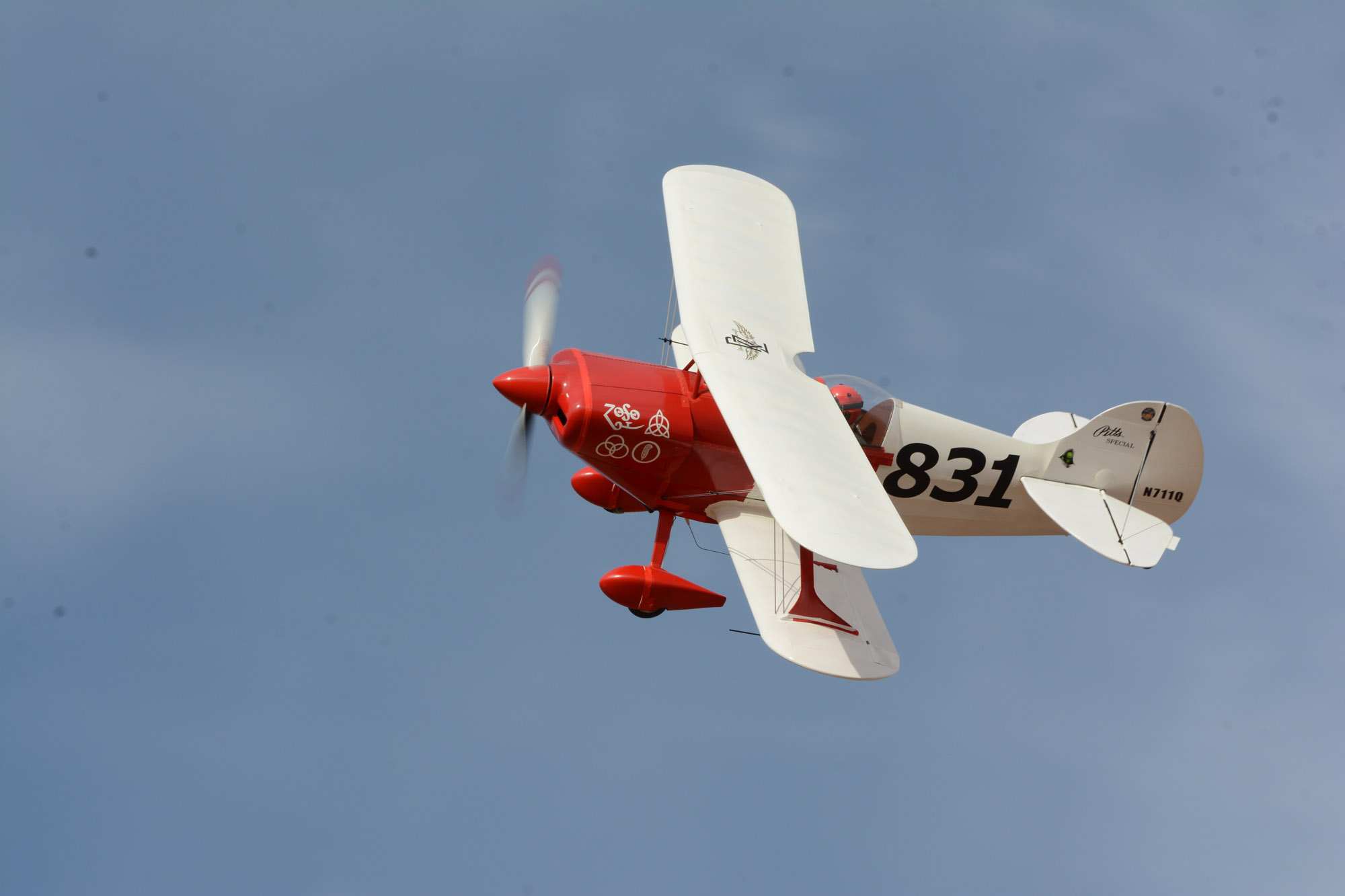
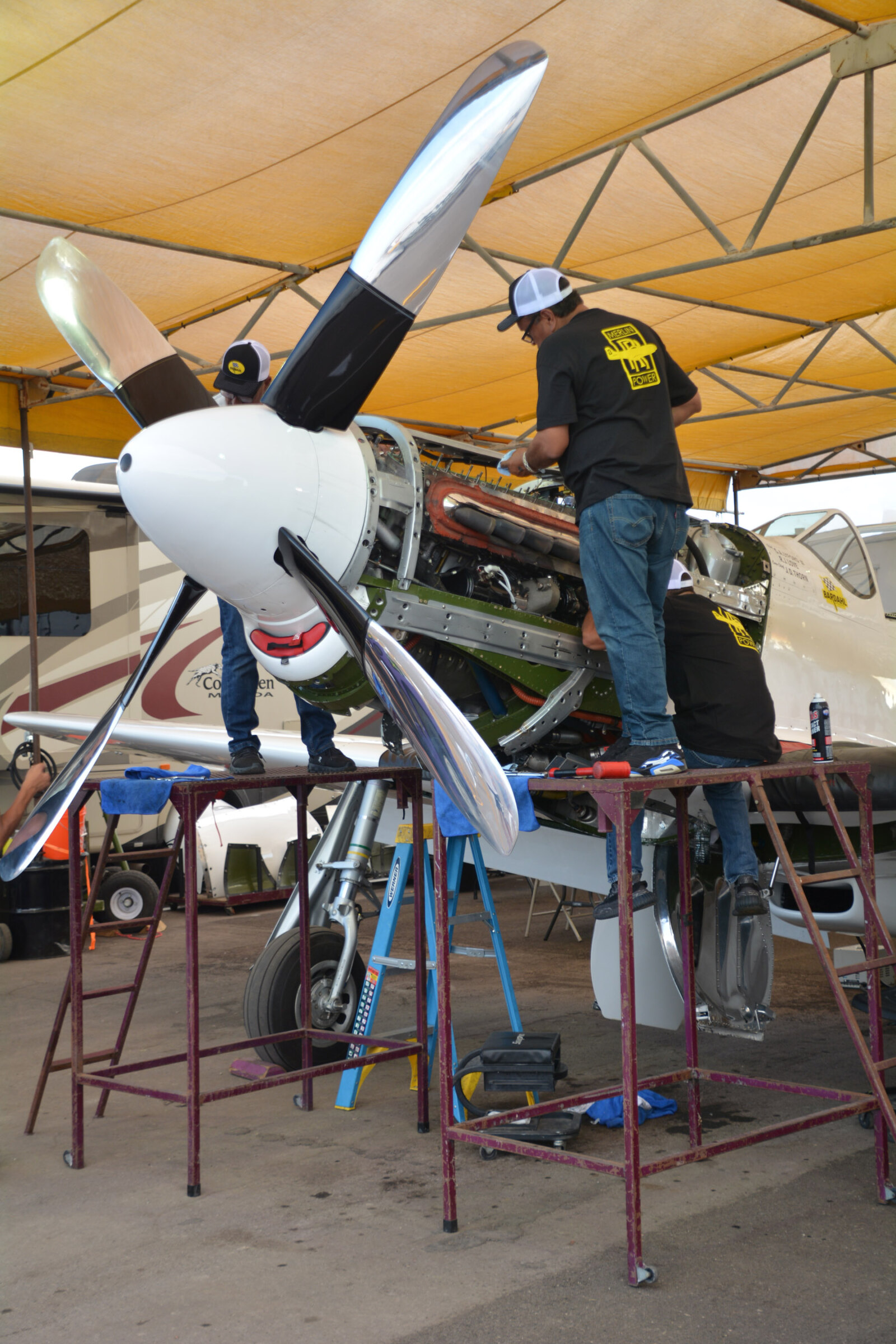
Next is the product itself, the races. We do well to remember the NCAR saw scarily declining attendance in Reno for years. This was no blip, but an established trend. The demographic interested in air racing—at least as it’s been presented—is now very old. If you can remember Pearl Harbor personally, you’re old; if you can remember the 9/11 attacks, you’re already 30 or older. So the nostalgia of hearing a Merlin sing or feel the old emotions swell in the wraaaaap of a T-6 prop isn’t the inducement to Roswell as it was to Reno fans 60 years ago. Today’s youth are native to a far faster world, one saturated with stimulus and instant gratification. The luckier ones don’t think much of jetting to Europe for an early college-years walkabout. Propellers on airplanes are quaint, and anything less than six government jet fighters aurally pounding all speech and cognition to impossibility is tame. From a noise and blinking-light perspective, air racing leans to the cerebral rather than the tangible, and that greatly diminishes the prospective audience.
To grind the point, the masses have no personal understanding of aviation, or the skill and practice it takes to run a consistent race line or execute a slow roll 200 feet above the ground. It’s all spectacle to them, and an RV-8 running a 275 mph lap is hardly a spectacle to anyone, no matter how improbable the accomplishment.
Making matters worse, what spectacle there is, is kept too distant at Roswell. It’s simply too far from the spectators to the home pylon. And in an unfortunate confluence of celestial mechanics, the late-afternoon races at Roswell are backlit to silhouette by the famously powerful New Mexico sun. Even experienced racegoers—and the announcer—had difficulty in identifying precisely which P-51 that was motoring by in the big Gold race last weekend.
Roswell is also too expensive for the local crowd. A guy and his date, sitting in the stands and the car parked within expeditionary hiking distance of the main gate, is $200 for a day if you include the usual grilled gopher-on-a-stick nutrition and a T-shirt to memorialize the agony. Charging $40-plus to park in the endless expanse of the Roswell desert is ironically sinful.
Furthermore, there is the weather. Granted, this is a tricky one as some like it hot, but the only people we encountered who thought unshaded, egg-frying aluminum grandstand seating “just fine” were mid-20s youth from Amarillo, and we all know about Texans. All the rest were wilting under an absolute hammer of a sun, and it was 90-plus in what precious shade you could find.
So the fans voted this year by staying home. We hate to say it, but there’s no other way of putting it. Attendance was visibly down from last year, which was pretty much curious locals augmented by a few diehard fans making a pilgrimage. And it wasn’t just the spectators. The racing fields are thin with just one flight of T-6s and just enough Biplanes and Formula 1s to put up a Gold and Silver race, to cite a few examples. Then there are the volunteers upon whose back nearly everything at the NCAR is carried. Pylon judges, shuttle-bus drivers, timers, scrutineers, registration personnel, and so on are all unpaid servants to the NCAR. One shuttle-bus driver told us he and his wife, both many-year veterans of Reno, spent over $3,200 to volunteer at Roswell this year. They’re in their mid-70s, and the fact he brought up the subject says the cost is an issue.
We could go on, but the point is clear. Reno was a unicorn, and Roswell is the new reality. It’s a new venue with new possibilities and many new challenges. So what’s to do?
Assuming the NCAR stays in Roswell, and after what the state of New Mexico has spent, it better, then the town’s isolation and weather are the first two things to tackle. Unfortunately, that’s mainly work for a higher-than-human pay grade, but we can always try. First, making the big air races a destination event, catering to recreational vehicles, could help the housing situation by bringing in our own. Give the crowd a reason to stay at the airport in the evening after the races, a concert or night show, and RVing gains legitimacy. Pre-positioning rental RVs would help if that’s financially possible.
A huge advantage to Roswell is the room and ability for fly-in traffic, something Reno could have really used. Developing a fly-in culture to the air races à la AirVenture might not move the attendance needle much, but it would cultivate a cadre of influential fans.
There is much talk about moving the NCAR date to October, and yes, this would have been a fine example of the foresight expected when selecting a race venue, but as the locals point out, it’s a bit late for that. October is already booked in Roswell by multiple other events because it’s the one month with predictably bearable outdoor weather there. The motels are already full; bulldozing the NCAR on top of them would only cannibalize hospitality sales rather than extending their season.
Springtime? The almanac says April is best for temperatures, but the worst for wind, and howling, gusting, sand-spitting wind is disqualifying in the desert, especially when airplanes are involved. May is as hot as September, albeit drier, and March still sometimes freezes overnight.
So, we’re left with mitigating the heat and thunderstorms of September. Cooling stations for intermittent respites between races would help; some form of shade is mandatory. One boggles at the sales opportunities offered by cooler, shadier spots in a Roswell summer. Imagine climate-controlled box seating for the upper crust; imagine large, open tenting with misters for the hoi polloi.
As for the product—the races themselves—getting the fans more engaged can be done by moving them closer (see FAA), or running larger, noisier, faster airplanes, and educating the audience about what’s going on.
OK, moving the kids closer is a nonstarter, but faster, noisier airplanes are possible with afterburning jets. That might make the Mach course Roswell’s saving grace. This seems a pursuit worth the effort for the promoters.
As for educating the masses, providing a combination of technically in-depth material to read or watch would help with the technically oriented fans (and they are a real factor in air racing), while scheduling pit walks and building up the pilots’ and crews’ personal stories would do wonders for the human-interest story so important to everyone else.
Racing is far more interesting when you know something about the people and machines zooming past. This isn’t very expensive to do and would go miles to dismantling the elitist gap between participant and spectator in air racing. Instead of seeing the fans as a demographic to be milked of their discretionary income, why not welcome them to your air-racing party as guests to be shown around and introduced?
While it’s hard to give away money when you’re not making it, getting involved in Roswell civics is necessary to build the two-way street a big, invasive event in town imposes, and the lesson we should have learned when we were kicked out of Reno. Let the jet set build a vocational school at the airport, for one example. There are plenty of old airliners to dismantle, the industry needs technicians, and Roswell needs hope for its youth.
There are other concepts, of course, from immersive, real-time video and data streams to robotized timing and scoring. In short, there are new ideas, plus a host of proven tactics, to employ at Roswell. Success is hardly guaranteed, but the time to start trying something new has already passed, and 2027 looms. Do we have the leadership to succeed?

Maybe having a electric air race. Maybe a electric bike race. Today, there are new airplane designs, but they pretty much look alike. It would be nice to see a totally new design, think Rutan in the 80s. I have a Long Ez and when I go places, I still get a lot of questions. When I go to sun and fun, I like the stol races and drag races.
As far as weather and hotels, don’t know. It sounds like a pretty bad problem.
Ron
The airport at Roswell is good for air racing. And maybe it’s higher elevation compared to other locations that were offered was a factor. But the cities location is not good. I remember going to air races in Miami in the early 70s. And it was close to sea level. They were held at the Tamiami airport on the north side. Some other locations near major cities were offered but not selected. Like Buckeye AZ or Thermal CA. One near Phoenix and the other Palm Springs. But yet they chose Roswell. Still wondering about that.
Thank you, Tom – you’re spot on. The other issues are fixable, but I’ll predict that ultimately, Roswell’s location will be too far from anything else to be successful in the long-term. The other finalists like Pueblo, CO and Casper, WY would have been better choices, me thinks. Nonetheless, I’ll return to ROW next year and enjoy it while I can.
Excellent article Tom!
Here is one way to solve the accommodation problem at NCAR:
Next year there might be an abundance of temporary ICE detention facilities available. They have proven themselves in the desert climate with AC and a toilet. They are quick to set up and can house all the spectators Roswell will ever have… at a reasonable price!
Great article Tom! Makes me want to go support NCAR in Roswell! Well done!
This is outstanding, unbiased journalism. Care to have a go at the mid-term elections?
I think the focus needs to be put back on what made the air races so big in the first place. And that is the unlimited class. I’ve been a die hard fan for a long time and I’m willing to bet that most of the long term fans would agree that the fastest way to pack the house would be figure out a way to bring back the competition in the unlimited. Names like Rare Bare, Strega and Voodoo to name a few. Figure out how to make that happen and the crowds would be huge
The races had been going 20 years by the time Dago Red, Strega and 30 by the time Voodoo showed up, in 1970 there were 12 Unlimiteds. We are starting over, and airline pilots buying used military surplus fighters that are supported by ex-crew chiefs from the AAF with cheap, plentiful spares is no longer happening. We’ll see what happens.
Yes I agree it’s a nearly impossible task to ask for but it would bring an unbelievable turn out if it did happened
Great article and I was one of the RV participants who drove 1,400 miles from Montana to attend my first air race(s). While there was certainly room for improvement in all areas as noted (especially the overpriced RV accommodations offering no services), I ended up leaving after 3 days (arrived Wednesday, left Saturday) due to boredom: while the competitors were impressive, the schedule was too repetitive (same six aircraft in each category, each day), and the lack of shade made it challenging sitting through several hours of daily qualifying heats. Perhaps I just didn’t appreciate what I was experiencing, but it would have been nice to have some additional aerobatic (to the Thunderbird and Bonanza) performers filling the gaps and more static displays. I did meet some great fellow aviators in the “campground”, and my hat’s off to the organizers and volunteers who provided transportation, security, FREE water, clean grounds and clean port-a-potties. While I hope the event gains solid footing in Roswell and survives, I likely will not return given the distance and current format.
The problem is that the current management only wants rich people to show up.
Parking needs to be more like $5 a day. General admission for a day needs to be under $20. Maybe under $15.
They need to stop trying to gig everybody, every chance they get. They’re making it too expensive to attend, which is pretty damn stupid when you consider how hard it is to get there if you’re not rich. And the Air Races needs the average person if they want the numbers and want the money.
Sadly there’s been a lot of questionable decisions made since the last change in management – getting rid of the volunteers and using paid services that have cut into the already thin margins even farther.
(Former Box Seat holder).
Wow, Tom, that really was beautifully written. Thanks for the thorough analysis.
Absolutely, outstanding article. Wisdom filled, common sense, and realistic analysis of a dying motorsport being on nostalgic life support.
Names such as Rare Bare, Strega, and Voodoo would motivate the Unlimited faithful to help fill the stands some. But what is needed is more than the Unlimited faithful to be economically viable as Tom well pointed out.
Can you imagine a gaggle of turbine singles like PC-12,s…TBM’s…Epics going at it? What about bringing back high performance piston singles such as Bonanzas, Meyers/Aero Commander 200’s, Comanches, and C210’s? How about a Baron, Aerostar, C310 twin class? What a noisy spectacle with Twin Beech’s rounding the pylons. If you can do aerobatics in them, you can run them around the pylons. Tap into the homebuilt market with Long EZ, RV8, Harmon Rocket classes. Cirrus VisionJet class, Citation, Lear racing, etc. Lots of noise and speed.
T-6 racing is all about the noise and closely matched performance…not 400kts speed. You can see them, hear them. Use pylons similar to those in the Red Bull competitions. Roswell would be an ideal venue for a Red Bull style competition that allows the spectators to easily see a combo of pylon racing combined with vertical maneuvers.
As already opined, quit gouging the public because the promoters think they can attach any price because of the Unlimiteds. $40 parking fees, expensive yet limited RV services, with minimum, at best motel/hotel accommodations. Aluminum seating with out shade in 100 degree+ heat looking at barely visible pylons literally miles away is not the kind of accommodations that makes people come back.
Nostalgia does not attract new customers. It protects the faithful until they cannot attend. Nostalgia has a way of overcharging for ruminating over the “good ol’ days” of Super Corsair, Bearcat, Mustang, including Stiletto, Red Baron, Miss Ashley, and Conquest 1. Those airplanes are gone forever. Miss Bardhahl and Miss America are the last of the breed…and the breed is almost extinct.
Time for new thoroughbreds that are more easily attainable, recognizable, and are currently supported. Time for new legends. Imagine flying cross country in your Baron, park in pit row, add your number plate, spend a few days hot rodding around the pylons, then climb in and fly home.
Roswell has potential. But for air racing to survive, more classes are needed, adding more airplanes per heat, which leads to more qualified pilots, with the probability of more use of Roswell not only for racing but the place to get qualified as a pylon polisher. Offering classes using a variety of common, identifiable airplanes from the experimental, GA, and commercial/corporate ranks would make air racing a truly spectator sport.
Gee, we need a few more Clay Lacy’s who would think out of the box racing a DC-6. Think about a bunch of DC-3’s turning left!