


August 2018
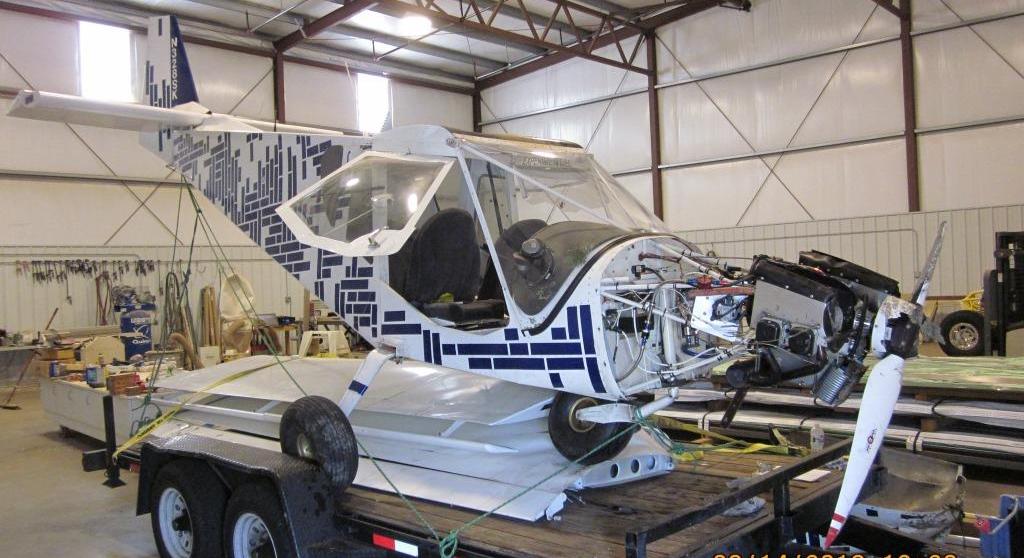
The pilot reported that they flew in the local area for about 20 minutes, and then smoke entered the cockpit. The pilot declared an emergency and headed toward the departure airport. Within 1–2 minutes, the engine lost all oil pressure and then lost total power. The pilot initially attempted to glide to the airport but, because it was too far away, decided to land on a road atop a nearby levee. The airplane touched down normally, but due to wind, the left wingtip struck the ground; the airplane spun, veered off the levee, and sustained substantial damage to the wing and fuselage.
The engine, a ULPower 350iS, was disassembled and examined in detail. All four pistons displayed evidence of significant erosion damage consistent with detonation, with at least one piston eroded to the point that it could no longer seal against the cylinder wall. A common cause of detonation is using a lower-octane fuel than specified by the manufacturer. The damage was consistent with the use of fuel with an octane rating significantly below that required for the engine. Although the pilot did not specify the octane rating of the fuel that he used, it is likely that he used fuel below the required octane rating.




Wouldn’t cylinder head temps give this away?
I would have thought so
NTSB: “According to the pilot, who was also the builder of the airplane, the airplane was for sale, and the
accident flight was a demonstration/familiarization flight for a potential buyer. ”
Oops.
(The report also shows that there was a lack of clarity in the engine owners manual about the octane rating needed by the engine…. AKI 93 in one place, “regular unleaded” in another.)