

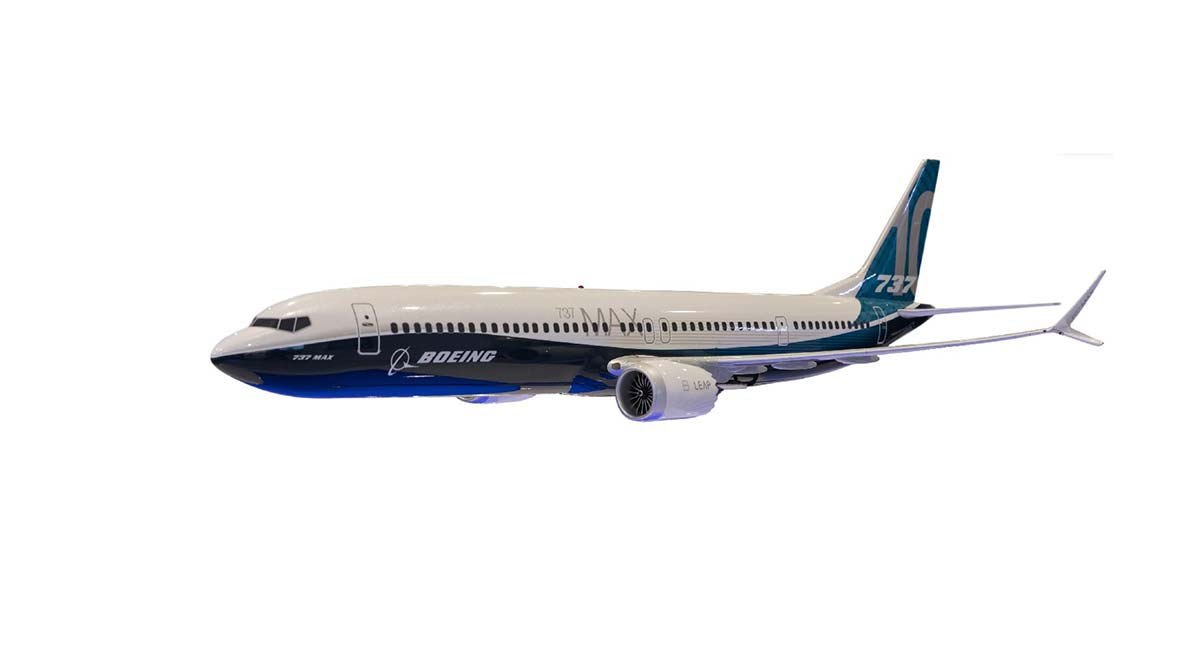
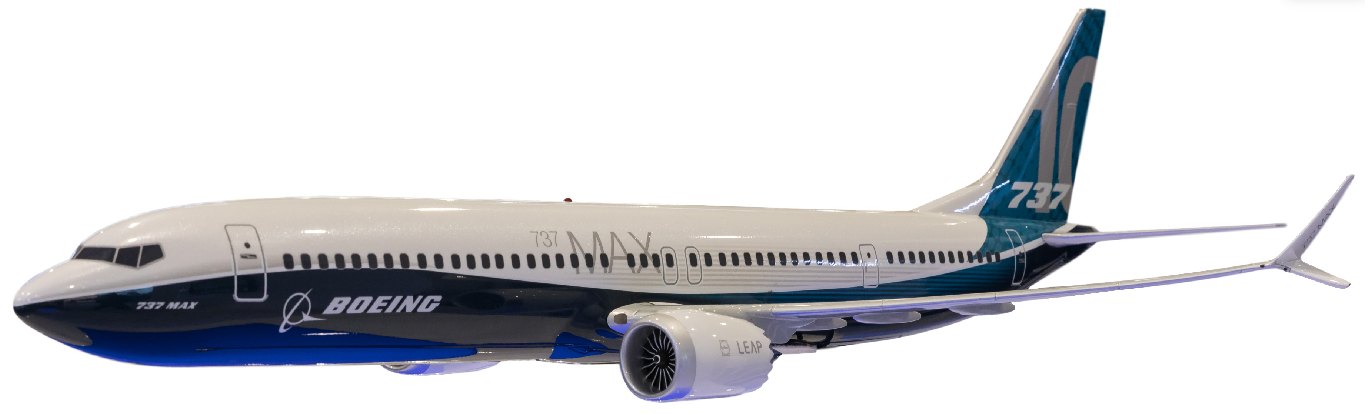
Boeing is now free to finish certifying its largest 737 MAX model after the FAA declared a known software defect to not be a safety of flight issue. The company told authorities last week there was a glitch in the flight management software for the MAX 7 and MAX 10 after a missed approach and it was thought the fault would delay the imminent certification of the 10 and first deliveries of the 7. “Following a thorough review, a panel of FAA safety experts on Friday determined a software issue in certain Boeing 737 MAX flight computers is not a safety concern,” the FAA said in a statement. “The FAA’s Corrective Action Review Board made that determination because pilots retain full control of the aircraft and the indications to the flight crew are clear and unambiguous.”
Going missed apparently messes up the vertical navigation on the FMS when the pilots override the system. WestJet first alerted Boeing to the issue in 2024. Instead of rewriting the software, Boeing will send a letter to all customers with the latest version of FMS software telling them how to recognize and cope with the issue. There are no U.S. airlines affected by the software issue because none have loaded the system onto their aircraft because it’s so buggy. According to the Air Current, they’re using a 10-year-old version of the system because the new one has so many bugs. Both the 7 and 10 are certified with the new system so a rewrite would have substantially delayed both programs. Southwest Airlines has been waiting for years for the 7, which was developed specifically for the airline’s lower productivity routes. Southwest ordered more than 200 of the 138- to 178-passenger aircraft. The MAX 10 has a backlog of 1,400 orders and will hold as many as 230 passengers in an all-economy configuration, although most airlines get them with a business section configured for 188 to 204 passengers.

The corrective action as I understand it is to reinitialize and reload the flight plan into the flight management system exactly as one would do for each subsequent takeoff after landing. This procedure is required after every landing in a simulator as well. It takes time, it fully occupies one pilot. While airborne it requires a certain amount of haste, and it is fraught with opportunities for erroneous entries. It should never need to be accomplished on the fly while airborne. The FAA is just plain wrong on this one and needs to quit coddling Boeing once and for all.
Agree 100%. Going missed causes the problem. A major software rewrite shouldn’t be needed. Fix it before delivering plane 1.
As a matter of interest, can the Max 7 and Max 10 be flown to published minimums and landed safely on an as needed basis?
ZeroGee, does your “as needed basis”
include landing with a fire truck crossing 1000 ft down the runway from your touchdown point? We’re a community where go arounds for the slightest of reasons are being encouraged as it should be. A crew faced with reprogramming their FMC due to the prospect of going around will be tempted to think twice about doing so.
I guess my question should have been, does the FMC have to be reprogrammed or can the missed and a second approach be manually flown and made? I’m serious with my question because I left an organization a few years ago when, during a checkride, I was expected to program the entire (short 1 hour) flight, engage the autopilot at 800′ AGL on departure and then monitor for proper operation.
Legitimate question ZeroGee. Yes missed and second approaches can be manually flown and made. While we should all be capable of and train for it, company SOPs determine the answer to that in some degree for normal passenger and cargo carrying operations. In any case, such an event should be considered abnormal. No part 121 or well self-governed part 91 corporate flight department should/would consider it to be normal operating procedure outside of training. Normal operating procedure is to use all available resources to ensure successful and safest operations possible. No manufacturer or regulator should be making exceptions to the use of today’s resources by delaying fixes to degraded technological capabilities for any reason in this day and age.
And no FMC should require reprogramming during and immediately after a missed approach. Bad form on the part of Boeing and the FAA.
John, the article is a bit slippery in its wording (as in: messes up VNAV) as to what exactly happens on the flight deck when a Missed Approach is being initiated?
By laymans (non 737 expert) logical conclusion, both – Approach & Missed – should be in the system, yielding a fairly hands off procedure to be executed by the aircraft. I see little to no reason to have anyone fly the plane manually (unless its training in the sim), if the SOP’s say that the use available automation is desired.
Whats the airplane doing?
My experience is in corporate aircraft equipped with basically the same FMC, without the VNAV dropout issue. I also am not 737 qualified but understand the issue because I have flown the same system.
What the airplane is doing is during a go around after which VNAV flight director mode is generally selected, VNAV drops out taking with it the point of origin, routing and destination. If you’re needing to fly missed approach routing or a subsequent approach requiring vertical navigation (a non ILS approach) which is often the case after a go around, in order to get VNAV back, a total re-initialization and re-programming of the FMC is required – same as when you’re sitting at the gate and programming the FMC prior to engine start. Programming the FMC at the gate can be accomplished by one pilot, but verification of programming accuracy is required by both pilots. For whomever is doing the programming, it’s heads down the entire time. Not a good scenario while flying a missed approach.
What I should have said is, unless you can complete your missed approach with radar vectors and subsequently be vectored to an ILS approach to landing, you’ll need LNAV at a minimum and most likely VNAV as well to complete the flight, even if hand flying. In this case reprogramming the FMC from a cold start will be required if it all dropped out on missed approach. Hard to believe the FAA is calling this a mere glitch.
Boeing should stop coddling Southwest. The 737 is nothing but a hodgepodge of awkward compromises. Southwest needs to put on its big-boy pants and fly more than one type like a real airline. Then Boeing can finally make a plane with tall enough gear for its engines and that isn’t riddled with patched up systems.
The 797 should have already replaced the 60 year old 737.