

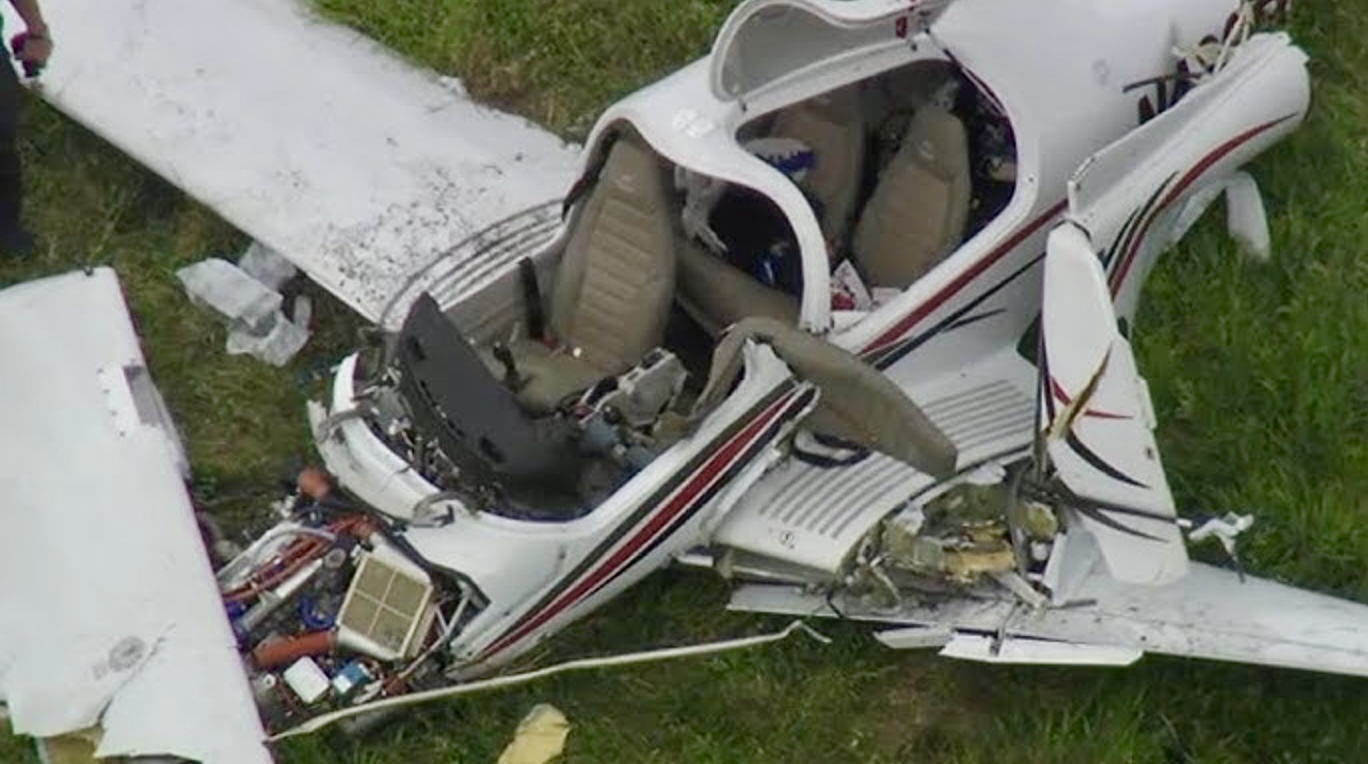
We’re reminded once again that matters can turn ugly on post-maintenance flight testing from the NTSB’s narrative on a Diamond DA40 four-place single that crashed on its first flight after an annual inspection. The details of the wreck might be less important than the wakeup call for mechanics and aircraft owners faced with first flights after major maintenance. The way this one went down was a stall and spin after the pilot lost control during a partial loss of power on a go-around.
This Diamond had an Austro AE300 turbodiesel, and a post-accident inspection found the turbocharger’s air discharge ducting separated from the engine, choking the turbo’s intake air. That could result in up to 65% power loss. The NTSB called out reusing the turbo ducting’s one-time-use worm drive clamps as a factor, despite the maintenance manual prescribing new clamps and specific torque values.
The NTSB’s Factual Information for the initial climb phase was of course powerplant failure, but also loss of control in flight, an aerodynamic stall and spin, and collision with terrain and objects after the pilot attempted to avoid hitting trees by flying toward a different runway on the field. The good news is that the pilot and the aircraft’s mechanic who was riding shotgun survived the wreck. We’ve been studying Diamond DA40 wrecks since the aircraft entered service over 25 years ago, and we continue to be impressed with the aircraft’s crashworthiness. Add this one to the list, especially since there was no post-crash fire as is often the case with the DA40 since its fuel tanks are positioned between dual wing spars.
Should Techs Fly With Customers?
We think they should, and as infrequently as possible. There are plenty of good reasons for a maintenance or avionics tech to strap in with the aircraft owner or designee the first time out of maintenance or modifications. But increasingly, shops are walking away from the risk. “We used to fly everything we worked on but it got way too scary and the risk just wasn’t worth it for our team,” one avionics manager recently told us. Now, the shop manager hands the pilot a post-install checklist of items to verify and has them come back to investigate any things that weren’t right. We’ve been there and found plenty of loose nuts behind the wheel.
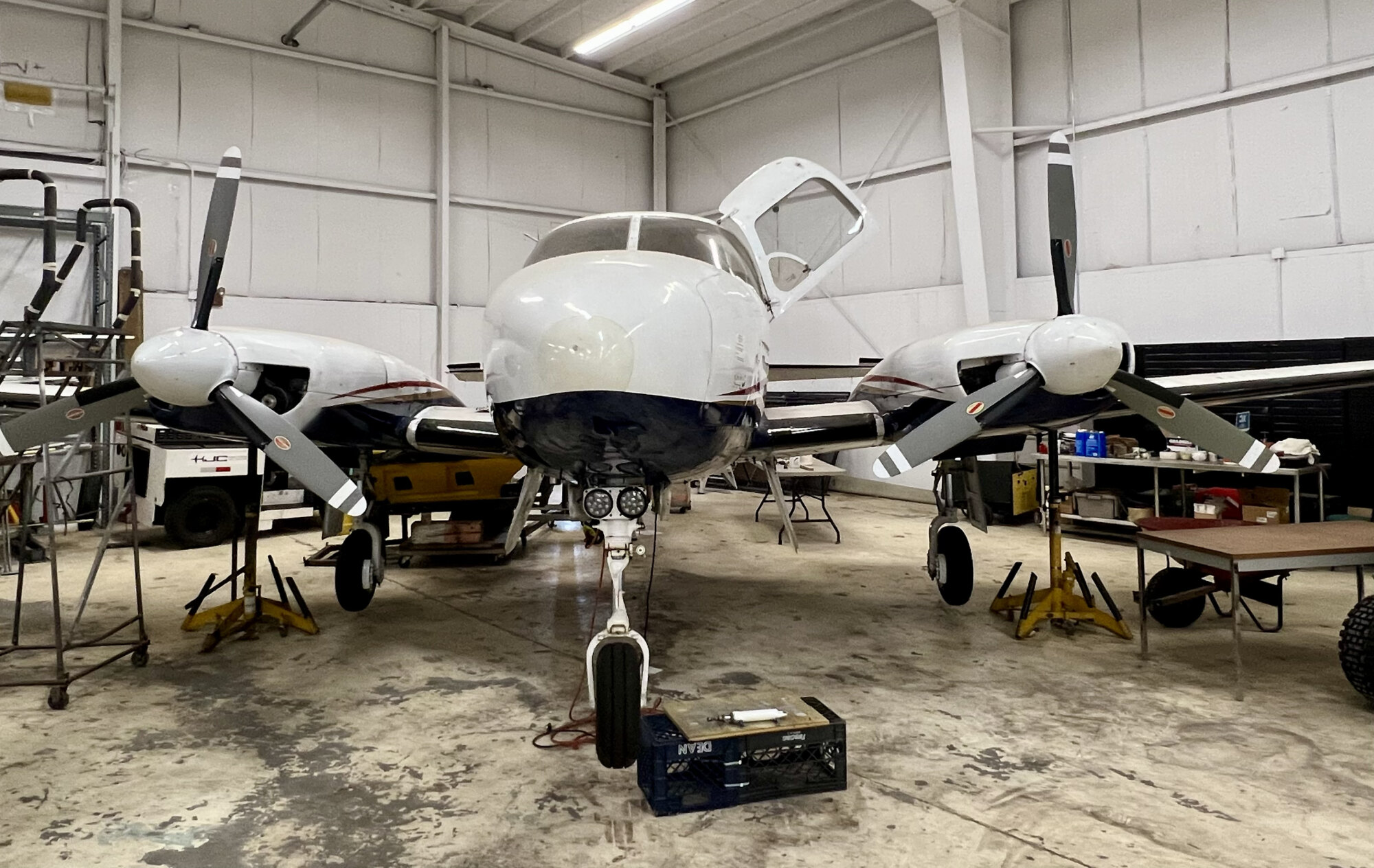
On the other hand, when things get sideways on a flight test, it isn’t always the customer’s fault, though the NTSB almost always puts at least some blame on the pilot for losing control of the aircraft, even if he heroically ensured nobody died when an engine or control surface failed. For many techs, especially newer, non-pilots who might not fully think about the risks involved, it’s tough to say no to a paying customer.
Plus, more than one aircraft owner has reasoned that if a mechanic is hesitant to fly in the airplane after returning it to service, it’s tough to have faith in the shop’s work. We don’t think that’s a fair or logical case. We’ve refused to fly on plenty of flight tests because of subpar prior maintenance, the airplane’s condition, and even the customer’s reputation for being a risk-taking crummy pilot.
Still, we’ve talked with plenty of techs who would strap into anything (we were once that brave, too) because they felt they had the skill to at least try and keep the airplane from crashing if it came to it. Plus, some system troubleshooting is made easier when the tech observes the aircraft in flight. Face it, pilots aren’t always great at correctly describing symptoms and it ends up costing far more time and money than necessary. It could something like an autopilot that porpoises in pitch, a power issue at altitude, and a long list of other things that can lead to a tail chase on the shop floor. But based on the NTSB’s report for the Diamond’s post-maintenance wreck, I wonder why the mechanic really had to be in the airplane because the owner asked him to go along for some touch-and-go landings. According to the report, the mechanic had already ground-ran and leak-checked the engine.
Smart Practices
To us, the best practice for flight testing is to do it with as few passengers as possible, and sometimes that means no passengers. We’ve seen pilots fill all the seats and launch on flight tests after major maintenance. It’s a head shaker. If it’s absolutely necessary to fly with the tech who worked on or is about to work on the aircraft, have a structured plan in place, and that includes sticking close to the airport when the weather is comfortable VFR. Question whether touch-and-go landings, where there are large changes in aircraft configuration and power at low altitude, make sense for the work that was performed. Is it better to climb, level at a safe altitude, and observe the systems in cruise flight with small, gradual power changes? Maybe.
Post-upgrade avionics flight testing can be risky because the owner might have been grounded for long periods of time because the installation took longer than planned. Then, when the owner finally straps in to fly it, the panel is totally different. Data overload on these first flights is common, made worse when the owner doesn’t get the right training ahead of time. It’s a dilemma because while the avionics tech might be familiar with the new equipment’s installation, he might not have a solid understanding of how the system is supposed to work for autopilot-coupled instrument approaches. The owner incorrectly sees the tech as a flight instructor, which is seldom the case. Of course the best-case scenario is flying with a member of the shop who is an instructor and understands the equipment cold. There are plenty of shops that offer these resources, and it’s something every buyer should ask when dealing with a new shop.
Last, don’t let money matters be a distraction to flight safety. We’ve seen the setup: A customer picks up the airplane to do a flight test with the shop and then gets into a billing dispute right before the flight. Both the customer and the shop tech might be in an awkward position, stressed even before the engine start. And whatever you do, don’t attempt to do a flight test if for any reason you aren’t up for it—currency, comfort, weather, or just a general bad feeling. Accept and respect that maintenance flying is risky and sometimes ends badly.

I’ve taken two homebuilts on first flights, and then through Phase One testing. But the scariest flights for me are the first flights of a certificated aircraft coming out of “annual”. With the modern homebuilts you can get to a high degree of confidence (via participation, inspection and experience),that things are RIGHT, but you cannot say the same thing for a 50 year old certificated aircraft that has been “maintained” by God only knows who over the decades.
I have never had a shop or mechanic offer to ride along after an annual, nor have I offered. Remember there is risk to the pilot as well should something bad happen; the pilot is responsible for any passengers. Instead, I perform a very thorough visual and functional preflight, runup, and even high speed taxi test then a short test flight.
Having a reckless pilot is the only legitimate reason to refuse to go on a first flight after maintenance if you are the maintainer. If poor prior maintenance or the aircraft’s condition are big enough issues to make the mechanic not want to go on a test flight after maintenance, then they should NOT sign off the airplane for return to service. Those are very poor excuses.
Exactly, if the mechanic has reservations about the airworthiness of the aircraft he has an obligation to advise the owner/pilot of the concerns as they are discovered, and at that have a frank discussion about the issue(s) before continuing with any further work on the aircraft.
The discussion isn’t limited to post-annual inspection flying, though. Avionics techs might refuse to fly in something because they don’t like what they see in the maintenance logs or while working on the plane, even though they’re signing off on the work they accomplished. When pointing out the large cracks in the base of the turbocharger, and a chewed-up outflow hose, I recall the shrugging owner who swore that a turbo failure on his Cessna T210 wouldn’t be a big deal.
Do Not:
This!^^^^^^^. The only thing would add to “Day, VMC” is “favorable winds”. And not just after annual, but after *any* significant maintenance where critical systems are touched.
Another factor regarding the DA40 is that Jet Fuel isn’t flammable. Gasoline evaporates rapidly already at room temperature, creating an invisible cloud of highly explosive vapor. Jet fuel does not.
Aerating the fuel (perhaps a broken injector spraying fuel under the hood) and/or heating the fuel (post-crash fire) can boost the evaporation rate to the point of sustained combustion,
Have you forgotten 9/11 already?
Gollly. Can we at least agree that gasoline is much more volatile that jet fuel?
While I understand your argument and agree that having the maintenance provider along is probably useless, I think having a second qualified pilot on board is an absolute necessity. My thinking is that you need one person to fly the airplane and one to trouble shoot any systems issues that arise. Leaving both responsibilities to one single person increases the risk of pilot distraction if there is a significant maintenance issue which in turn can lead to a loss of control accident.
However, 91.407(b) requires that after any major maintenance “that may have appreciably changed its flight characteristics or substantially affected its operation in flight”, the aircraft be flown with only the minimum crew required. For most GA aircraft, that means only the pilot. The “work-around” is that 91.407(c) allows for a ground inspection be performed such that a flight test not be required, after which a not-test-flight test flight can be flown with additional people.
I disagree and point to the tragic McSpadden crash as a reason to not expect another pilot onboard to substitute for good aviation decision making. I always tell my students to “fly into a plan” meaning the plan is considered including contingencies prior to takeoff. Finally consider purchasing a helmet that could be shared among a number of pilots for the express use in post-maintenance test flights. Preventing head injury vastly improves otherwise survivable crashes.
Having flown post maintenance test flights in heavy jets as well as light aircraft;
Minimum crew for sure, but if readings are necessary, another qualified person is a must.
The Pilot in Command, must be qualified for the flight;
An owner is not always the best person for such flights;
Consider whether someone with broader experience would be required.
In light aircraft; over the field till reliability of the aircraft is established.
Any time the aircraft has been opened up; systems disturbed; a test flight is required.
If maintenance doesn’t think the aircraft is actually airworthy; why is it flying?
(In transport category aircraft, some maintenance test flights require agreement that the certificate of airworthiness is not valid and a special permit is required.
That does not mean the aircraft is actually not airworthy; it is a bureaucratic distinction.)
My A&P often took the plane up for a test flight before I got there; part of the work. On other occasions he flew with me. If the A&P won’t go up with me I would want a different A&P.
Probably the best and most important piece you’ve ever written Larry.
Yep. People still load up their family after annual and blast off into 300-1.
You’re overthinking it. From now on, the mechanic is going to replace the hose clamps. Case closed.
The idea of a purposeful, aircraft specific written post-maintenance checklist that is objective and not prepared by the tech themselves is a great idea. Even better if they do it alongside you and can correct any errors or omissions.