

I watched your video on aircraft parts pricing with great interest. Thank you and everyone involved for bringing this to light. I appreciate and feel privileged to be a pilot and an aircraft owner. At the same time, nobody gave me a pilot license and/or an airplane! The privilege we enjoy was earned.
I too, at times, feel guilty complaining about the cost of flying when so few have the opportunity. At the same time this should not be used as justification for others to monopolize the market and charge excessive prices for parts or access to the local FBO.
But there’s another aspect to this conversation that I don’t believe has been adequately addressed, and that is the safety, or lack thereof.
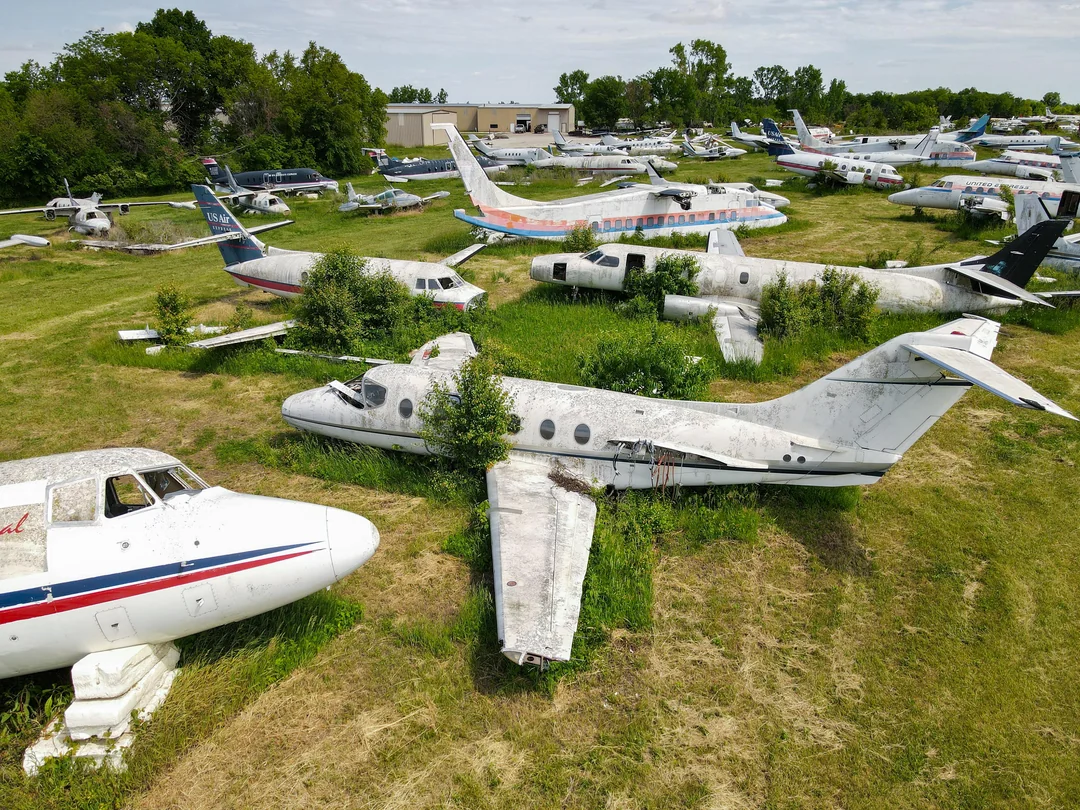
It is common in general aviation to replace failed parts with used parts because of the prohibitive expense and unavailability of new parts.
We all know everything has a lifespan. As the GA fleet and the respective parts continue to age there will become a time where the “new” used parts we are installing will be so prone to failure that the safe completion of your next flight will be questionable.
To put it another way, does anyone believe that if a part that failed after 40 years of service on your plane and was replaced with the same 40-year-old part from your neighbor’s plane that you could, would, or should expect another 40 years of trouble-free service? I don’t think so. But more importantly, what’s the answer? Another 30 years, 20 years, 10 years, or is it measured in days?
I don’t know the answer and that’s the problem. That’s the ticking time bomb that needs to be addressed. When will we reach the point that a used STC and PMA part is less reliable or trustworthy than a new part manufactured without an STC or PMA? Many people believe that time has come and gone. They point to the experimental market with the availability of high-quality parts at a fraction of the price of certified parts.
General aviation certified airplanes and all of their parts should be the shining example on the hill, the epitome of high-quality parts and high-quality maintenance. Instead we are scrambling to find the last used part in a salvage yard before it is sold. If you are fortunate enough to find a new part, you’re rushing to purchase it before you need it because you’re afraid it will go out of production or the cost will increase exponentially.
I’m afraid that multiple factors, including the current rules and regulations that govern the GA parts manufacturers, have made new parts either unaffordable, unavailable, or both. This leaves maintenance providers and owners with few good options.
Don’t get me wrong, I’m not advocating that we throw caution to the wind and abandon all the rules and regulations that were quite literally written in blood and that keep us safe. But I am advocating for a national convention to address this very serious issue.
If we are as serious about safety as we claim to be, a conversation to address roadblocks preventing the availability of quality new parts at reasonable prices for general aviation needs to be had soon. The clock is ticking.

Bill, as an experienced A&P with an interest in aircraft restoration, let me offer the following perspective. We don’t simply slap a salvage part on an aircraft and call it airworthy. Any responsible A&P will carefully clean and inspect it. For parts used in critical areas, it will receive the appropriate non-destructive” inspection (mag-particle, dye-penetrant, etc). I was quoted $1000 and a year lead time for a Bonanza door hinge from Beech some time back. It was pretty obvious they didn’t want to sell the part. An aircraft salvage yard sold me a hinge off a salvage Bonanza for $100 and I was back in the air in a week. There is a great FAA advisory circular called AC43.13 which tells you exactly how to do all this. Every aircraft owner and every mechanic needs a copy of AC43.13 and should refer to it often.
For me, part of the fun of flying antique-classic aircraft was the challenge of maintaining them. Most were designed and built by the same engineers and shop folks who cranked out 10’s of thousands of aircraft during WWII. Designed by experienced engineers, built by experienced shop workers and test flown by experienced test pilots. I may be an old guy, but that precious experience has been replaced by technology and as they told us when punching computer cards back in the 70’s… “garbage in, garbage out”
This is good advice. The majority of people flying old aircraft aren’t doing it because they’re interested in restorations and preservation, but because it’s the only way for them to fly GA without first becoming significantly wealthy. They’re mostly putting trust in regular everyday A&Ps, not seasoned aircraft restorers like you. In a market where a new C172 costs more than $500,000, the pilot flying a 50 year old $50,000 Cherokee 140 is usually not doing it because he’s passionate about 1970s aircraft.
I agree with Steve on this, but there is an issue with the STC system that needs addressing. As an example, there are a number of tail wheel airplanes that were made in the mid-forties. They all came with drum brakes. There are no new parts for these brakes besides pads. The only way to keep them going is replacing old parts with serviceable old parts.
There was a parts company supporting these aircraft that had an STC to convert drum brakes to newer modern disc brakes with Cleveland wheels. This company was acquired by a much larger parts company, but they did not buy this particular STC. Now that STC is no longer available even though it is a proven system, and we are back to trading old parts for other old parts. There needs to be a way for this to change. If an STC becomes abandoned, it should be available for all in my view. Here is a safe system that no one can utilize.
TV makes an excellent point. I actually did a brief stint as tech advisor for the American Bonanza Society. My specific task was to try and “sell” owners of the legacy (E225 powered) V tails on the importance of preventative maintenance. It was a “hard sell”.
Well reasoned and well written. I agree there needs to be some rationalization on certified versus non-certified parts. I’m unaware of crashes caused purely by some non-certified part failing (not saying there have t been, just I’m unaware). The vast cost differences between certified and non-certified for what in some cases are identical parts (primarily avionics) is ridiculous and reduces safety, not increasing it.
Steve Zeller makes a good point in his comment. But I think he left out a couple of very important points.
As a fellow A&P and former Part 147 School Instructor, I submit that most A&Ps who are putting their name and number in your logbook perform the tasks Steve has identified when installing a previously flown part and certainly do not consider themselves as “Aircraft Restorers”. These professionals are specifically taught in A&P School how to properly clean and inspect – and even repair certain parts – before installing them on your aircraft.
But there is more. While the Federal Aviation Regulations identify the aircraft owner as the responsibility party for maintaining the aircraft in airworthy condition, the A&P Technician who installs a used part – or any part for that matter – and signs the required logbook entry for that part replacement is taking responsibility for the airworthiness of that part. In fact, in many cases, the repair will require paperwork that only the FAA, their legal representatives, or an A&P with Inspection Authorization can sign and approve a “Return To Service” for that aircraft.
And the Used Aircraft Parts Safety Net does not stop there! The FAA will monitor parts failures in the field and issue Airworthiness Directives affecting very specific airplanes and parts, guiding the A&P in certain cases in his use of used spare parts on your airplane. Additionally, the aircraft manufacturers issue Service Bulletins, Service Letters, and other forms of guidance for the A&P here.
And finally, the FAA places “Life Limits” on certain parts as part of the original aircraft certification. These parts are carefully identified along with tables that define the specific limit in flight hours or flight cycles or both of each affected part number. If a part does not have a “Life Limit”, then the part is evaluated using Approved Methods by an A&P in a category known as “On Condition”.
Thus, each pilot of an airworthy airplane has multiple assurances that his airplane conforms with the Type Design and is in a Safe Condition for flight. These assurances are NOT available on an Experimental Aircraft.
John Caulkins, A&P
I don’t think the issue with non-certified parts in Certified aircraft is so much about safety as it is liability for the TC holder. If Type Certificates were more like patents and have a fixed amount of effectively then once they were no longer “certified” per se they could be maintained in accordance with a variety of accepted industry standards. Non-commercial would have a broader latitude than commercial, which is not that different from the way it is now. And replacement parts could be made to an industry standard that would ensure safety but also take advantage of similar standards in other industries.
Abandoned STC’s would become “public domain”.
I actually bought brake friction lining from McMaster Carr
and bonded it onto the drums of prehistoric Shinn brakes to keep my 1940 Luscombe flying back in the 90’s.