

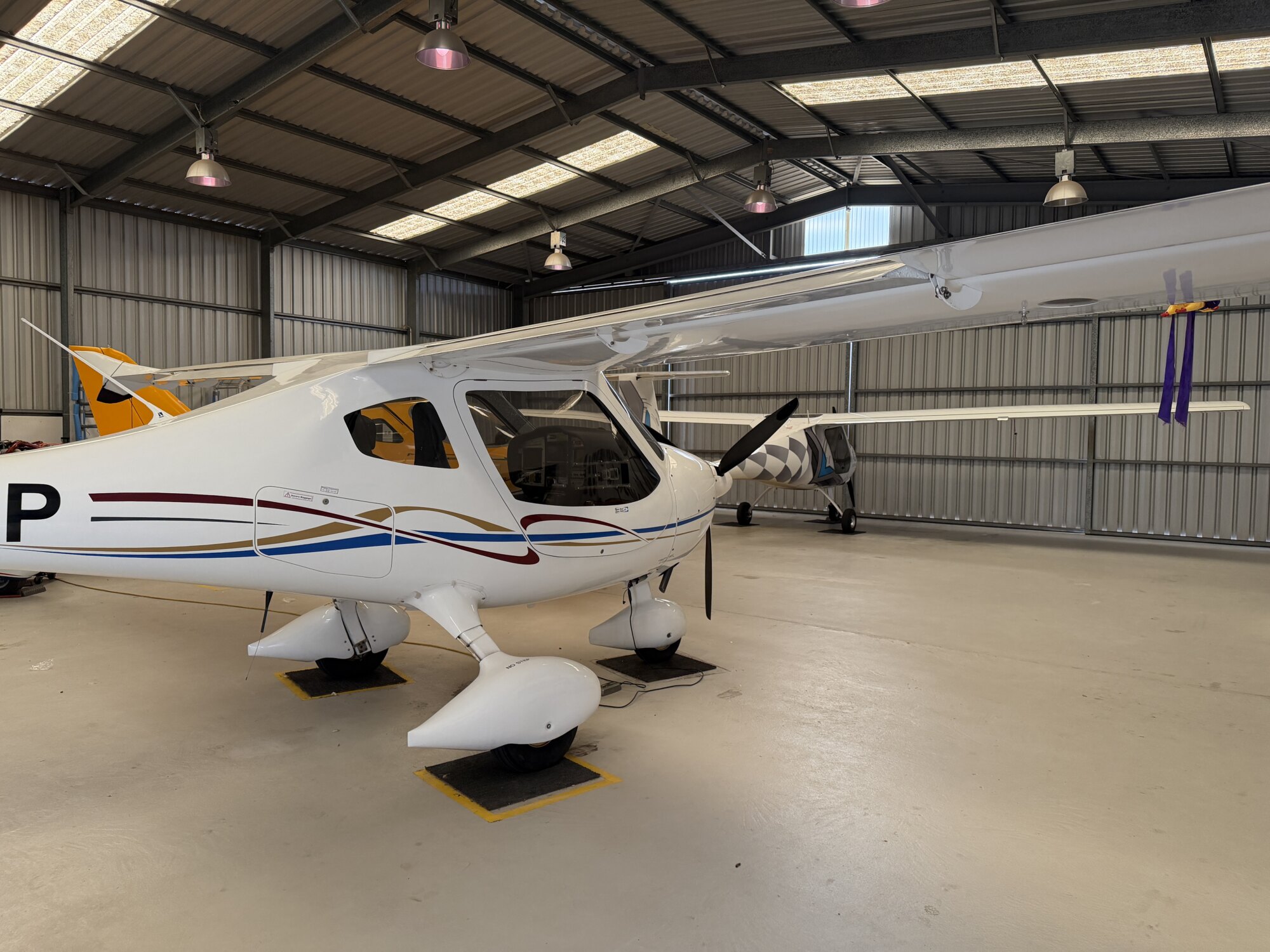
In 2020, Korum Eliis launched a dream. His vision would leverage the budding electric aircraft industry to push Australia towards a more sustainable general aviation future. As Korum E, on his social media channels, he has put together a marketing model underpinned by an ambitious business plan that started with a relationship with Pipistrel Aircraft, based in Slovenia and prior to its acquisition by Textron Aviation—and continues to build six years later.
Ellis is the architect of not only a hybrid electric training program, but also has envisioned how it would connect into regional aviation in Australia, primarily for trips less than 500 nm. In his home base at Perth, Western Australia, that naturally lent itself to tourist and commuting residents to Rottnest Island, and whale watching, bespoke lifestyle experiences, and other add-ons to make margins healthy.
FlyOnE Sustainable Aviation was born on that foundation, with plans to build Australia’s first advanced air mobility network.
But it isn’t based on eVTOLs or AAM as we see it pitched in the U.S. and globally—at least not yet. Instead, FlyOnE maintains a distinctly practical approach, grounded in achievable margins and aircraft currently available and in the standard certification pipeline.
The crux lies in the bifurcation of operations separating complex IFR Part 25 and heavy charter from relatively simple low-level VFR charter and flight training. Both fall under commercial ops in Australia, but remain defined by very different levels of regulatory oversight and inspection cadence.
At one point, FlyOnE had five sites active in two states within Australia: in Western Australia around Perth and Mandurah/Murray Field (about 50 nm south of Perth) and in Victoria, with renewable energy supply to the charging infrastructure. Two flight training locations are in operation today, with the first being at Jandakot Airport southeast of the Perth metro area and the second at Rottnest Island. “[The five were] part of our proof of concept test phase,” says Ellis. “The locations were Jandakot, Rottnest Island, Murray Field in WA, and Moorabbin and Lilydale in Victoria. We have only Jandakot and Rottnest Island active now. The three flight schools we deployed an electric aircraft with during the test phase were Cloud Dancer Pilot Training in Perth, the Royal Aero Club of WA in Murray Field and Lilydale Flight Training in Lilydale.”
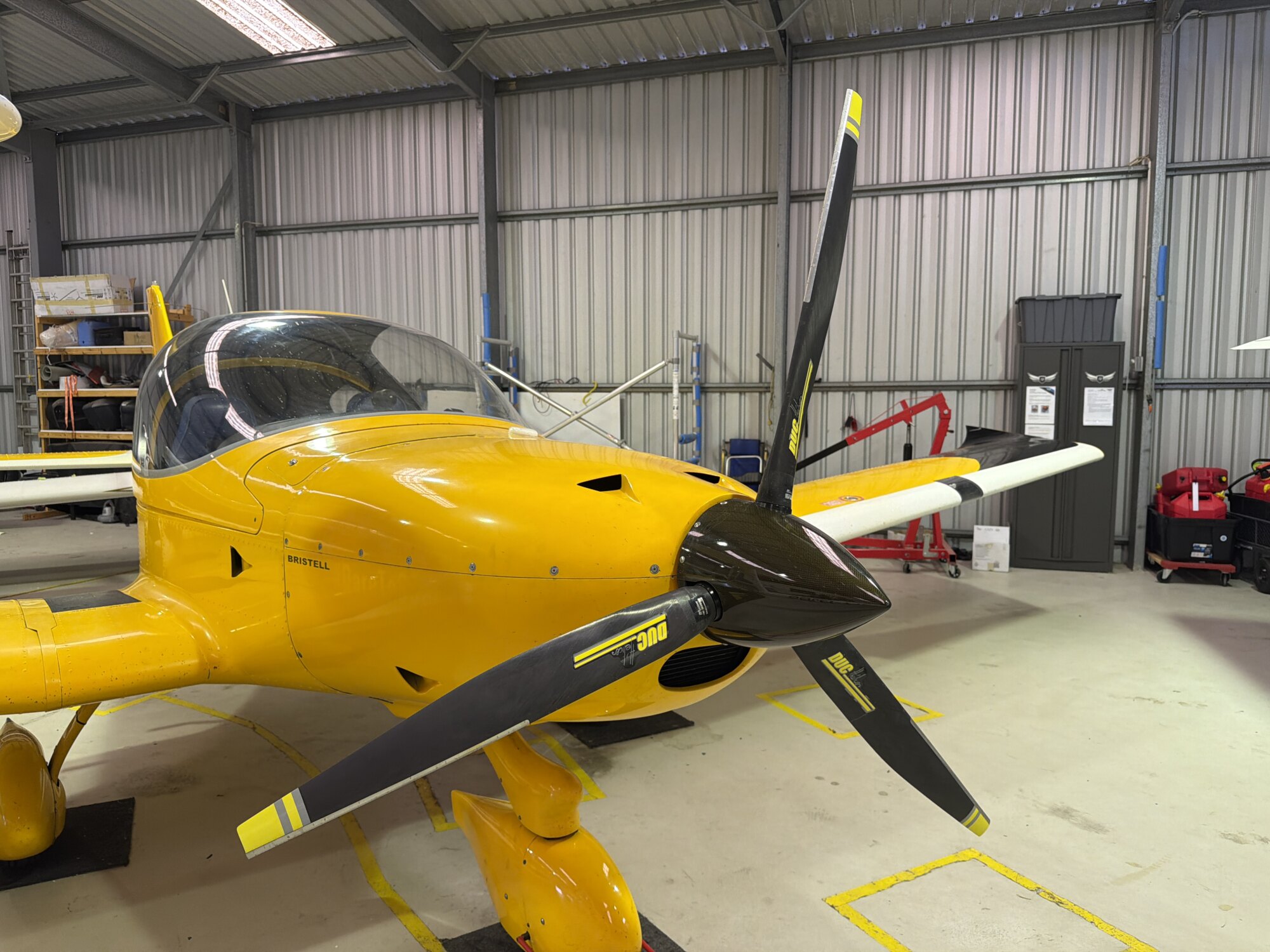
The offer at FlyOnE’s Skycademy program is membership based and begins with a trial flight in the Pipistrel Alpha Electro, for about $155 U.S. dollars at current exchange rates, lasting 25 minutes, or a trial lesson with 35 minutes of flight time and 25 minutes of ground theory training for about $210. A five-hour Introductory Training Pack includes three hours of flight time and two hours of ground for $900. Larger chunks include a “Fundamentals Pilot Training Pack” with six hours of flight time in the Alpha Electro (for pattern work) and in a Rotax 912-powered Bristell light sport aircraft (for local flights) at around $2,450 and a “Go Solo” package to get a student to first solo in 12 hours of Alpha Electro and Bristell training with six hours of briefing time for a little more than $4,500. The solo package includes a caveat that some students may take longer to fly solo—but this is all toward the Australian recreational pilots licence (RPL), similar to the FAA’s sport pilot certificate. Skycademy estimates the total to achieve that milestone (with a minimum flight time of 20 hours) at $7,700 to $9,100—not bad considering the premium unleaded to run a Rotax in Perth at the time of publication was selling at local service stations for roughly $6.65 per gallon.
The flight training operation runs in concert with FlyOnE’s air charter, which does business under flying Piper Cherokee Sixes and a Cessna 172. The 172 is used for private pilot license training, with commercial training taking place in the Cherokee Six. Eventually, Ellis plans to introduce the Pipistrel Pantera hybrid—a project that was once in the works but remains parked for now—and Bye Aerospace’s eFlyer 2, after it achieves certification. It will take time to add those to Skycademy’s Part 141 certificate, in addition.
“What we do is we stack everything,” says Ellis. “You see the story of training versus air taxi. We see that as one thing for the most asset utilization. If I’ve got a plane on the ground, I want it flying all the time, any way it can. And if I can get a paying student out of it in the morning and paying air taxi in the afternoon, great. Particularly with our air taxi cadence, people are usually going somewhere in the morning and coming back in the afternoon. And the aircraft sits still for four or five hours—there’s not a lot of activity in the middle of the day because people are enjoying their day. So that’s when we set up a training cadence.”
The common base also allows FlyOnE to centralize its energy infrastructure. A partnering company, Electro.Aero, has developed its own series of chargers that FlyOnE uses alongside the Pipistrel and Electro.Aero’s universal IS6968 electric aircraft chargers. Ellis has also developed an app in-house to manage and track flight hours on the fleet and student progress in a single location, offering more efficiency opportunities.
With goals of importing up to 70 electric aircraft by 2030 and 30 charge nodes at “key” airports in Australia, it’s an ambitious plan—and only three Pipistrels are in country at the moment, along with five charging stations. But Ellis remains focused on the numbers he’s already achieved: more than 1,350 electric-powered commercial flight hours so far.
The allure of brining quiet, affordable recreational flying to Oz continues, and FlyOnE has a vision to achieve that if the electric aircraft come along as planned.

Is bifurcation like an Aussie word?
It is used in anatomy/physiology/medicine and maybe other places.
While AI can bring us endless fluff and advertisements, it doesn’t have a good grasp on the language or reality: I did not know Rotax engines use diesel!
And what are they “stacking”?? Their odds?
Spare me!
They use electric aircraft for circuits and petrol-powered aircraft for other things? I’m embarrassed to be an Australian. Fancy learning slow flight in one aircraft and landings in another. Completely different aircraft. How CONFUSING. What’s important for safety? Time in type. It also shows what a pathetic failure electric aircraft are – they can’t even get out of the pattern! Also, this article sounded like an advertorial. If I said what I really thought, I’d get my post taken down.
Dear AVBrief.com
If this is the best you can come up with, stop posting it. It’s the kind of thing that gets you unsubscribed to. I stopped subscribing to the Flying email after they produced a piece (ad!) about a huge, chunky electric bicycle and said it was for aircraft.
“Best” wishes
Andrew Nielsen
For me, even if I will not be a participant with whatever is being reviewed, I still find it interesting, usually. Hearing how far E planes have come…or not come, is interesting. To me anyhow. It does sound like Rotax for small training aircraft is the future for now. Or actually an old C150 or C172, as long as some are still around.