

“I’ll try to rig ya’ up some sorta’ handle … ” (Jack Ridley, The Right Stuff)
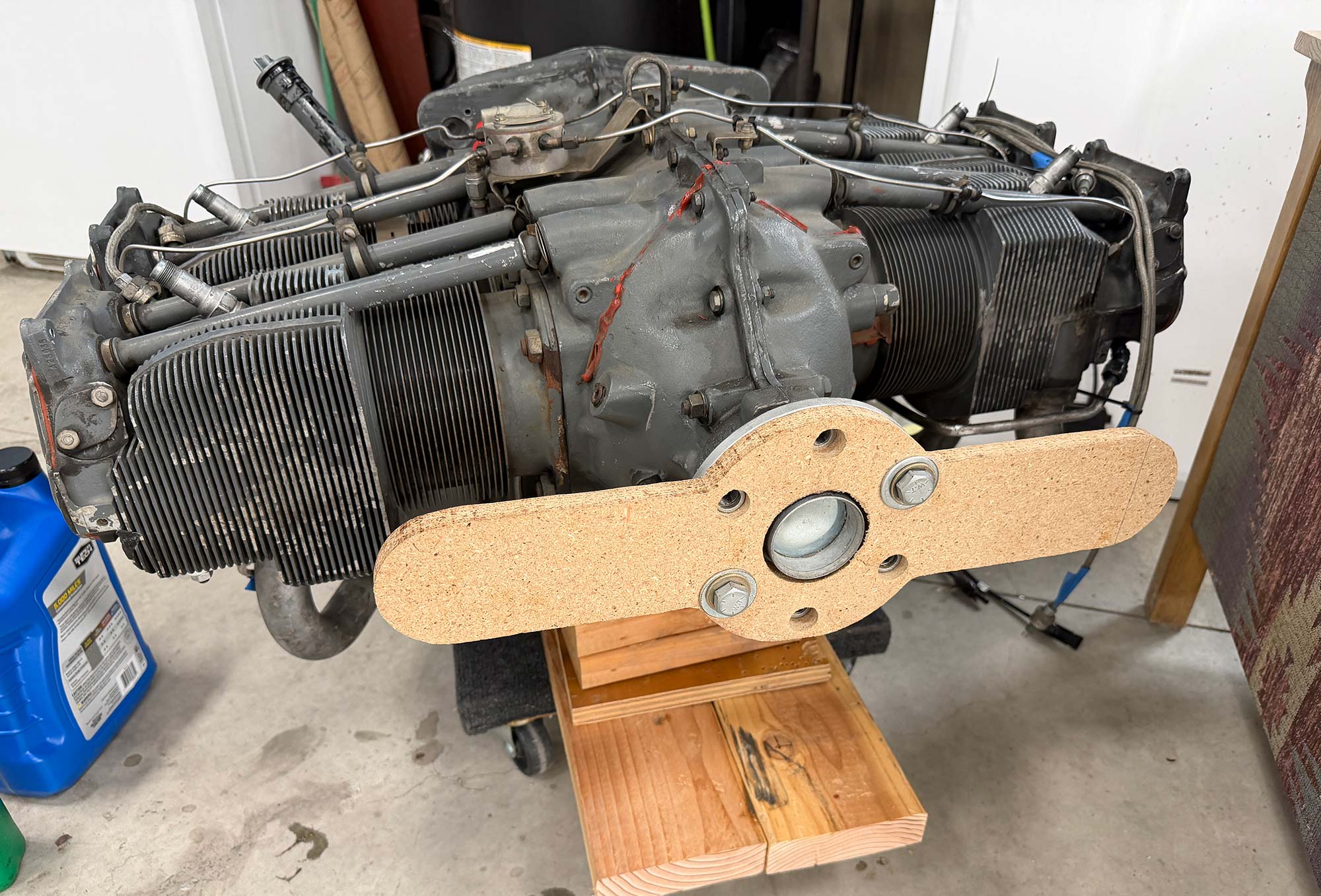
We picked up this nice little IO-360-A1A not long ago—a running motor with good oil analysis and compression numbers at a price we couldn’t refuse. We’re planning on putting it on a project we have going, but probably not for at least another year—so I am just kind of going over it, lubricating things, doing a little preservation … Now, Lycoming’s preservation procedure assumes that the engine has just been run or at least is mounted on an airframe or test stand. We don’t have that luxury, so I am just turning things over, moving some oil through the system, spraying preservation oil in the cylinders—and all that means I need to turn the crank a few times. With no prop and the engine close to the floor, that can be a problem—using a big screwdriver jammed between the prop drive lugs is common, but it can scratch up surfaces I don’t like scratched—so what we needed was a simple handle to make it easier.
No, it’s not the world’s most inefficient propeller (wait a minute … it probably is!)—it’s just a piece of handy fiberboard with a standard prop flange layout traced on it, then cut on a band saw and drilled with some auger bits. Fine-thread half-inch bolts and washers from the hardware store make it complete. One caveat—you are not going to turn the engine over a compression stroke with this short handle—it’s only useful when the plugs are out, which is convenient because the only time we are going to turn it over is when we are distributing that preservation oil all around. Once we get it all preserved, we won’t be turning it again until we are getting close to “unpreserving it”—but I’ll probably leave the handle on just to protect the crank’s prop flange.

The “handle” might not be useable unless there’s a Sensenich or Macauly sticker on it (to prevent splinters).
Paul,
Mike Busch really discourages turning the engine during storage or long periods of down time. He does recommend what you did which is spraying the cylinders with a preservative through the spark plug holes, but not to turn the engine crank.
I’m in the same boat with a new overhauled engine but can’t install it for about 4 months. So your guidance about turning the engine would be much appreciated.
I discourage turning it during storage as well – but getting it READY for storage requires some turning – as does checking out a used motor that you just bought (doing borescope inspections, etc). Having a handle to move it is better than scratching things up with a metal screwdriver or pry bar. I personally would not worry about a 4 month delay in your case unless you live on a salt-water beach in tropical climes….
Awesome! Thanks, Paul! Fortunately the overhaul shop sprayed the upper cylinders with preservative and I’m using a Drybot and dessicant upper plugs. And I’m in north central Washington on the dry side of the mountains.
After spending $$$ on this IO-540, I’m paranoid from the stories of ruined idle engines. The shop told me as well that I’m doing the right things, so thanks again.
How do you get oil onto the cam, which in these Lycoming engines is on top?
Well that’s a whole ‘nuther article – this one is just a short bit about making a handle (for whatever reason you might want it) – Engine Preservation and protecting a Lycoming Cam is something we’ll have to cover another day – maybe we’ll toss it to our engine guru!