

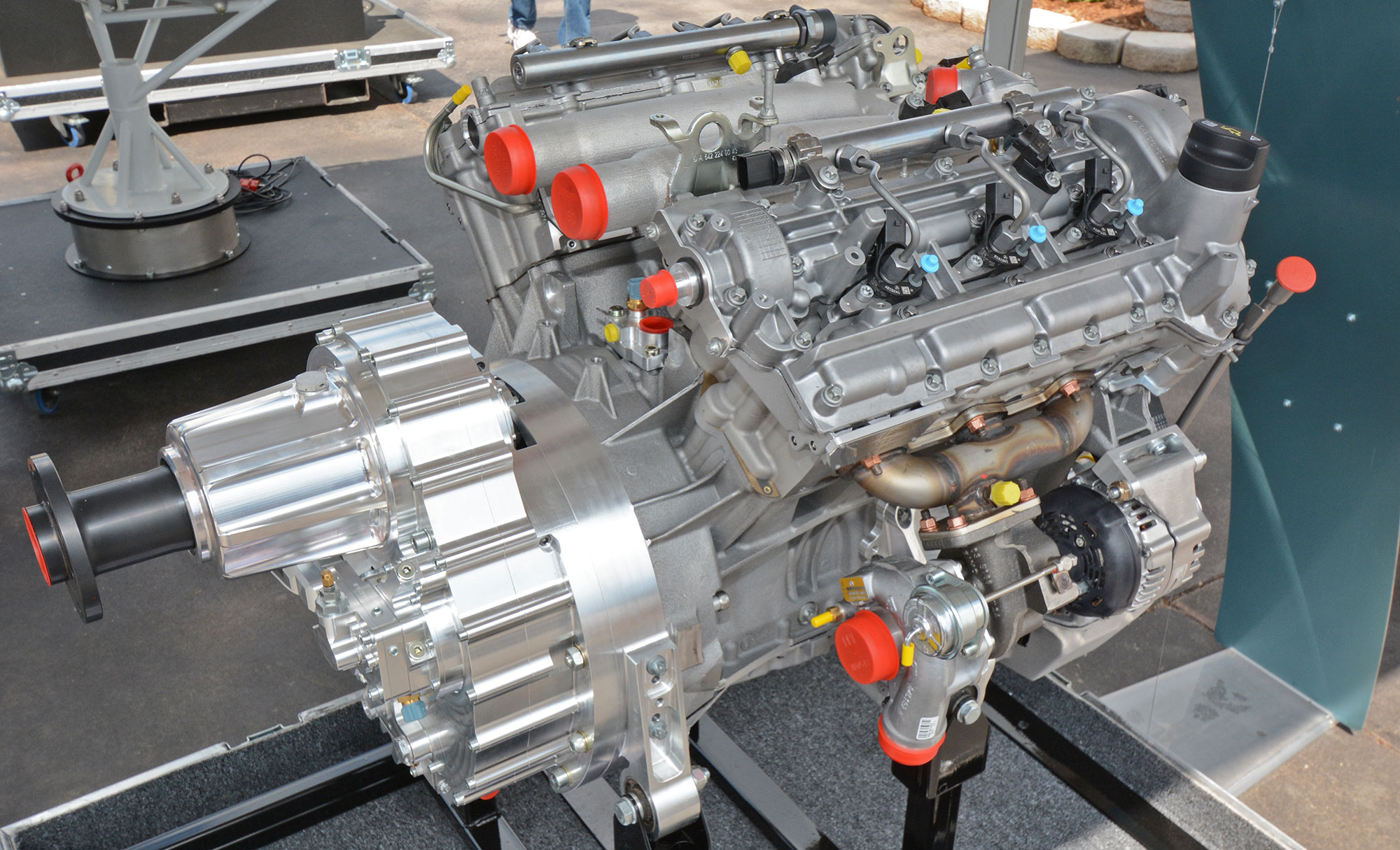
Bringing up diesel engines around gearheads can be like talking politics at Thanksgiving. Some people don’t like diesel power, others think it’s the bee’s knees, and most folks don’t care too much as long as it gets them there.
If engines are new to you, “diesel” likely makes you think of a semi-truck because they all have diesel engines, but diesel piston engines are also quite common in pickup trucks, SUVs, and sedans. In aviation, a “diesel engine” is one that has pistons and burns Jet A fuel. This excludes jet engines, which also burn Jet A, but they don’t have pistons—which is a whole other subject for another time.
Piston diesels are rare at the typical U.S. general aviation airport because they are expensive, but they are out there, and they could become more popular due to the worldwide availability of Jet A fuel. The stuff is everywhere, while 100LL gasoline is really a North American and European reality. In the rest of the world, 100LL is already extremely rare, excruciatingly expensive, and likely to disappear as the war on lead progresses.
Let’s also note Jet A fuel is interchangeable with diesel fuel on the conceptual level. Your aviation attorney or manufacturer may beg to differ for good reasons, but your diesel pickup will run on Jet A, and your diesel aircraft piston engine will run on farm diesel.
So, what’s the difference between the more familiar gasoline piston engine and a diesel piston engine? It is the fuel, the way the fuel is injected into the cylinder, and how the fuel is ignited.
Let’s start with the ignition. It’s a law of physics that compressing a gas, such as the earth’s atmosphere, raises its temperature. Thus, when the piston rises on its compression stroke in a piston engine, the air trapped in the cylinder is compressed, and its temperature rises. In a gasoline engine, the idea is to not heat the incoming air so much that the air/fuel mixture lights off on its own, because gasoline is very fast combusting, and the resulting near-explosion would cause cylinder pressures so high it would literally break the piston, bend the connecting rod, and so on.
Raising the temperature so high that diesel fuel will ignite the moment it is sprayed into the cylinder is the whole point of a diesel engine. This is possible because diesel fuel—Jet A around the airport—is more like an extremely light oil than gasoline. It is more difficult to ignite and burns at a slower rate. This keeps combustion pressures in check, although they are still very high in a diesel engine.

The other factor is diesel fuel is sprayed directly into the cylinder by a high-pressure fuel injection system. Thus, there is only air in the cylinder until the fuel is injected. Therefore, pre-ignition is impossible. Gasoline engines put a combustible mixture of gasoline and air in the cylinder during the compression stroke, which limits how much cylinder pressure (heat) can be present prior to the spark plug firing. Diesels don’t have that issue because they compress only air, then inject the fuel precisely when combustion is desired. This also allows very lean fuel mixtures in diesels when cruising.
Which brings us to the heart, brain, and tissue of a diesel engine, the fuel system. A basic, traditional diesel fuel system pumps fuel from the fuel tank using what in a gasoline engine we’d call a fuel pump, but in a diesel is known as a lift pump, transfer pump, or, just to keep everyone on their toes, a fuel pump. This pump can be mechanical or electric; electric is the most common today.
On traditional diesel engines, the fuel is transferred to the injection pump. This is a complex, precisely machined mechanical device using plungers (think of syringes) that are fed a metered amount of fuel. When the plungers are pushed up, the fuel locked in them is crammed down high-pressure steel lines to one of the engine’s cylinders, where a fuel injector sprays the fuel directly into the cylinder. The fuel spray is precisely timed, just as the ignition system is timed in a gasoline engine. That makes sense because when fuel is sprayed into a cylinder in a diesel is when combustion starts—conceptually the same as ignition timing in a gasoline engine.
Fuel pressure in a traditional diesel injection system is somewhere in the 900 to 1,200 psi range, and to improve combustion, the fuel is sprayed in multiple directions due to several small holes in the fuel injector’s nozzle.
Such a traditional diesel injection system is purely mechanical and requires no electricity, save perhaps driving the transfer/lift/fuel pump. They are also very robust and maintenance-free—until they aren’t, when they require servicing by an injection pump specialist. DeltaHawk engines use such a fully mechanical fuel injection.
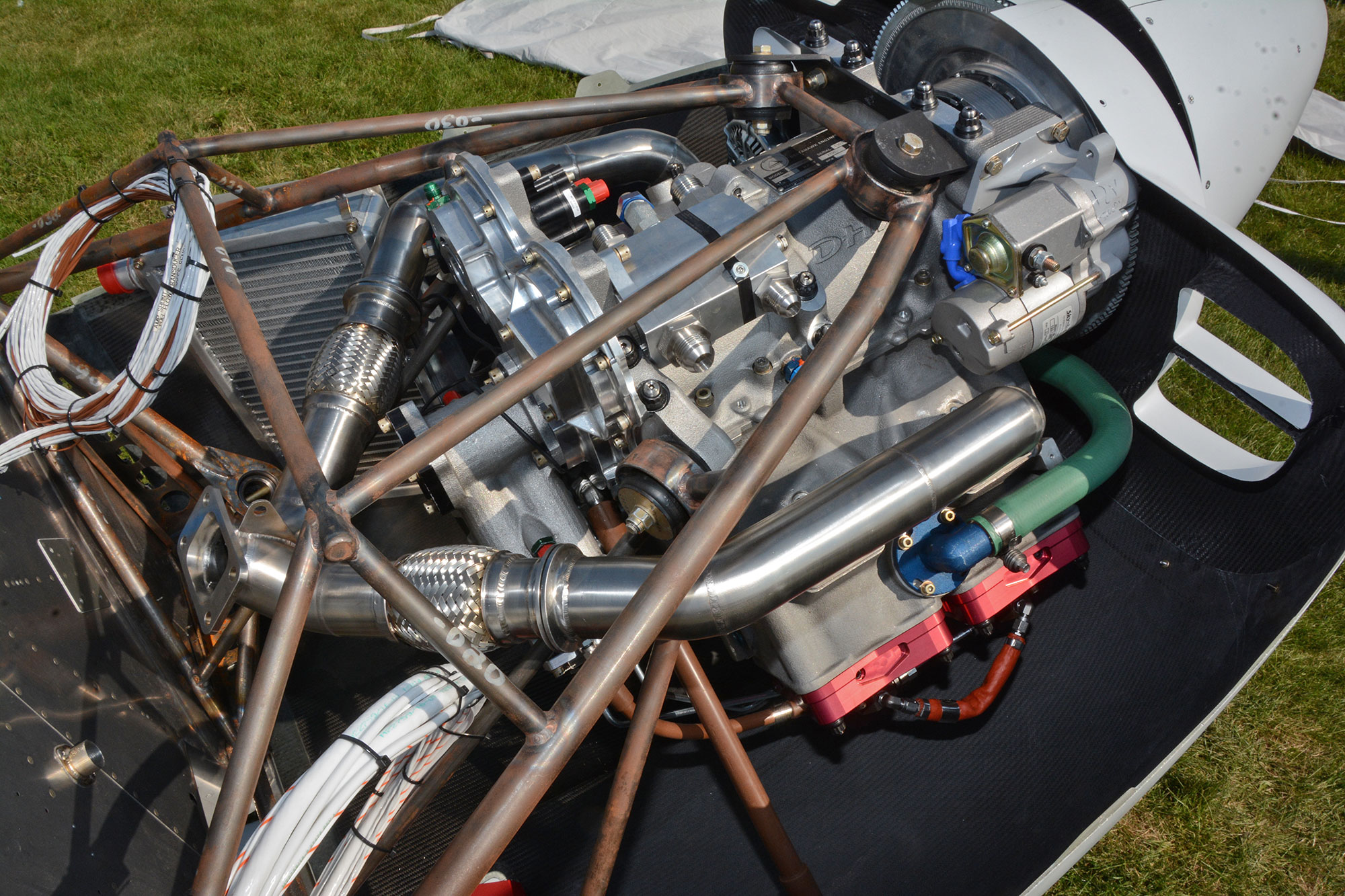
About 30 years ago, automotive diesel fuel systems were computerized in cars and trucks, and now in some aviation applications. These are called common-rail fuel systems because the injection pump and its individual high-pressure lines running to each injector are replaced by a fuel rail connecting all the injectors together (a “common” fuel “rail”).
The fuel injector on a common-rail diesel is a large, tight-tolerance, electro-mechanical plunger. It is electrically fired by the engine control computer, and at roughly 3,000 engine rpm or less, the injector can be fired multiple times per injection event. As there is high-speed digital control taking place, at idle or slow speeds, the injector could be fired as many as seven times, and each of the seven firings could be for a different duration, thus delivering a different volume of fuel. Such multi-strike fuel delivery ensures a better fuel burn.
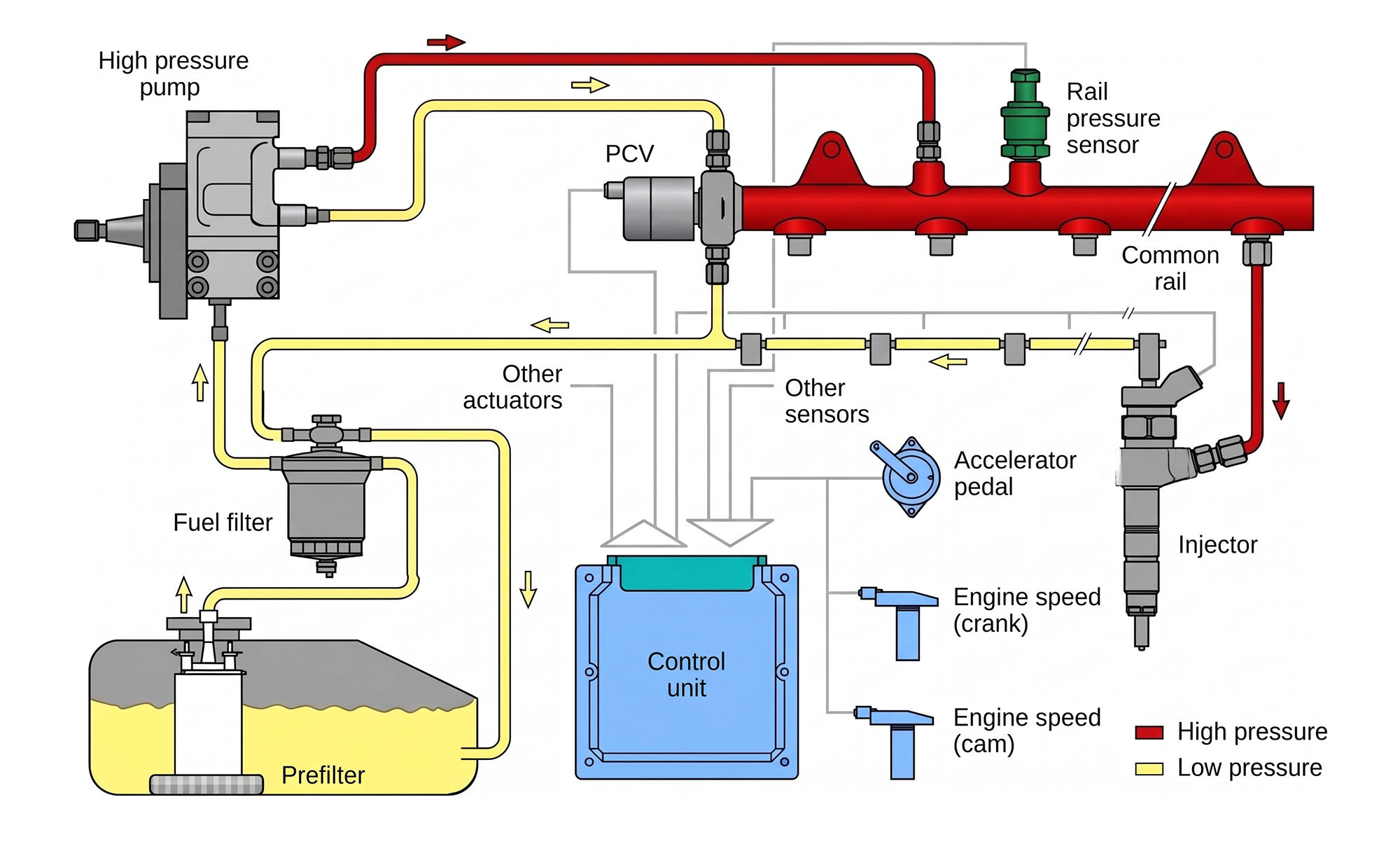
Another twist to common-rail injection is yet another fuel pump downstream of the transfer pump and before the common fuel rail. This is the high-pressure fuel pump. Its job is to raise the approximately 40 psi of fuel pressure delivered by the transfer pump up to something like 300 psi. It does this using engine oil; the high-pressure fuel pump is essentially a high-pressure oil pump. It uses the high oil pressure to help drive the fuel injectors. Thus, there is roughly 300 psi to start with in the fuel injectors, and in turn, they hammer the fuel pressure up many more times when spraying it into the engine’s cylinders. Fuel pressure at the emitter end of the injectors is often in the high 20,000 psi range, with 36,000 psi not unheard of. Such extreme pressures shred the fuel into a highly atomized mist, greatly aiding the initiation of combustion and making sure all the fuel burns. Continental’s Jet A engines are based on auto engines and use common-rail injection.
So, what is the point of all this diesel engine complexity compared to a gas engine with a carburetor? Efficiency is the main thing, often 30% greater than gasoline. For starters, diesel fuel has more heat energy (calories for the technical among us) than gasoline. There is more oomph in a gallon of diesel fuel than a gallon of gasoline. That helps mileage. In an airplane, it means you need to carry a little less fuel to go the same distance, which saves weight.
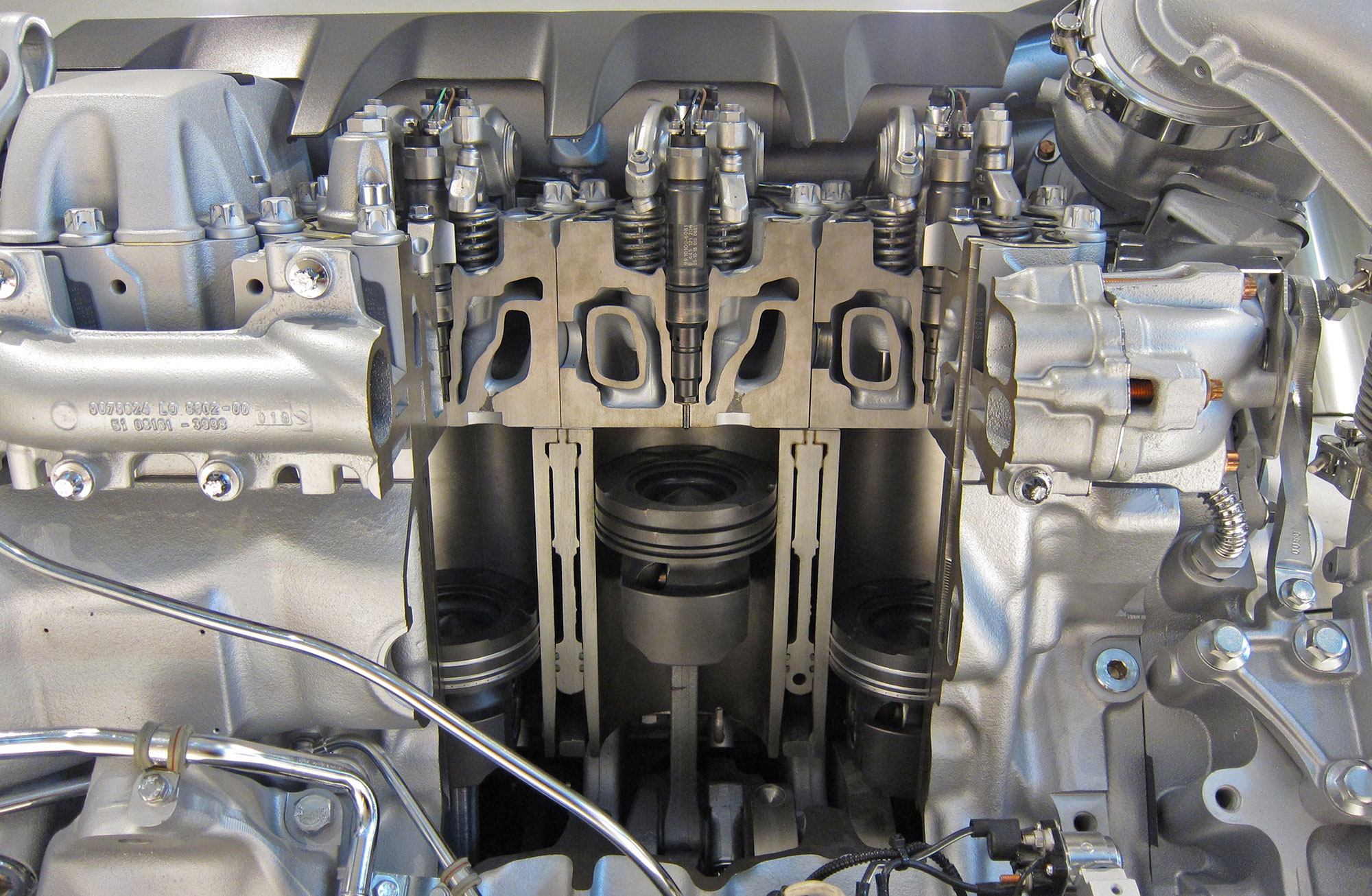
Diesel engines do not have a throttle because power produced depends on how much fuel is injected. Less fuel, less power. More fuel, more power. By eliminating the throttle, we eliminate the energy spent drawing air around a partially opened throttle. This is a large part of the “pumping loss” of getting air into and out of a piston engine. Again, this increases mileage.
Thirdly, because a diesel engine cannot detonate, there is less restriction on compression ratio. As you may recall from earlier in this Greasy Bits series, how hard the air is squeezed (compressed) in the cylinder is a fundamental factor in engine efficiency. In gasoline engines, compression is limited by gasoline’s party-ready nature, but in a diesel, much higher cylinder pressures can be run with no fear of detonation. So, while an aviation gasoline engine might have 10:1 compression, an older naturally aspirated diesel might have 23:1 compression. Again, more mileage.
This is also why diesel engines take to turbocharging like a duck waddling to water. Impressive amounts of induction boost can be run with no fear of detonation. Once again, this means better mileage. Because the turbocharger increases cylinder pressure with a denser air charge, the engine’s compression ratio is lowered to around 18:1. It’s more efficient to force air into the cylinder than massively squeeze what air naturally finds its way in.
Of course, nothing is free, and there are tradeoffs with diesel power. They are considerably heavier than gasoline engines because of the high cylinder pressures. Everything is heavier: the block/case, crankshaft, connecting rods, pistons, and even the cylinder heads. The fuel systems are always more complex than gasoline engines, and this, combined with the heavier structure, means diesels are heavier, more complex, and more expensive than gas motors. Furthermore, the heavier nature of diesel rotating and reciprocating parts (crankshaft, connecting rods, pistons) makes them slower to accelerate and limits high-rpm operation. Incredible power is possible from diesel engines, but they deliver it in a muscular, lower-rpm way. Zippy sports car engines they are not, but if you need a powerplant that can grunt out rivers of power seemingly forever, diesel is your boy.
This is precisely the type of power sailors, truckers, and pilots need.
Weight is always a problem with aircraft, of course, but the extra heft of a diesel engine can be offset by the need to carry less fuel, especially in long-range aircraft. That, and modern engine design, has resulted in diesel engines remarkably lighter than their predecessors.
Practically speaking, we can note some typical diesel engine characteristics. Because tolerances are tight inside the injection pump or common-rail injectors, and diesel/Jet A is somewhat gritty stuff (some algae can actually grow in it), fuel filtration is serious business. Expect all sorts of filters, water separators, and screens.
Because there is no throttle, pedants insist the knob or lever in the cockpit is a power lever and not a throttle. They’re correct.
Modern common-rail diesel engines are electrically dependent, and an aircraft running a common-rail Jet A engine must be electrically robust.
All modern aviation diesels are liquid-cooled. Ideally, they would have an airframe designed around that, but in practice they are not. This isn’t much of a practical concern to pilots, but experimental builders could take advantage of this in the unlikely event they should afford a Jet A piston in the first place.
Jet A/diesel engines convert engine oil into a primordial black goo due to the high cylinder pressures. These pressures are enough to press carbon into grit and are indicative of the strain diesel power puts on lubricating oil. Take it as a reminder that, more so than with any other type of engine, oil and filter change intervals on diesel engines are not to be ignored.
As a pilot, there is little accommodation required when switching to diesel power from gasoline engines, other than remembering which fuel dispenser to taxi up to. There will be no mixture control, and the liquid cooling hugely reduces the chance of shock cooling, so in-flight operation is easier than with gasoline.

Deutz has been making air cooled diesel engines for a long time. First designed in Germany during WW2 as possible aircraft engines. They also have full mechanical injection systems needing no electricity to operate. You would have a power(throttle) push/pull control and a pull to shut down control. I have worked on these engines and they are very robust. But yes are much heavier than a same HP gas engine.
Weight is everything in aviation especially where it is placed like in front of the aircraft. Diesel fuel also weighs more, but, is conveniently forgotten in discussions. Weight is the 800 lbs. gorilla every proponent of diesel likes to dance around. And, it never goes away.
Very good explanation, thanks. One question. I believe diesel additives vary according to the expected OAT, so much so that if you stored summer diesel fuel and put it in your truck in the winter you could damage the system. Same with Jet-A?
Thanks, Tom. I learned a LOT. About all I knew before reading your article was that ignition in diesel engines was from compression!
The diesel combustion cycle is more efficient because of a few basic things. 1. Compression ratio allows greater expansion of the released energy to the charge. 2. More rapid heat release, the combustion takes place in a shorter period. Meaning low timing advance and more of the stroke can turn the combustion pressure into work. 3 . Lean combustion means lower peak temperatures and less heat loss to the piston, head and cylinder. The engines with highest overall thermal efficiency are lean burn natural gas. It is not the fuel. It is so lean it can’t detonate. Imagine that for an avgas.
Tom, Nice article on the function of the injection and systems though, and well written even if a few technical details are misconscrewed :-). On that topic, I am jealous.
BillL said: “It is so lean it can’t detonate”.
That is spot on and can be done with gasoline too!
Don’t forget the propeller reduction gearbox. You cannot discuss the use of diesel engine without discuss the design of the gearbox. Your engine maybe more reliable than an 100LL engine but the gearbox will require overhaul before the engine. Nothing comes free in aviation. Already mentioned is the cooling requirement, and this will add to the empty weight of an airplane.
For Cooling: Weight and possibly drag. IIRC, the original DA-42 prototype was ~10-15 knots faster than the production version – in large part due to the modifications they had to make to the engine cowling to ensure adequate cooling in all weather conditions.
[on the other hand, the Rotax 9-series manages to have both air and liquid cooling and doesn’t seem to suffer from excessive drag; but the engine is also lightweight and compact, which undoubtedly helps]
The total is a small displacement engine designed for light weight LSA and it doesn’t have to work as hard compared to airplanes the fly at the flight level. But yeah, cooling drag shouldn’t be an afterthought when talking about water cooled engine, especially with powerful diesel
As to drag and speed of the DA42 you’ve got it backwards. The newer DA42-V1 since 2012 is 10-15 knots faster, primarily due to a decrease in drag.
FYI the DeltaHawk design is direct drive…no gearbox.
Gearbox? Most diesels I know only operate at 1800 to 2200 RPMs.
Take another look at the lead-off image in this article.
Vibration is another serious diesel bugaboo that needs to be considered. High compression and only a few pistons (4-6) means that each ignition produces a big power pulse that the entire powertrain (and engine mounting system) must absorb.
In 2005 my initial CFI was convinced to buy one of the very first (Thielert diesel) DA-42s, to lease back to a Seattle FBO as a sales demonstrator and light twin trainer. Within 300 hours of operation, both the exhaust manifolds and the gearboxes cracked – on both the left and right engines! They were replaced, and cracks started appearing on the replacement parts soon afterwards. The “Austro” engines that Diamond developed have shown better reliability and longevity, but the Theilert saga is a reminder that diesels are – sadly – not a slam dunk solution.
Over the next 5-10 years we’ll see if the TurboTech line of engines is a better “GA Jet-A” solution. The materials and construction are expensive, but the lower weight and mechanical simplicity (compared to all of the moving parts in a diesel) could prove to be a big advantage…
Vibration: Thanks to the Torsional Vibration Damper an Austro diesel in a Diamond DA40 feels subjectively smoother than the Lycoming IO-360 version I used to have. My current DA42 with two Austro diesel engines feels much smoother than a Cirrus SR22 with a Continental IO-550.
Great article thanks so much for putting this together. Nicely summarized functions pros and cons of diesel engines.
I have been flying experimental diesel aircraft for 18 years, over 2000 hours. I NEVER “conveniently” leave the extra weight of Jet A out of the discussion. It’s a non-issue because a diesel (pistion Jet A) aircraft can fly the same distance on considerably less fuel than its gasoline counterpart. In all cases I’ve been involved with, you gain useful load for a similar mission.
My current plane is an experimental C180 with an SMA SR305-230E aerodiesel. It is AIR COOLED, direct drive (no gearbox), mechanical injection system. The FWF layout is no different than any other Cessna, except it has a larger oil cooler and an intercooler for the turbo. The plane weighs just under 1700lb, which is lighter than many “standard” C180s. It cruises all day at 140-145 ktas burning 9 gal/hr or less. I could not be happier with this plane.
The technology exists (and has for many years) to replace traditional piston aircraft engines with diesels. The main barrier is cost, but as diesels gain popularity, hopefully the cost will go down.
Nice article, especially the details about the fuel injection system.
You wrote, “All modern aviation diesels are liquid-cooled. Ideally, they would have an airframe designed around that, but in practice they are not.” In an article about the viability of aviation diesel engines it should at least be mentioned that there are more than 5,500 Austro diesel engines flying in the world today in various single and twin engine Diamond aircraft.
And…
To bring gasoline engines into the 21st century, direct injection of fuel and advanced ignition timing would be in order.
So happy to have stumbled onto AvBrief. Kitplanes used to be my favorite Av magazine but not long ago aliens seemingly abducted all their great writers (Paul, Tom, Etc.) and replaced them with colorless, generic AI content. Would love to learn the back story to what happened. Just glad I can still tap into the pool of Aviation knowledge those writers provide.