

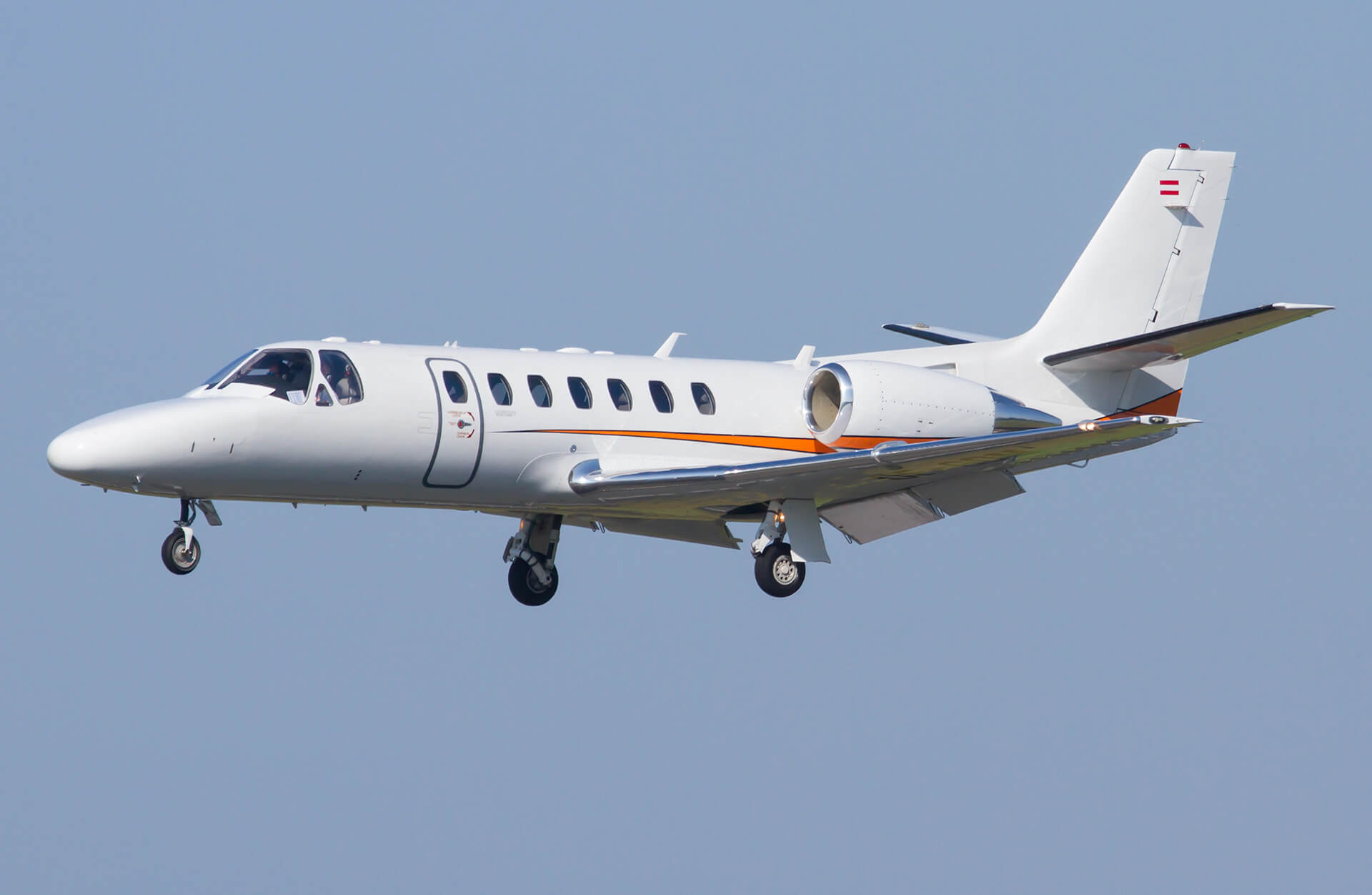
AOPA is asking the FAA to pause the blanket cancellation of single-pilot operations for certain older Cessna Citation models and instead just rescind those privileges for the few who are not in compliance. Last week the agency rescinded single-pilot exemptions for operations in aircraft that were originally certified as two-pilot aircraft. It included eight models from the original 500 series to the Encore+. Exemptions have been approved for more than 40 years. More recent models were not affected because they were certified for single-pilot operation. The agency said it took the action because during a review of the practice it found most training centers providing the exemptions were not in compliance. It also found that single-pilot operators flying on exemptions were twice as likely to crash as single-pilot operators of the newer models.
AOPA said it’s not fair to tar all single-pilot Cessna operators with the same brush. “We ask the FAA to immediately halt the total denial of the single pilot exemption and only rescind the exemption for operators who fail to meet minimum standards set forth in the exemption,” Dave Boulter, AOPA’s VP of Regulatory Affairs, said in a letter to FAA Administrator Bryan Bedford. “AOPA further recommends the FAA immediately establish an industry work group to evaluate and formulate recommendations in order to move forward together to improve safety.” He also said issues with the exemptions should have been spotted and fixed long before such drastic action was taken. AOPA’s letter is copied below.

Hmm… most training centers providing the exemption training and endorsement weren’t in compliance, the entire group of pilots operating with endorsements were twice as likely to crash as those without… and AOPA suggests that only “the few” not in compliance get their exemptions rescinded.
Yeah I’d rather not be endangered by a population that apparently can’t be relied on to have been properly trained to solo aircraft that were certified for two pilot ops. A SIC is affordable compared to the fuel bills let alone the liability insurance they should be carrying based on their risk bucket.
Would you change your mind if the safety record was the same or something less than the FAA-claimed “double”?
You mean the FAA-noted rate? Frankly the training centers having not been in proper compliance is enough reason to revoke any endorsements for this even without the half-crewed aircraft being more likely to crash.
Ok. If the training centers were in compliance, would you change your mind?
… you’re effectively asking me if, hypothetically, the FAA hadn’t had cause to do this if I would mind them not doing so.
The training centers aren’t in compliance, the single pilots in these planes aren’t operating as safely as the dual pilots, so these exemptions should be revoked.
As for why these aren’t as safe single-pilots as the part 23 citations, that merits study. Could be the they need further avionics changes along with control layout, could be that the training regimen is inadequate without sims to match the current ones.
Yes, exactly.
Hypothetically, if you learned the rate wasn’t “double” (or otherwise statistically significant in the difference) and learned that the SPE providers were in compliance, it sounds like you would be OK with the SPE.
Do I have that right?
What I was trying to understand from your comment is if you thought all Single Pilot bizjet ops were a bad idea or not.
(I would argue that safety is more important than paperwork, but I recognize both need to be right)
The part 23 single pilot planes seem to not have the same issues, so I don’t see an issue with single-pilot certified airframes. I’d definitely like to know what differences are actually making the safety impacts seen, since the CJs don’t seem to be having the crashing issues.
Whether a CJ, Phenom, or other single-pilot certified jet should be operated single-pilot is up to the risk appetite of the PIC and the plane owner. There’s definitely a safety benefit to having a qualified second pilot even if it’s not legally or financially (insurance coverage as an example) required.
Having had recent experience looking into single pilot citation training, I found out that the FAA has also recently (within the last year) required that only CAE or FSI could issue a new type rating with single pilot exemptions. But now, as of last week’s announcement, apparently the FAA will not allow any single pilot exemptions on part 25 certified citations, (at all, from any trainer). And they took it a step even further to say that they are rescinding even the SPE’s already in existence for the last 4 decades. Not just the trainers, but the pilots as well. So this begs the question of whether CAE and Flight Safety are also failing to train and keep proper records on single pilot Citation issuances like so many other trainers are accused of. At this point, and with the recent, high profile Citation crashes (GREG BIFFLE) with pilots flying them without legal qualification, I can understand the FAA response. But I think that their response of forcing a warm body with minimal qualifications in the right seat will do more harm than good. If the PIC is ignorant of, or lies about qualifications, I’m not sure that the FAA solution is going to fix the problem. Even a copilot that meets legal qualifications on paper can really get in the way and cause lots of problems for a perfectly good captain in the left seat.
I have a friend that has a Citation M2. It’s single pilot certified and he is single pilot certified on it and he always has a second pilot even for 15 minute flights from his home near me to the city where he lives.
This FAA action happened a week ago. One would assume AOPA was ahead of this issue and working directly with the FAA to minimize the impacts, but unfortunately it appears to be the typical week behind and another ex post facto letter ?
Has there been/ is there a statement from NBAA?
Yes. On 9/25
https://nbaa.org/aircraft-operations/safety/nbaa-cjp-question-faa-rescission-of-legacy-citation-single-pilot-exemptions/
Thanks, Jim.
Sounds fair: “Our goal is to understand the facts and analysis behind the FAA’s actions so we can assess their impact on our members and respond constructively…”
To me this is all a bit foggy.
Some serious BS must have been waved through, for such a hammer to be dropped collectively. Maybe this whole “training provider is authorized to certify” isn’t such a good idea.
Deleted
It seems to me that if a training center is not in compliance, then any students (er, “learners”?) it certifies are not as well. So is the FAA pulling just those certs? Is that what the AOPA is asking for?
Or is the FAA pulling ALL certs, regardless of how good (or bad) the training may have been?
I’d like more explanation of the accident rate. Specifically, do pilots from bad schools have higher accident rates? Or were pilots from compliant schools also crashing at the same rate?
Furthermore – is it a problem with the plane, or the training? In other words, would more/better training reduce the accident rate? Or is the plane simply too complicated for single-pilot operations?
But then again, I suppose we could ask many of the same questions about all of the multiple pilot, large transport aircraft that have gone up in a huge fireball in the last couple of years. And remember that very often, the accidents that are blamed on single pilot operations, actually have 2 pilots in the cockpit because somebody falsely believed that the second pilot made them safer.
“ I suppose we could ask many of the same questions about all of the multiple pilot, large transport aircraft that have gone up in a huge fireball in the last couple of years.”
And we have asked those questions, usually via the NTSB, and the results have been published. And (sometimes) the NTSB’s suggestions about procedures and training have been followed.
If similar data is publicly available regarding Citation SPEs, it would help explain the “why” behind the FAA’s decision.
Looks like others are asking the same question, i.e. “show me the data”:
Rob Balzano, CEO of CJP and the CJP Safety and Education Foundation, said the organization immediately submitted Freedom of Information Act requests for the data used by the FAA in its review of the CE-500 SPE program.
Remember that the NTSB is an American bureaucracy. They cannot tell us the whole truth when political correctness is at stake in an aircraft accident. If they did, it would be squelched immediately and the facts would never see the light of day after the public outcry about it from the left on various networks.
No, the past actual history of the NTSB since the 1950’s have shown that the NTSB has remained an independent agency free from Congressional and Executive Branch interference with many at odd events with the FAA and other agencies.Our Mission-Making transportation safer. We carry out our mission by—
The NTSB has five Board Members, each nominated by the President and confirmed by the Senate to serve 5-year terms. The President designates a Board Member as Chairman and another as Vice Chairman for 3-year terms. The Chairman requires separate Senate confirmation. When there is no designated Chairman, the Vice Chairman serves in an acting capacity.
That is all good information Mr. Tino, but I was suggesting that Congress and the President are not the only forces acting upon NTSB proclamations and in fact they may also have their own political correctness biases from within the organization, as well as other external and media groups which may apply undue influences.
But be that as it may, the NTSB has shown through past history to not give in to any outside force or push back—whether it come from the executive, legislative or judicial branch of government in a bureaucratic scheme of things especially when the outside force comes from an interest group or lobby group. Not that it might not happen in the future, but the historical track record speaks for itself.
Sometimes people fail to see the Forrest because they are looking at the trees.
that can happen and it also can reverse itself once the viewers realize the errors of their ways.
More co-pilot news.
https://m.youtube.com/watch?v=niOz1_q_8_c
https://m.youtube.com/watch?v=85cehlWLNa8
This situation actually makes the FAA look bad. If oversight was lacking with this, where else is oversight lacking in the training and checking world? I’ll bet most training providers are going to be audited with a fine tooth comb, looking for any T’s not crossed, or I’s not dotted! If these single pilot exemptions are mostly pt91 ops it shows just how much the FAA hates dealing with pt91 operations. I have been ramped checked several times when flying pt135 and the companies I flew for got audited once a year minimum. I have a CE500 type trained in an Utra. Never flew or dealt with any single pilot exemption. One company I flew for got a CJ1 on the certificate and discovered the increase in insurance cost for single pilot ops would be the same as paying for a SIC, so they went with a 2 pilot crew.
It does look bad. And the FSDO inspectors, who are the public face of the FAA, are helpless to do anything about it.
I noticed on another publication that Textron has issued a rather bland and non-committal statement in regards to this issue. I wonder if Textron encouraged the FAA to take this action so it would relieve Textron of some liability?